
Motherly Love
What A Mother Wouldn't Do
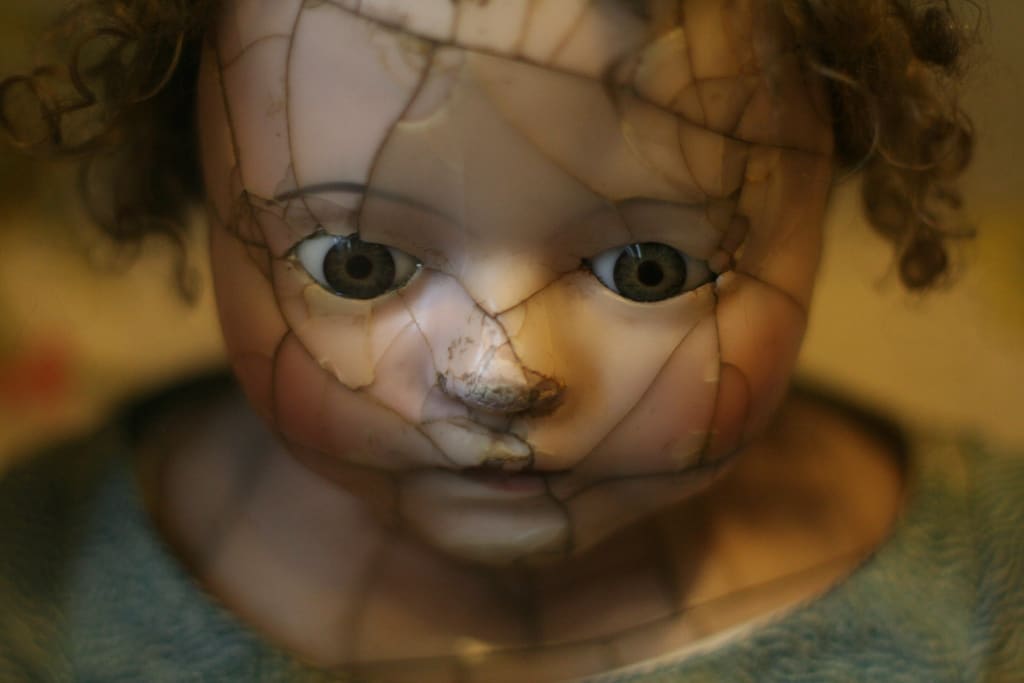
Betsy's eyes fluttered open. After all this time, she responded, coming awake.
"What happened, Mommy?"
My heart leaped with joy. The injection had succeeded!
"You've been asleep for a long time, Betsy."
"But when I fell asleep, I was still in the hospital. Why am I at home now?"
"Oh, Betsy." I gathered her into my arms and held her, stroking her poor, bald head. The chemotherapy had been harsh, cruel, robbing my little girl of her pride and joy, and in the end proving futile.
"You were sick for a long time. That's why you were in the hospital. We brought you home to make you well. Everything's going to be just fine now, Betsy. You'll never be sick again."
From the time I was seven, I had been fascinated with plants and their various uses. By the time I reached middle school, everyone understood I would grow up to be a botanist. While other girls my age experimented with make-up and worried about whether or not certain boys liked them, I experimented with herbs and learned how to make poultices to cure various ailments. By the time I graduated from high school, I had become an expert in the field.
In my second year of college, I met Hans Dietrich. A mutual friend introduced us to each other. Hans was majoring in psychology, and his dedication to his field of study matched my own. I can't really say he swept me off my feet, but we were kindred spirits, and so it was only natural that we would come together. We married after earning doctorate degrees in our respective fields.
For the first few years, life was good. Each of us found academic positions at the same university that allowed us to buy a lovely home with a large greenhouse containing plenty of room for my botanical experiments. The arrival of our firstborn, Betsy Renee, completed our joy. Beautiful, with dark hair and dark eyes, she proved to be intelligent as well. She started talking in full sentences at fourteen months and showed definite artistic talent by the age of three.
My second pregnancy was uneventful up until my last month. My due date came and went, the fetal movements decreased, and yet my obstetrician refused to induce labor. It was not until the baby was in obvious fetal distress that an emergency C-section was performed. To our shock and horror, our son had inhaled so much meconium that his brain had suffered profound damage. The pediatrician gave us the grim prognosis and recommended that Peter be institutionalized. Hans refused.
"No matter what, he's still my son," Hans explained. "We may not be able to cure him, but he'll receive more love from us in our home than he ever will in any institution."
As Peter passed his first year and failed to reach expected developmental milestones, I suggested to Hans that perhaps the pediatrician had been right. "After all, an institution could provide him with much more sophisticated treatment than we can provide," I argued.
Hans grew angry. "They might would provide more treatment options, but would he be loved? To them he would be just another patient, another statistic, another job to be done. He's our little boy, Myra. Nobody else can love him like we can."
For me, the embarrassment of Peter's being the child of two college professors and having an I.Q. of barely above zero was acutely painful. I flinched every time I saw the looks on the faces of the employees of the university child care facility where Betsy and Peter were both enrolled. I wondered what kinds of things they said about Peter, and about us, when we weren't around to hear.
It was about that time that Betsy began to develop nosebleeds and mysterious bruises. The pediatrician ran tests on her, and then called Hans and me into his office to discuss the results.
"I'm afraid I have some bad news," the pediatrician began. "Your daughter has leukemia. I'll be honest. The type of leukemia Betsy has is one of the most aggressive forms, and treatment for it is difficult. Also, Betsy's case is even more advanced than I had feared at first. We will treat it to the best of our ability, of course, but it's going to be a long, uphill battle, and I want you both to be prepared for the worst."
Later, Hans held me as I sobbed. "I can't lose her, Hans! She's all I've got! Please, there has to be something I can do!"
"The doctors will do all they can, Myra, but they're not miracle workers," he said in a gentle voice. "We have to be strong, not only for Betsy's sake, but for our own and Peter's as well."
The chemotherapy treatments commenced, and with them came the hair loss and constant nausea. Caring for both children while attempting to keep up my university duties became an almost insurmountable task. Betsy went into remission temporarily, but the leukemia returned with a vengeance almost as soon as the treatments stopped. The pediatrician gave us little hope.
"We will try to make her as comfortable as possible in the time she has left," he told us. "Take her home and spend as much quality time with her as you can. Shower her with love. Right now, that will do her more good than any medicine will."
His words caused a panic reaction as a cold hand squeezed my heart. No! No! No!
I began to spend almost all my spare time in the university library, desperately searching journals and periodicals for any helpful information. Finally, while doing research late one night, I came across an article in an obscure periodical that shocked me. Fascinated, I read through the article several times to make sure I understood it correctly. It described the preparation of a concoction that could work miracles, defy the laws of nature, work untold wonders. I thought it was surely too good to be true, but after researching the concoction's ingredients in other journals, it began to seem logical. I already had many of the concoction's ingredients growing right in my own greenhouse, and the ones I didn't have could be easily ordered through the mail. For the first time since Betsy's diagnosis, I saw a ray of hope.
I discussed my findings with Hans, and to my disappointment, he wasn't nearly as enthusiastic as I had hoped he would be.
"What you're proposing goes against the laws of nature, Myra. You're trying to play God, to cause things to happen that weren't meant to happen. I think you'd best leave these things alone."
"But it's Betsy we're talking about! Our precious little girl! Don't you love her, Hans?"
"What a silly question! Of course I love Betsy! But she's dying, Myra, and we have to accept that. There's no magical formula in the world that's going to prevent it, or reverse it once it's happened."
"I love her too. Too much to just give up."
"Myra, there's a difference between just giving up and accepting the inevitable."
"It's not inevitable yet, not to me." Hans didn't respond.
After considerable time and effort, I finally had the formula prepared in the proper concentration. Now all I needed was a test subject to try it out on. Naturally, I wouldn't experiment on my daughter with a completely untested substance. I didn't have to wait long. One rainy night, while driving home from the university, a soft 'thump' came from underneath the wheels of my car. I pulled to the side of the road, got out my raincoat and flashlight, and investigated. I found an injured cat in distress, its breath coming in uneven gasps. It wasn't dead yet, but I knew it soon would be. I fetched a blanket from my car trunk and, being careful not to go near the cat's claws, carefully wrapped it and put it in my back seat.
By the time I got home, the cat had gone completely limp, and its breathing had ceased. I smuggled it into the greenhouse and lay the blanket on the floor. First, I checked the cat to make sure that all of its vital signs were completely gone. Then I prepared a syringe that contained the formula. I attached a hypodermic needle to it, injected it into the cat, and waited.
Several minutes passed, and I saw no reaction whatsoever. I sighed and prepared to go over the procedure step by step to find where I had gone wrong. Then I saw a paw twitch, and hope sprung up inside of me once more.
As I watched, the cat rolled up into a ball, opened its eyes, and began to explore the greenhouse. I could barely contain my excitement. I knew that, to be on the safe side, I would need to keep the cat and observe it for a time to determine whether or not there would be any negative side effects from my experimentation. Remembering childhood mornings spent attending Sunday school at the First Episcopal Church, I named the cat Lazarus.
Betsy was thrilled to have a cat, although her failing health was such that she was barely strong enough even to stroke Lazarus's fur. Hans asked no questions about the cat, but I knew he realized what had happened. He just looked at Lazarus and sadly shook his head, making no effort to show any affection toward the cat. Peter was, of course, totally oblivious to the cat's presence.
Soon afterwards, Betsy was hospitalized for the final time. I told Hans of my plan, and also told him I would need his help.
"What you're suggesting is crazy," he protested. "I know how much you're hurting, Myra, because I'm hurting just as much as you are. But we can't just take things into our own hands like that. It wouldn't be fair to Betsy. She wouldn't want us to do what you're suggesting."
"How do you know she wouldn't?" I spat.
Hans's body sagged as he shook his head, his face a complete blank.
"So will you help me, or not?"
He didn't respond.
"If you won't help me, fine. But just as soon as the funeral is over, I'm going to start calling institutions to find the one that will best serve Peter's needs."
"All right, Myra," he said wearily. "I'll do whatever you want me to do."
The next day, he and I sat by Betsy's hospital bed, watching her slip away from us.
"The end is near," the doctor warned us. "If you have any close family members who would like to be here, I suggest you call them now."
"We don't," I lied.
"Mommy, I'm so sleepy," Betsy said in a voice no louder than a whisper.
"It's going to be all right, sweetheart," I told her. "Everything's going to be just fine."
A few seconds later, she slipped into a coma and stopped breathing. A nurse came in, checked her pulse, and shook her head. "She's gone. I'm so very sorry," she said. Hans lowered his face into his hands and sobbed.
"I'll see you again really soon, Betsy," I promised her.
Later that evening, Hans and I arrived at the hospital in a rented hearse. Wearing disguises and carrying phony identification papers, we entered the morgue requesting Betsy's body. To my immense relief, the morgue attendants accepted our phony badges and documents without asking any questions. I knew that it was just a routine procedure for them.
After placing Betsy's body in the hearse's rear, we drove to the parking lot of the funeral home of which we had claimed to be employees and parked in the back parking lot. After making sure that the coast was clear, we transferred Betsy's body from the hearse to our own car, which was parked alongside it. It definitely wouldn't have done for the neighbors to have seen a hearse parked in front of our house.
After hurrying into the house, I took Betsy to her bedroom and laid her in her bed. Then I injected the prepared formula into her and waited for it to work.
"Come, Betsy," I said now, standing her on the floor and taking her hand. "Daddy's in the living room. He'll be so happy to see you." It was simply wonderful to watch my daughter walk out of the bedroom on her own two feet, needing no assistance at all.
Hans was sitting on the sofa with a haunted look in his eyes.
Betsy smiled at him. "Hello, Daddy!" she said.
His expression instantly brightened. "Hello, sweetheart!" She ran to him, and he picked her up and gave her a big hug. "How's my girl?"
"I'm all better now, Daddy."
"I'm so glad to hear that, sweetheart." He did seem genuinely relieved.
"You must have been afraid I was going to bring back some monster from a black-and-white horror movie," I told him later, as we were getting ready for bed.
"I had no idea what you were going to bring back, but I honestly didn't see how anything good could have come from it," he replied.
"Well, as you can plainly see, there was nothing to worry about after all. She's the same adorable little girl she was before she got sick."
"So it seems," he admitted. "Of course, we'll have to go wig-shopping with her soon. I don't want her to be self-conscious when she goes back to child care." He actually smiled, a genuine smile.
"I plan to take her tomorrow," I told him.
"I don't like that stuff, Mommy!" Betsy pushed away the bowl containing the edible version of the special formula. "It tastes yucky!"
"You have to eat it, Betsy," I said calmly, setting the bowl back in front of her. "If you don't, you'll go back to sleep, and next time, you'll never wake up."
Betsy's eyes grew big, and she instantly started spooning in the mixture. She'll get used to the taste, I told myself.
Betsy did indeed seem to be her old self again in most ways, although there were subtle differences. She didn't seem to get hungry at all, gobbling down her life-sustaining nutrition with no further complaints, yet never asking for any other kind of food, or even sweets. Neither did she seem to sleep much, if at all, as she always seemed to be wide awake in bed when I went to wake her in the morning. Before she became sick, she had often been very difficult to awaken.
A disturbing new development was that when playing outside, she began to dig in the ground for bugs and worms to eat. I saw dirt around her mouth on a couple of occasions when she had come back inside after playing in our yard, and then I actually caught her in the act once.
"No, Betsy, no!" I shouted, grabbing her hand and marching her briskly back into the house.
"But Mommy, they taste so good!"
"Come inside and rinse your mouth with water. I never want to see you eating bugs again!" Shuddering with disgust, I wondered why in the world my little girl had thought of doing such a thing.
We went to visit my parents later in the year. As my father lifted Betsy to sit in his lap, her shirt slipped up, and he accidentally touched her skin. Startled, he withdrew his hand and looked at me.
"Why is she so cold?"
"It's a side effect of the chemotherapy," I explained.
"Even after all this time? And it isn't just that she's cold. There's another thing that I can't quite seem to put my finger on. She feels almost...slimy." He was not quite grimacing as he said the last word.
"That's also a side effect of the chemotherapy. You'll just have to get used to it. We all have." My parents never asked any more questions about Betsy after that. I'm sure the reason was that they really didn't want to know.
As the result of malpractice litigation against the pediatrician I had used with Peter and the hospital where he had been born, the jury awarded us half a million dollars. It didn't return to us the normal child we should have had, but it would provide for Peter's needs for the rest of his life.
The children Betsy's age in the university child care center began attending kindergarten in the morning. They were all slightly taller than Betsy by now, as were many of the children who had been born a year later than Betsy. When we began to get puzzled looks from the employees of the child care center, we knew that it was time to move to another area.
Several years later, Peter was enrolled in a kindergarten for special needs kids. Brianna, as Betsy was now known, was enrolled in the child care center at the university where Hans and I now taught.
"Mommy, Peter's bigger than me now," Brianna observed one day."He used to be smaller than me. How come, Mommy?"
"You're a very special little girl, Brianna." I struggled to find the right words to say. "You're always going to be the same size you are now. Just the right size to fit in my lap so that I can kiss your cheek."
Seeming satisfied with that answer, Brianna continued her play. She was trying to teach Peter how to stack blocks.
"Look, Peter, this one goes on top of the other one, like this."
Peter whooped with laughter and knocked the stack of blocks over. Brianna sighed and prepared to start over.
Silently, I watched my two children play, one who was forever frozen in time, and one whose mind would always be that of an infant.
About the Creator
Angela Denise Fortner Roberts
I have been writing since I was nine years old. My favorite subjects include historical romance, contemporary romance, and horror.
Keep reading
More stories from Angela Denise Fortner Roberts and writers in Horror and other communities.
Amongst the Humans
She stood there looking at the blackened pile of rubble that had once been her entire life for eleven out of twelve months every year. She knew that the others were all gone forever, nothing left of them but ashes. If not for a twist of fate, she would have come to the same end. But it had been her month to go out and live amongst the humans, and that fact had saved her. With a shudder, Betty Black turned from the ruins of the building she had known so well to face the bustle of a typical city in the United States of 1960.
By Angela Denise Fortner Roberts4 years ago in Horror
Eight Feet Tall: The Shadow in the White Dress
1. The Intruder in the Twilight Imagine the scene: you are in a quiet, rural Japanese countryside. The sun is dipping below the horizon, and the sky is turning a bruised, deep purple. Everything is peaceful. Then, you see her. Standing over the rice fields, taller than the power lines, stands a woman in a white sundress and a wide-brimmed straw hat. You think it’s a trick of the light. But then, you hear it. A guttural, rhythmic sound echoing across the valley: "Po... po... po... po..." This is Hachishakusama—or "Eight Feet Tall." In the digital age of urban legends, few entities command as much primal, visceral fear as this towering specter. She is not a jump-scare ghost; she is a slow, methodical predator who marks her prey long before she strikes.
By Takashi Nagaya7 days ago in Horror
Why Didn't Anyone Tell Us
Men, move along. This is not for you. This is for the women. I was forty-five when I began menopause. It is pretty young for that to be going on in a woman’s life, but I had undiagnosed PCOS, my entire life. Thank you to all the gynecologists I had seen my entire life. That in itself should encourage women to keep seeking second opinions, especially when you are not getting correct answers or any at all.
By Alexandra Grant3 days ago in Humans




Comments
There are no comments for this story
Be the first to respond and start the conversation.