
Medieval Execution Methods: A Gruesome Look at the Dark Ages
In the past several gruesome methods were deviced to punish offenders


The Middle Ages, also known as the Medieval Period, was a time of great violence and brutality, and the methods of execution used during this period were particularly gruesome.
Beheading
Beheading was a common method of execution for high-ranking individuals, such as nobles and royalty. The victim's head would be placed on a block or platform, and a skilled executioner would use a sword or axe to sever the head from the body in one swift blow.
Ancient Greeks and Romans viewed beheading as an honorable form of execution. This was a common belief during the Middle Ages, particularly because beheading was considered a more humane form of capital punishment than the alternatives.
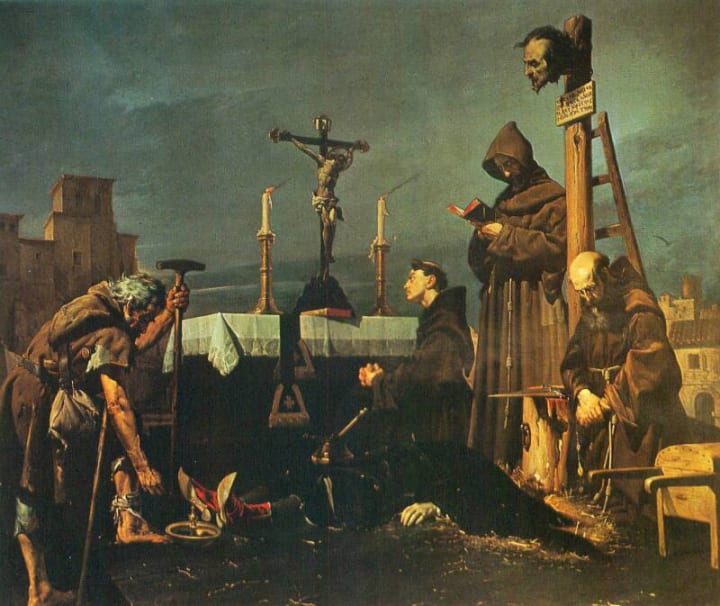
Unfortunately for some of the earliest victims, the typical method of execution was by ax. Later on, as more effective swords became available, victims typically met a relatively swift demise.
Beheading was one of the least painful Medieval execution methods; therefore, it was considered the most "honorable" method of execution.
Historical records show that beheading by sword was introduced to England by William the Conqueror during the 11th century.
Impalement
Impalement was a gruesome and protracted form of torture that always ended in death. A stake was traditionally partially sharpened before being inserted into the ground with the point facing up. After that, the victim would be put over the spike. Then, depending on whether they were a male or a woman, they would be skewered through the rectum or the vagina.
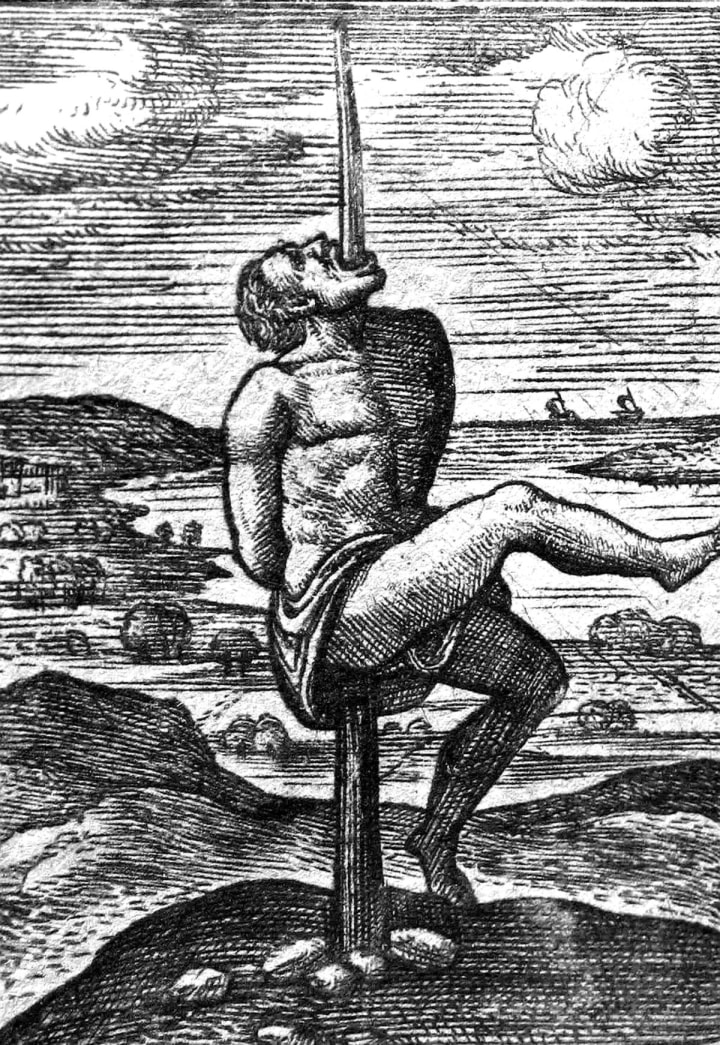
The semi-greased stake would forcibly penetrate the victim’s insides until the person eventually died, and the stake would often exit near their neck, throat, or shoulders. Some of these poles were purposefully blunted to prolong the torture — with some cases of impalement going on for hours or even days
Crushing
Pressing was a method of execution used to force a confession from a suspect. The victim would be placed under a heavy weight, such as a large stone or iron plate, and slowly crushed to death.
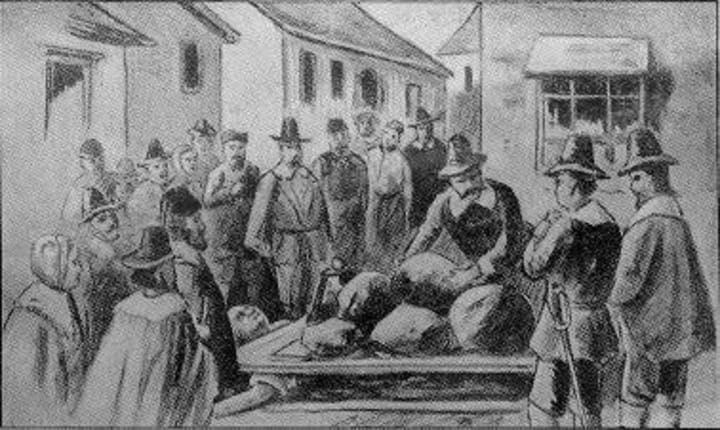
People who were given crushing sentences had not even been found guilty of anything. Crushing was one of a number of Medieval execution procedures that were designed to coerce confessions from alleged criminals. It was designated for people who refused to plead guilty. Nevertheless, this strategy frequently resulted in the victim's death.
Boiling
Boiling was a method of execution that involved placing the victim in a large cauldron of boiling water or oil. The victim would slowly cook to death as the temperature of the liquid rose.
The process of boiling someone to death was unbearably excruciating. Even before the Middle Ages, the Roman emperor Nero reportedly executed thousands of Christians using this practice, which would later become a popular means of punishing coin forgers, particularly in the Holy Roman Empire.
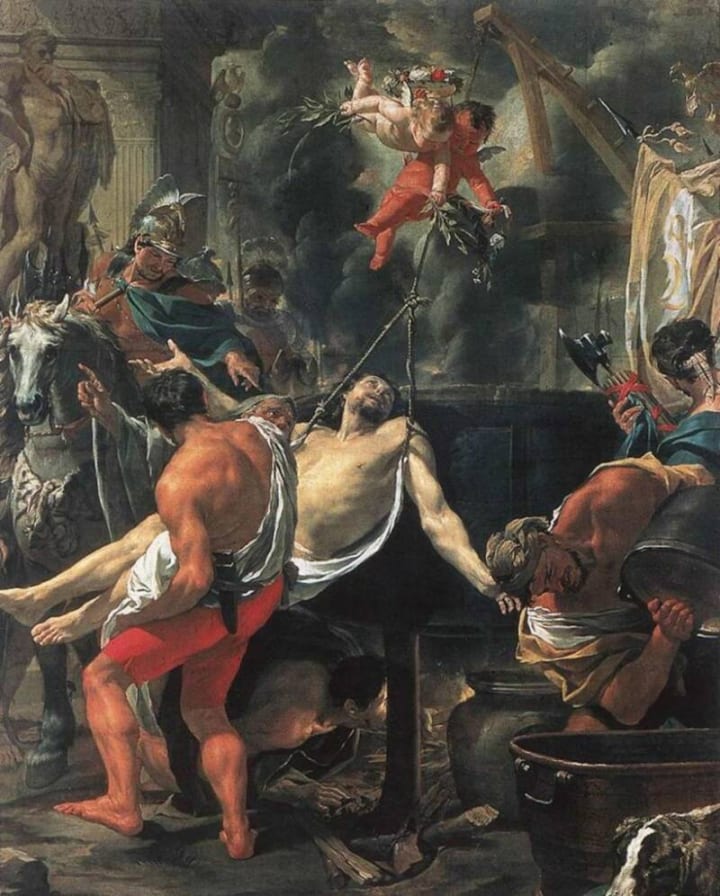
Later in British history, King Henry VIII adopted the practice of boiling to death as a means of executing murderers who used poison to crime out their crime.
Those subjected to this punishment were placed in a big container containing a hot liquid, which could be water, oil, wax, or even molten lead. Afterwards they were essentially cooked.
Boiling to death was unquestionably among the worst ways to die during the Medieval Ages. Since the victim would likely be conscious, he would observe his eyes burning, his clothing fusing to his body, and his skin blistering. While this should have been reserved for the most heinous offenders, it quickly became the preferred means of execution for all fraudsters.
Sawing
Sawing was a particularly gruesome method of execution, often used for those convicted of murder or treason. The victim would be tied upside down and sawed in half, with the saw cutting through the body from the groin to the head.
Crucifixion
Crucifixion was a method of execution that involved nailing the victim to a wooden cross or stake. The victim would be left to die a slow and painful death, often taking several days to succumb to their injuries.
Burning
Burning at the stake was a particularly gruesome method of execution, often reserved for heretics and witches. The victim was tied to a stake or post and set on fire, with the flames slowly consuming their body.
Hanging
Hanging was one of the most common methods of execution during the Medieval period. The victim was typically hanged from a gallows, which was a wooden frame with a rope or noose attached. The weight of the victim's body would cause the rope to tighten around their neck, causing suffocation and death.
About the Creator
Rare Stories
Our goal is to give you stories that will have you hooked.
This is an extension of the Quora space: Rare Stories
X(formerly Twitter): Scarce Stories
Writers:
....xoxo
Keep reading
More stories from Rare Stories and writers in Horror and other communities.
The Mysterious Case of the SS Ourang Medan: Fact or Fiction?
The story of the SS Ourang Medan varies depending on where you hear it, but according to Ripley's, one of the most popular versions says that the ship was passing through the Strait of Malacca in the 1940s.
By Rare Stories3 years ago in Horror



Comments (1)
Ouch!