
Lost in the widerness: A survivor's Tale
Surviving the Nightmare: The Incredible Story of aForest Plan Crash

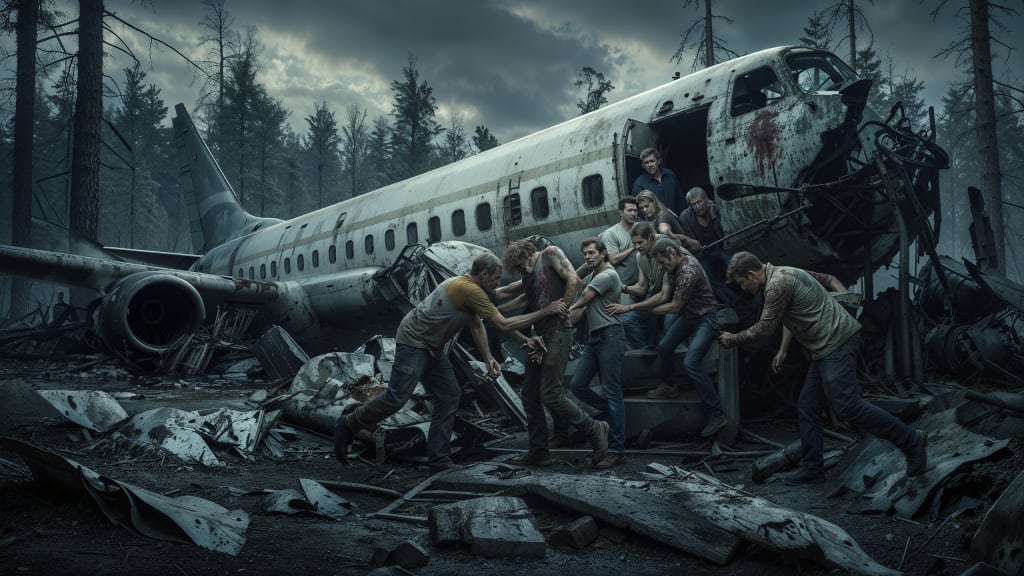
I always thought my life was rather ordinary. My name is Emily Davis, a 35-year-old project manager who often flew across the country for business meetings. The day it all changed started like any other. I was booked on Flight 732 from Seattle to Denver, a route I had traveled countless times before.
The morning began with the usual hustle and bustle. I kissed my husband, Jake, goodbye and promised to call him once I landed. The taxi ride to the airport was uneventful, and I checked in smoothly, boarding the plane with a sense of routine familiarity. Little did I know, this flight would turn into a nightmare I would never forget.
The first hour of the flight was normal. I had settled into my seat, a window view in row 15, and was reading a book to pass the time. The cabin crew served drinks and snacks, and everything seemed perfectly ordinary. Suddenly, we hit a patch of turbulence, more intense than usual. The plane shook violently, and the seatbelt signs flashed on with a sense of urgency.
People around me started to murmur anxiously, and I could see the concern on the faces of the flight attendants. The turbulence grew worse, and the plane felt like it was being tossed around by an invisible giant. My heart pounded in my chest as I clutched the armrests, praying for it to pass.
Then, it happened. The plane made a sudden, sharp descent. Oxygen masks dropped from the ceiling, and a collective gasp filled the cabin. I quickly put on my mask, my hands trembling. The pilot's voice crackled over the intercom, trying to sound calm but betraying a hint of panic. "Ladies and gentlemen, please remain calm. We are experiencing severe turbulence and will be making an emergency landing."
The descent felt like an eternity. The plane shook and rattled, and I could hear the engines struggling. Outside the window, I saw nothing but dense forest stretching as far as the eye could see. We were nowhere near an airport.
The impact was sudden and brutal. The plane hit the treetops, and there was a deafening noise of metal tearing and trees snapping. Everything went dark for a moment as I was thrown forward, my seatbelt straining against the force. The next thing I knew, we were on the ground, the plane broken into pieces.
I unbuckled my seatbelt, my hands shaking uncontrollably. Smoke filled the cabin, and I could hear the cries and moans of other passengers. Panic set in as I realized we were in the middle of nowhere, and the plane was on fire.
I scrambled to my feet, adrenaline surging through my veins. I managed to push open the emergency exit and stumbled out into the dense forest. The sight that greeted me was one of utter devastation. The plane was in ruins, and scattered around were dazed and injured passengers.
I knew I had to help. I ran back to the wreckage, calling out to anyone who could hear me. A few other survivors emerged, and together we pulled people from the wreckage, doing our best to tend to the wounded. The smell of burning fuel and the cries of pain were overwhelming, but there was no time to lose.
As night fell, we realized the true extent of our predicament. We were deep in the forest, miles from civilization, with limited supplies and no means of communication. We had to rely on our instincts and each other to survive.
We gathered whatever supplies we could salvage from the wreckage: first aid kits, blankets, and a few bottles of water. The forest was eerily silent, and the darkness seemed to close in around us. We built a makeshift campfire, hoping it would keep the wild animals at bay and provide some warmth.
Days turned into weeks as we struggled to survive in the unforgiving wilderness. Every day was a fight for survival. We rationed our meager supplies, scavenged for food, and tried to signal for help with makeshift distress signals.
Our group grew closer as we relied on each other for support. There was Mark, a retired firefighter who took charge of building shelters and starting fires. Sarah, a nurse, tended to the injured and kept everyone's spirits up. And then there was me, doing my best to stay strong and help wherever I could.
The forest was not without its dangers. We had several close encounters with wild animals. One night, a bear wandered into our camp, drawn by the scent of our food. We barely managed to scare it away, but the incident left us shaken.
In addition to the wildlife, we also had to contend with the elements. A violent storm hit one night, flooding our camp and leaving us soaked and freezing. We huddled together under the makeshift shelters, praying for it to pass.
Despite the hardships, there were moments of hope. We discovered a small stream nearby, providing us with a much-needed source of fresh water. We also managed to catch some fish, which was a welcome change from the berries and plants we had been subsisting on.
Our spirits were lifted when we heard the sound of a helicopter in the distance. We scrambled to light a signal fire, waving frantically to get their attention. The helicopter circled but then disappeared. It was a crushing blow, but it gave us hope that a rescue might still be possible.
Our perseverance paid off. After what felt like an eternity, we heard the sound of another helicopter. This time, we were better prepared. We had built a large signal fire and arranged bright-colored debris to spell out "HELP."
The helicopter circled and then landed in a clearing nearby. Rescue workers emerged, and the relief and joy we felt were indescribable. We were finally saved.
Being rescued was only the beginning of our journey back to normalcy. We were taken to a hospital, where we were treated for our injuries and the effects of prolonged exposure. The media frenzy that followed was overwhelming, and each of us had to come to terms with our experience in our own way.
The bond we formed during those weeks in the wilderness remained strong. We stayed in touch, meeting regularly to support each other and share our progress. The experience had changed us all, and we were determined to make the most of our second chance at life.
As I sit here, reflecting on those harrowing weeks, I realize how much I have learned about myself and the strength of the human spirit. The crash and the subsequent fight for survival tested us in ways we never imagined, but it also brought out the best in us.
I am grateful for the small moments of kindness and the bonds we formed. I am thankful for the resilience and courage we found within ourselves. And most of all, I am determined to live each day to the fullest, knowing how fragile life can be.
This is my story, a tale of survival, hope, and the unbreakable spirit of those who refused to give up.
About the Creator
"Scream 7" (2026): Running out of Fresh Screams
This is the seventh time we’ve had a Ghostface crisis. Scream 7 is the latest edition of the Scream franchise. Sydney Prescott and her family are under attack by another anonymous killer dressed in a Ghostface costume. While having issues with her daughter, Tatum, they run from the bloody murders, trying to determine who is behind it all.
By Marielle Sabbag9 days ago in Horror
Close encounter at the midnight hour.
Close Encounters of the Midnight Hour It’s a quarter to 4, just a few hours before dawn. The room is dark; silence engulfs it. I lie in bed and fall asleep. In just a few hours, I will wake up and go through my morning routine. I’m not a morning person—just a bit tired from those sleepless nights.
By Rickles Pez3 days ago in Horror



Comments
There are no comments for this story
Be the first to respond and start the conversation.