
Looking back on that ending: 'Gerald's Game' (2017)
Why was the ending so polarising?

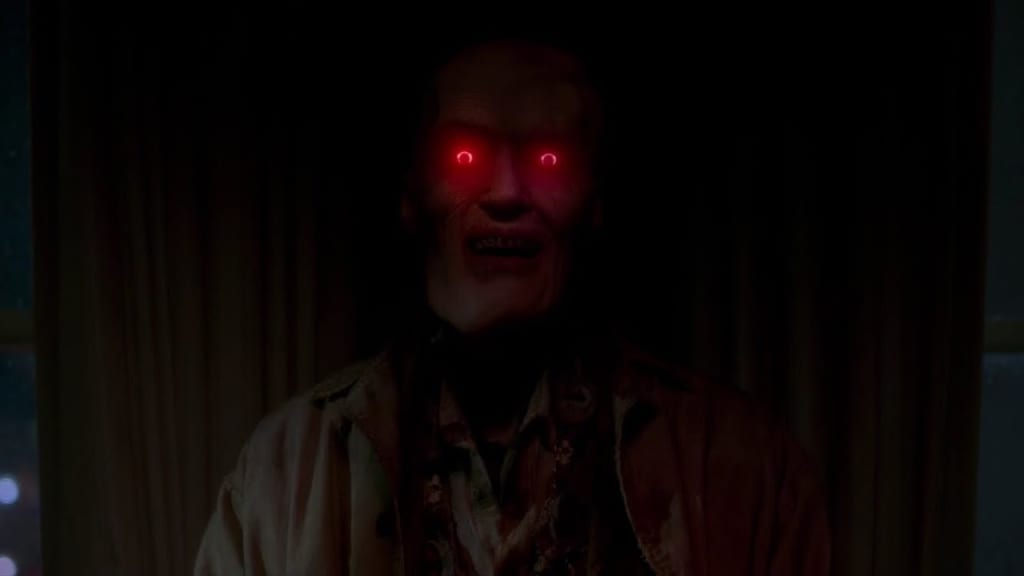
We’re almost at Halloween and already our screens have been graced with a variety of horror films and shows. Receiving a rather high amount of critical praise is Mike Flanagan’s The Haunting of Hill House, the same Mike Flanagan that gifted us Gerald’s Game last year. Which, as the title of this article suggests, got me thinking about the response that the film received, specifically the divisive ten minutes at the end of the feature. Because of this, I watched it again, and noticed a few things I feel are worthy of writing up. It goes without saying, but I will say it anyway, you should probably not read on if you haven’t seen the film or read the Stephen King novel.
Now I’m assured those of you remaining have all seen the film, I no longer have the joy of writing out the plot summary, which means I get to jump right into the juicy bits.
The ending of Gerald’s Game took a lot of people by surprise, in a good and bad way. Some considered it a triumph, while others felt it reduced a 10/10 rating drastically. Once Jessie has escaped from the impossible situation, we see her coming to terms with her own experience and using her voice to provide help to other victims of abuse. The coinciding revelation that the moonlight man (who Jessie was convinced had been a product of her psychosis) is Raymond Andrew Joubert, a grave robbing and cannibalistic necrophiliac, allows for Jessie to physically confront her monster. Let’s take this apart…
At the crux of the criticism this ending received, is the tonal shift that takes place. Most of the film is spent delving into a horrifying what if scenario, that our protagonist through sheer will manages to desperately escape. By the magic of cinema, we jump to a hopeful time where the hero of the story makes her final cathartic move and strolls off into the sunset. It’s a sharp contrast, not necessarily a mistake or storytelling error, it just skips to a happier time quite abruptly. I believe that another factor contributes to this…the moonlight man.

For those who haven’t read the book, the moonlight man appears from thin air to send a chill down your spine. For most of the film, he acts as the personification of death, patiently waiting for the moment Jessie might meet her end. The details and deeper meaning behind the revelation of his existence are almost overshadowed by the tonal shift that occurs. Jessie did leave her ring in his box, begging the question, did he accept that gift in an unspoken bargain for her life? More importantly, did he strip Gerald’s flesh and consume it? Or was it the stray dog as Jessie had seen?
Ultimately, the ending garnered a fervent reaction because it’s a horror film, and the thoughtful and evocative emotional arc that we see Jessie go through would naturally belong in the drama genre. In that sense, it suffers from being such a classically well-crafted horror story, one that preys on a relatable fear and introduces a fascinating (in the morbid sense) villain. While Jessie's journey is inexorably tied to the horror of abuse, the components of the film that place it in this genre (the moonlight man himself) ultimately clash with her journey tonally.
Yep, you just read a theory that a horror film’s ending is polarising because it’s a horror film...
About the Creator
Alex Wilson
Watching then writing...
Keep reading
More stories from writers in Horror and other communities.
Miss Persephone's Manual to a Seemingly Ordinary Life
Miss Persephone was found at the dining table, her blue eyes swollen, her tears arriving and retreating like the tides of the ocean. Earlier that day, her family had visited her in the retirement home where she had lived for eight years. It was her eightieth birthday.
By Imola Tóth6 days ago in Fiction


Comments
There are no comments for this story
Be the first to respond and start the conversation.