
Lobotomy: The Dark History of a Mind-Altering Procedure
Once hailed as a miracle cure for mental illness, lobotomy is now remembered as one of medicine’s most brutal and controversial experiments. At the heart of this dark chapter was a man awarded a Nobel Prize — a legacy tangled with tragedy, ethics, and regret.

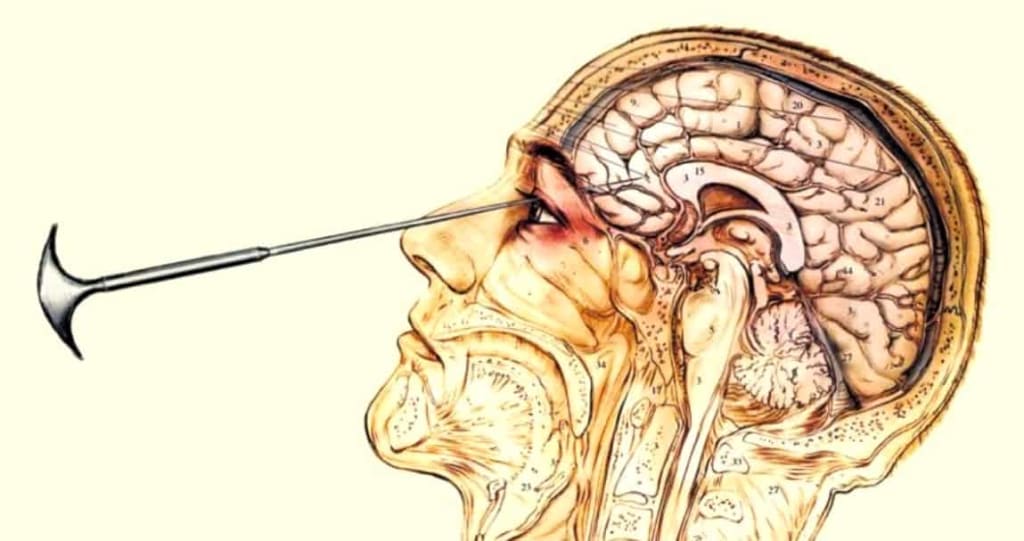
A radical idea takes shape
In the early 20th century, psychiatry struggled to treat severe mental illnesses like schizophrenia, depression, and psychosis. Overcrowded hospitals housed patients who often faced lifelong institutionalization with little hope of recovery.
Amid this desperation, Portuguese neurologist António Egas Moniz proposed a radical solution: sever the connections between the brain’s frontal lobes and the rest of the brain. He believed disrupting these neural pathways could calm chaotic thoughts and violent behaviors.
In 1935, Moniz performed the first successful leucotomy (later known as lobotomy), drilling holes in a patient’s skull to inject alcohol or cut brain fibers connecting the frontal cortex.
The Rise of Lobotomy in America
Moniz’s work made headlines and quickly crossed the Atlantic. In the United States, neurologist Walter Freeman became the most notorious advocate of lobotomy.
Freeman was charismatic and relentless, viewing lobotomy as a miracle cure that could free psychiatric patients from lifelong misery. Yet he transformed the procedure into a faster, simpler, and shockingly brutal practice.
In 1946, Freeman developed the transorbital lobotomy, or “ice pick lobotomy.” Using a thin instrument inserted through the eye socket, he severed brain connections in minutes — no surgical team or anesthesia required.
Freeman traveled the country performing these procedures, sometimes dozens in a day, often in non-sterile environments.
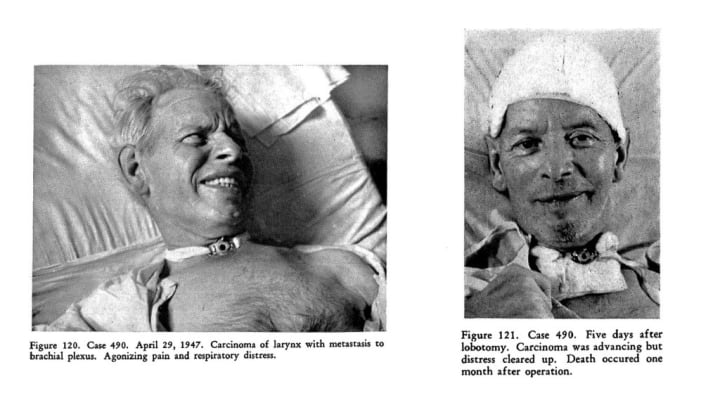
Noteworthy Cases That Shocked the World
The impact of lobotomy is seen in several infamous cases:
Rosemary Kennedy — Sister of President John F. Kennedy, Rosemary underwent lobotomy in 1941 at age 23 after struggling with mood swings and learning difficulties. The operation left her permanently incapacitated, confined to an institution for most of her life. Her family kept her condition secret for decades.
Howard Dully — At 12, Howard was lobotomized in 1960 by Walter Freeman. Committed by his stepmother for behavioral issues, Dully survived and later wrote a memoir revealing the harrowing effects of the procedure.
Frances Farmer — An American actress institutionalized for erratic behavior in the late 1940s, Farmer reportedly underwent lobotomy. Though debated, her case symbolizes the era’s dark misuse of psychiatric treatments.
The Man Behind the Procedure: António Egas Moniz
Moniz was a respected neurologist and professor in Lisbon, Portugal. Beyond lobotomy, he pioneered cerebral angiography — a technique to visualize brain blood vessels.
In 1949, Moniz received the Nobel Prize in Physiology or Medicine for his work on lobotomy. This sparked intense debate: hailed by some as a genius offering hope, condemned by others for brutal side effects and ethical failings.
Though he won the Nobel, Moniz performed few lobotomies himself, leaving their widespread adoption to others like Freeman.
The Decline of Lobotomy
By the 1950s, reports of severe side effects — personality changes, cognitive loss, and death — piled up. The procedure’s dark reality became undeniable.
The mid-1950s introduction of antipsychotic drugs like chlorpromazine offered a safer alternative, and lobotomy procedures sharply declined.
Walter Freeman’s Fall from Grace
Walter Freeman’s relentless pursuit of lobotomy ended in tragedy and disgrace. In 1967, after a patient died during one of his transorbital lobotomies, Freeman was stripped of his medical license in several states. The medical community condemned his reckless methods, and he withdrew from performing surgeries altogether.
Haunted by the consequences of his zeal, Freeman lived his remaining years in relative obscurity, grappling with the legacy of a procedure that promised salvation but often delivered devastation. He died in 1972, leaving behind a complicated and cautionary tale about the limits of medical experimentation.
Moniz’s Final Years and Legacy
Egas Moniz continued working in neuroscience until his death in 1955. Tragically, plagued by ill health and chronic pain, he took his own life.
His legacy is a complex tapestry of pioneering science and profound ethical questions. Though lobotomy is obsolete, its history forces medicine to confront the balance between innovation and humanity.
The Ethics and Aftermath
Today, lobotomy stands as a cautionary tale, raising urgent questions about consent, medical experimentation, and the treatment of vulnerable people.
For many patients and families, it was a nightmare — stripping away not just illness but identity, personality, and dignity.
Conclusion: Remembering a Dark Chapter
Lobotomy’s story reminds us of the dangers when science rushes forward without care for consequences. It shows how desperate times breed desperate measures — and how those measures can leave lasting scars.
As we reflect on lives changed and lost to lobotomy, we honor those who suffered and commit to ethical vigilance in medicine.
About the Creator
E. hasan
An aspiring engineer who once wanted to be a writer .
Wild Card Weekend Recap: What Happens Now?
I think I figured out why I love Wild Card Weekend so much. It's because it's the first playoff anything of the calendar year. The NFL season starts in the fall, and once upon a time, the champion was crowned either on or slightly before New Year's. The evolution of the NFL schedule has resulted in the playoffs starting just into the New Year, and currently, the final week of the season falls on the first weekend of the New Year, with Wild Card Weekend coming a week after that. So yes, chronologically, the NFL's Wild Card Weekend serves as the first playoff anything of the calendar year.
By Clyde E. Dawkins3 days ago in Unbalanced



Comments
There are no comments for this story
Be the first to respond and start the conversation.