
Judgment Echoes
Where Justice Sleeps, Secrets Awaken

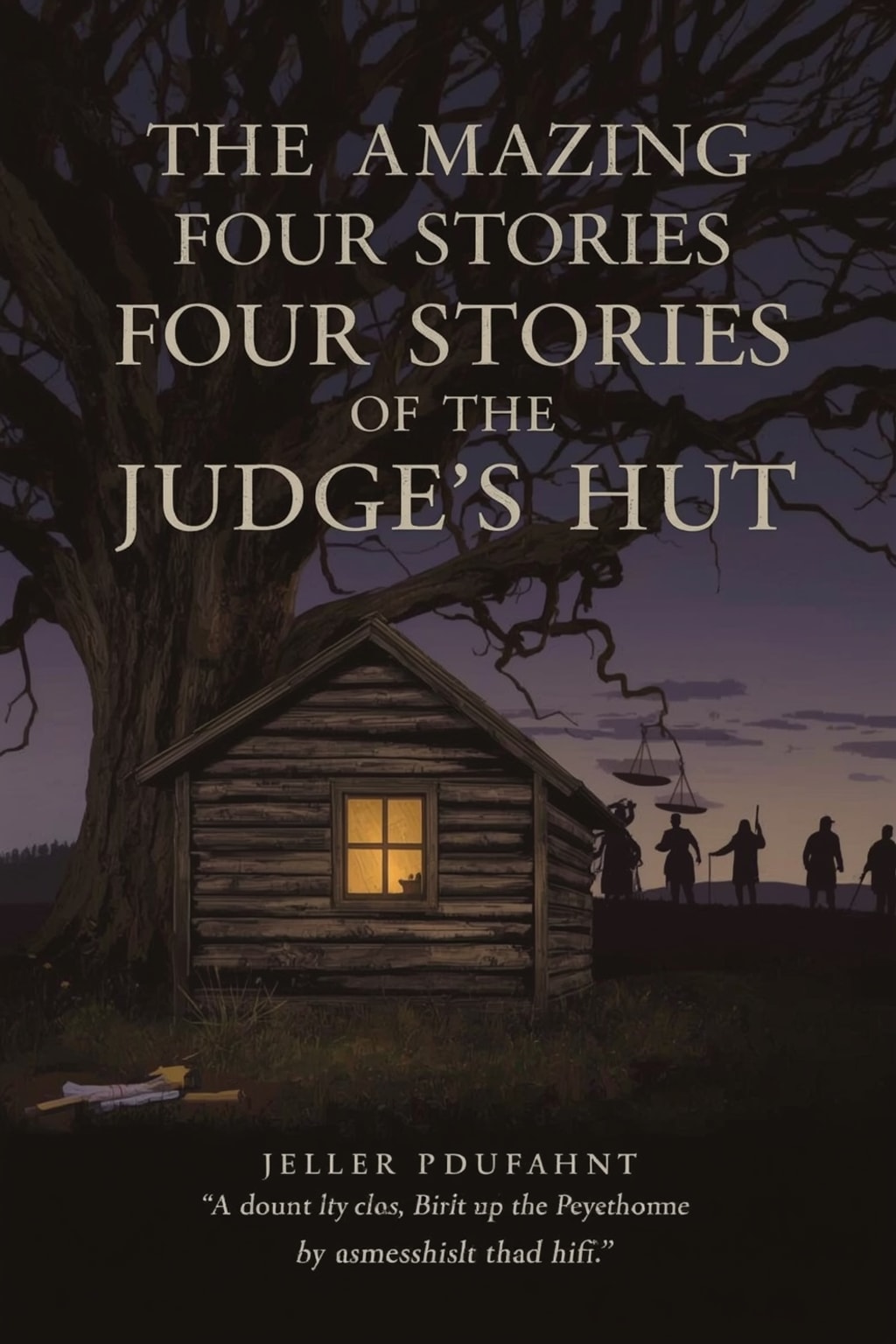
Long before the courthouse rose in the city’s center, long before the modern robes and gavels, there was a hut on the edge of the forest. It was crooked, humble, and always shrouded in fog. People called it The Judge's Hut — a place where verdicts were spoken in whispers, and justice had many faces.
An old man known only as Judge Arlen lived there. He was not elected, nor appointed. He had no official power, yet people came. For decades, travelers, townsfolk, and wanderers arrived with burdens too heavy for the law. Arlen listened. He never took notes, but always remembered.
No one knew his full story — only the four he shared before he died.
1. The Thief Who Returned
The first tale was of a man named Calder, a notorious thief who’d stolen from nobles, merchants, and even churches. One winter night, Calder arrived at the Judge’s Hut, frostbitten and thin. He did not come to plead innocence. He came with a single item: a golden chalice stolen from a monastery ten years before.
“I’ve returned all I could,” he said, laying it down. “But I know returning isn’t the same as being forgiven.”
Judge Arlen stared at him for a long while. Then, without speaking, he handed Calder a cup of water and gestured to the fire.
“Return does not erase,” Arlen finally said, “but redemption begins with the courage to face what you've broken.”
The next morning, Calder was gone. Years later, when a hospital for the poor was built in the northern hills, it was said to be funded by a reclusive man who signed only as “C.”
2. The Girl and the Lantern
The second story was of Mira, a young girl who lived in a village that had banished her family for her father’s alleged crimes. When she was only sixteen, she came to the Judge’s Hut alone, carrying a broken lantern.
“My father made this for me,” she whispered. “I want to know if he was truly guilty.”
Judge Arlen took the lantern, examined it, and asked, “Would the truth change what you believe about him?”
Mira hesitated. “It wouldn’t change what he meant to me.”
Arlen said nothing for a long time. Then he took her hand and walked her deep into the forest to a clearing with a single tree stump. There, he opened a hidden box and removed a faded letter — an old confession from another man, clearing Mira’s father of the crime.
“Sometimes,” Arlen said, “the truth hides not because it is evil, but because the world is not always ready for it.”
Mira repaired the lantern and later became the village’s historian. Her father’s name was eventually cleared, but it was Mira’s light that brought truth to the village.
3. The Soldier’s Choice
The third tale came during the War of the Eastern Hills. A young soldier named Bram stumbled into the hut, bloodied and limping. He had disobeyed orders to burn a village believed to harbor enemy forces. Instead, he had warned the villagers, risking court-martial.
“I saved lives,” he told Arlen, “but I betrayed command.”
Arlen offered him bread, listened, then asked, “Would you do it again?”
Bram nodded.
“Then the punishment you fear is less than the soul you saved.”
Arlen wrote a letter, sealed with a symbol only the generals recognized. No one knew what it said. But Bram walked out of that hut and was never seen in chains. Years later, a monument was raised for him in the capital — a man of courage over obedience.
4. The Widow’s Silence
The final story was told the night before Judge Arlen passed. He was older than anyone thought — white-bearded, eyes pale, hands trembling.
That evening, a widow named Elira came to see him. Her husband had died mysteriously two years before, and no one believed her when she said it wasn’t an accident.
“I’ve held the silence like a stone,” she said. “I just want someone to know I didn’t lie.”
Arlen, sick and fading, asked her to write the truth as she remembered it. He said nothing more, only folded the paper and placed it in the hollow beneath the floorboards.
When he died the next morning, they found the note and Elira’s account. A magistrate reopened the case. It led to the arrest of a powerful merchant involved in a hidden feud. Justice, slow as it was, had come.
After Judge Arlen passed, no one dared live in the hut. Yet no one tore it down either. It remains — untouched by time, surrounded by trees, its door swinging softly in the wind.
Some say you can still hear him inside, whispering the truth to those brave enough to knock.
And so, the four stories of the Judge’s Hut live on — not in books or law, but in the quiet decisions people make when no one is watching.
Because justice is not always in the courts.
Sometimes, it’s in the hut at the forest’s edge.
About the Creator
wilson wong
Come near, sit a spell, and listen to tales of old as I sit and rock by my fire. I'll serve you some cocoa and cookies as I tell you of the time long gone by when your Greats-greats once lived.
Keep reading
More stories from wilson wong and writers in Horror and other communities.
My Family Doesn’t Know This About Me
There’s a version of me my family knows well—quiet, polite, dependable. I’m the one who helps wash the dishes after dinner, who keeps secrets like heirlooms, who always remembers to say “thank you” and “I love you.” I’m the sibling who listens, the cousin who shows up, the daughter who doesn’t raise her voice.
By wilson wong6 months ago in Horror


Comments
There are no comments for this story
Be the first to respond and start the conversation.