
If Ed Gein Lived in 2025, Would He Still Be a Monster? by NWO Sparrow
A chilling question that challenges what we’ve learned about gender, repression, and mental illness in America. by NWO Sparrow

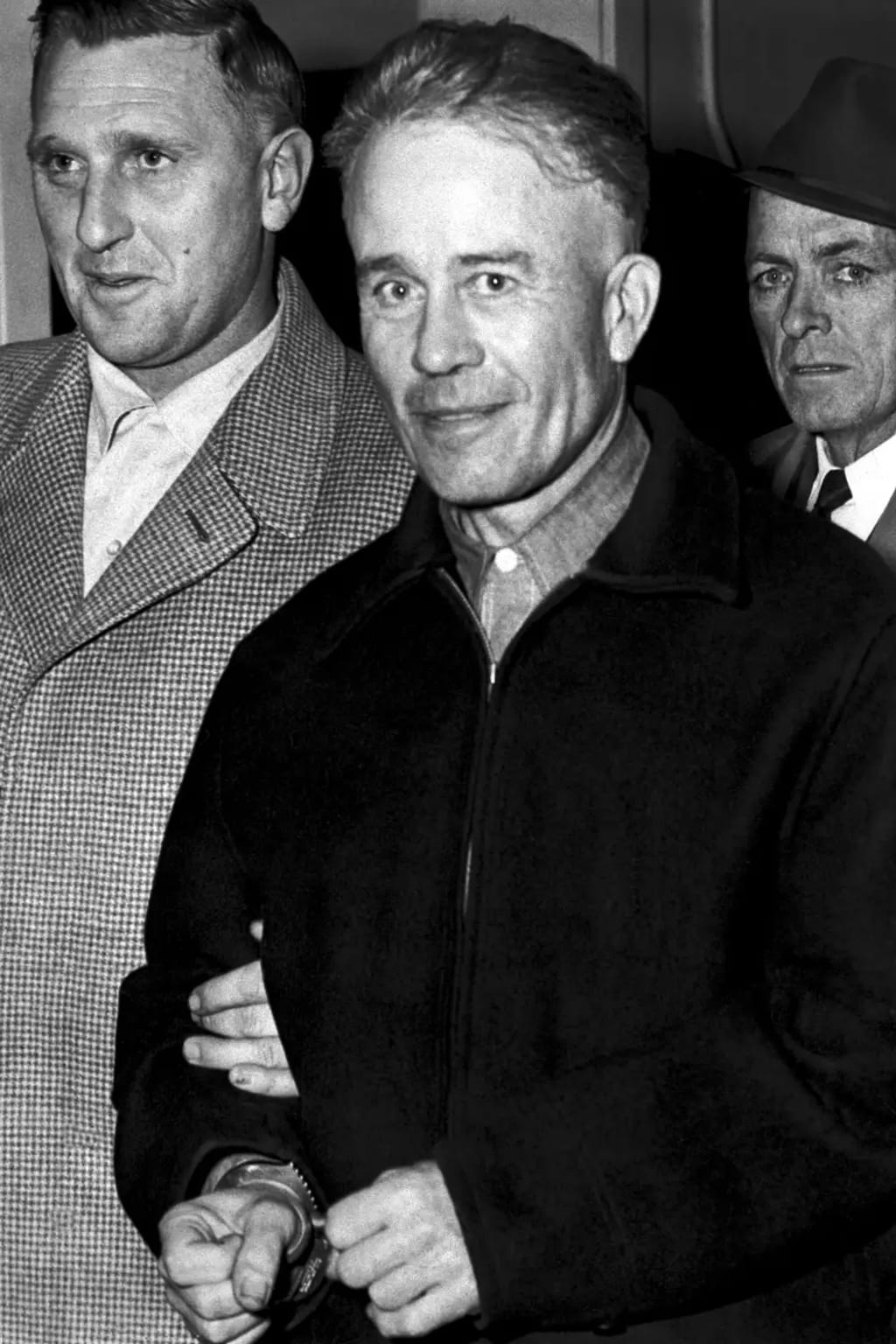
When the Closet Turns Into a Coffin: The Real Horror Behind Ed Gein and America’s Fear of Gender
Ryan Murphy has never been afraid to walk us through America’s darkest corridors. With his new Netflix series Monster: The Ed Gein Story, he’s about to pull us into the heartland of mid-century Wisconsin, where repression and religion built the kind of monster only small-town America could produce. The horror of Ed Gein’s story isn’t just in the grave-robbing, skin suits, or mutilated bodies found in that isolated farmhouse. It’s in the way America taught men like Gein to hate themselves long before they learned how to harm others.
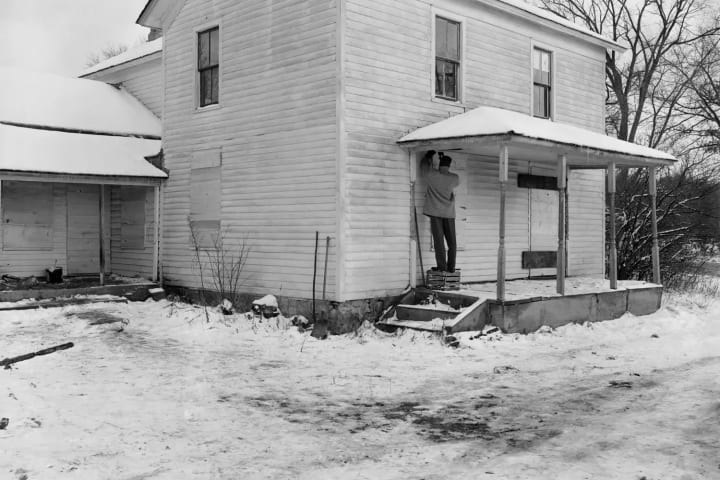
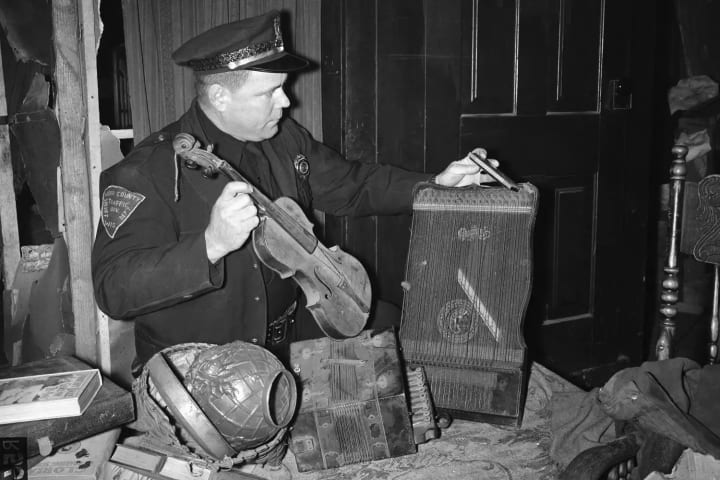
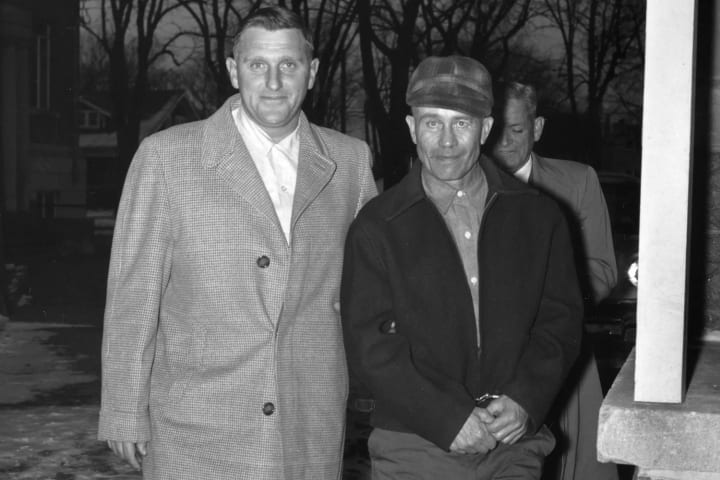
Ed Gein’s crimes have been mythologized for decades. When police entered his Plainfield home in November 1957, they didn’t just find evidence of murder. They found a museum of human remains. Furniture upholstered in human skin. Bowls made from skulls. Masks crafted from the faces of dead women. Among the most tragic victims were Mary Hogan, a tavern owner who disappeared in 1954, and Bernice Worden, whose body was found hanging in Gein’s shed like a slaughtered deer. Those discoveries stunned the country and inspired a lineage of cinematic horror icons from Psycho’s Norman Bates to The Texas Chainsaw Massacre’s Leatherface. Yet what’s often overlooked is how Ed Gein’s life before the crimes was already a slow, silent horror story shaped by fear, isolation, and repression.
Gein was born in 1906 in rural Wisconsin, raised by a father who drank and a mother who preached fire and damnation. Augusta Gein was the kind of woman who believed every woman, except herself, was sinful. She filled her son’s head with scripture about purity and corruption. To her, women represented temptation, filth, and the road to hell. That kind of doctrine doesn’t just breed obedience. It breeds guilt. It strangles self-understanding. It builds a cage inside a young mind and locks the door from the inside. Gein adored his mother, even worshiped her, but what she gave him wasn’t faith. It was fear disguised as salvation.
When Augusta died in 1945, Ed Gein’s last tether to the outside world snapped. He boarded up her bedroom, preserving it like a shrine, and spent the next decade slipping further into delusion. He lived alone, consumed by loneliness and psychosis. Reports and psychological analyses later suggested that Gein may have had gender identity confusion. He was fascinated with women’s bodies, not in a sexual way, but as if he was trying to understand or even inhabit them. In an era when the word “transgender” didn’t exist in the public lexicon, Gein’s internal conflict had no language, no outlet, and no safe place to land. His desire to wear human skin was grotesque, but it was also symbolic of his longing to be something society told him he could never be.
That doesn’t absolve him of his crimes. Ed Gein was a killer and a thief of human dignity. He desecrated graves and stole lives. But it’s worth understanding that his madness didn’t grow in a vacuum. It was fertilized by the shame of his time. In the 1950s, gender nonconformity was seen as perversion. Homosexuality was a crime. Crossdressing was an arrestable offense. Mental illness was not treated with compassion or science. It was punished with ridicule, fear, and institutional abuse. Gein was a man trapped inside an identity he couldn’t express and a religion that told him expression was sin. That pressure cooker of self-hatred eventually exploded into the most disturbing crimes America had ever seen.
If Ed Gein had lived in 2025, his story might have ended differently. He could have found words to describe himself. He might have had access to therapy, support groups, or even online communities that help people navigate gender identity safely. Instead, Gein lived in a world where being different meant being damned. The world he knew offered only two choices for someone like him: hide or be destroyed. That’s not an excuse for murder. It’s a diagnosis of what happens when a culture criminalizes humanity. What Ryan Murphy’s upcoming series did, honestly, is show how Gein’s violence was both an individual act and a collective failure. America made Ed Gein long before he made his victims. The small-town church sermons about sin. The fathers who confused masculinity with cruelty. The psychiatrists who labeled nontraditional gender expression as psychosis. All of it built a psychological maze Gein could never escape. Every skin mask he crafted, every corpse he dismembered, was a grotesque attempt to become something that was forbidden to him. It’s horrifying, yes, but it’s also deeply human in the most tragic way.
It’s easy to label Gein a monster because monsters let us off the hook. They let us believe evil is something that lives outside of us, something born in shadows, not in the systems we build. But the truth is that Ed Gein’s story is American to its core. It’s about repression and control. It’s about how a culture obsessed with moral purity can rot from the inside. When people are forced to hide who they are, they either implode or explode. Gein exploded, and the victims paid the ultimate price. The real horror behind Ed Gein isn’t just what he did. It’s what he represents. He’s a mirror showing what happens when society treats identity as sin. The 1950s were a decade of conformity and fear. The image of the perfect nuclear family masked an ocean of suffering underneath. Gein was the crack in that perfect facade, the reminder that beneath every clean-cut town and smiling church choir was someone breaking quietly in the dark.
Today, we’re still learning that lesson. We still see lawmakers trying to police gender and identity. We still hear sermons about sin that sound a lot like Augusta Gein’s old Bible readings. The difference is that now we have language. We have visibility. We can talk about mental health, trauma, and gender without being locked away. That progress doesn’t erase the horror of Ed Gein’s crimes, but it does remind us why stories like his matter. They warn us what happens when repression replaces understanding.
If Monster: The Ed Gein Story succeeds, it won’t be because of the blood or the crime scene re-creations. It’ll be because it dares to ask the question America still avoids. What turns a person into a monster , their nature, or the society that teaches them to hate who they are? Ed Gein is long dead, but the world that created him still exists in echoes. Every time we mock someone’s identity, every time we weaponize shame, we plant another seed of destruction.
Gein’s farmhouse has been torn down. The town of Plainfield wants to forget. But forgetting is the easy part. Remembering is what keeps us honest. The real horror isn’t what happened inside that house. The real horror is that America built it.

MONSTER: The Ed Gein Story | Official Trailer | Netflix
Related NWO Sparrow TV News and Topics
Follow my Vocal Media page for more TV news and Updates
About the Creator
NWO SPARROW
NWO Sparrow — The New Voice of NYC
I cover hip-hop, WWE & entertainment with an edge. Urban journalist repping the culture. Writing for Medium.com & Vocal, bringing raw stories, real voices & NYC energy to every headline.
Keep reading
More stories from NWO SPARROW and writers in Horror and other communities.
The Dyatlov Pass Incident
In late January 1959, a group of ten experienced hikers led by Igor Dyatlov, a twenty-three-year-old engineering student at the Ural Polytechnic Institute, set out on an expedition to reach Otorten, a mountain in the northern Ural range of the Soviet Union, undertaking a trek that was classified as Category III, the most difficult level of hiking expedition, but one that all members of the group were qualified to attempt based on their previous experience and physical fitness, and the group consisted of students and recent graduates who were skilled in winter hiking and outdoor survival, people who understood the dangers of the terrain and weather they would encounter and who had prepared accordingly with appropriate equipment and supplies. The expedition began normally with the group traveling by train and then truck to the last inhabited settlement before beginning their hike on January 27, and one member of the group, Yuri Yudin, turned back early due to illness, a decision that would save his life, while the remaining nine hikers continued northward toward their destination, making good progress through challenging terrain and camping each night in the snow, following their planned route and maintaining the schedule they had established before departure.
By The Curious Writer2 days ago in Horror



Comments
There are no comments for this story
Be the first to respond and start the conversation.