
I Found a Letter Hidden in My Wall. It Was From a Dead Woman
Some messages wait decades to be heard—especially the ones meant to stay buried

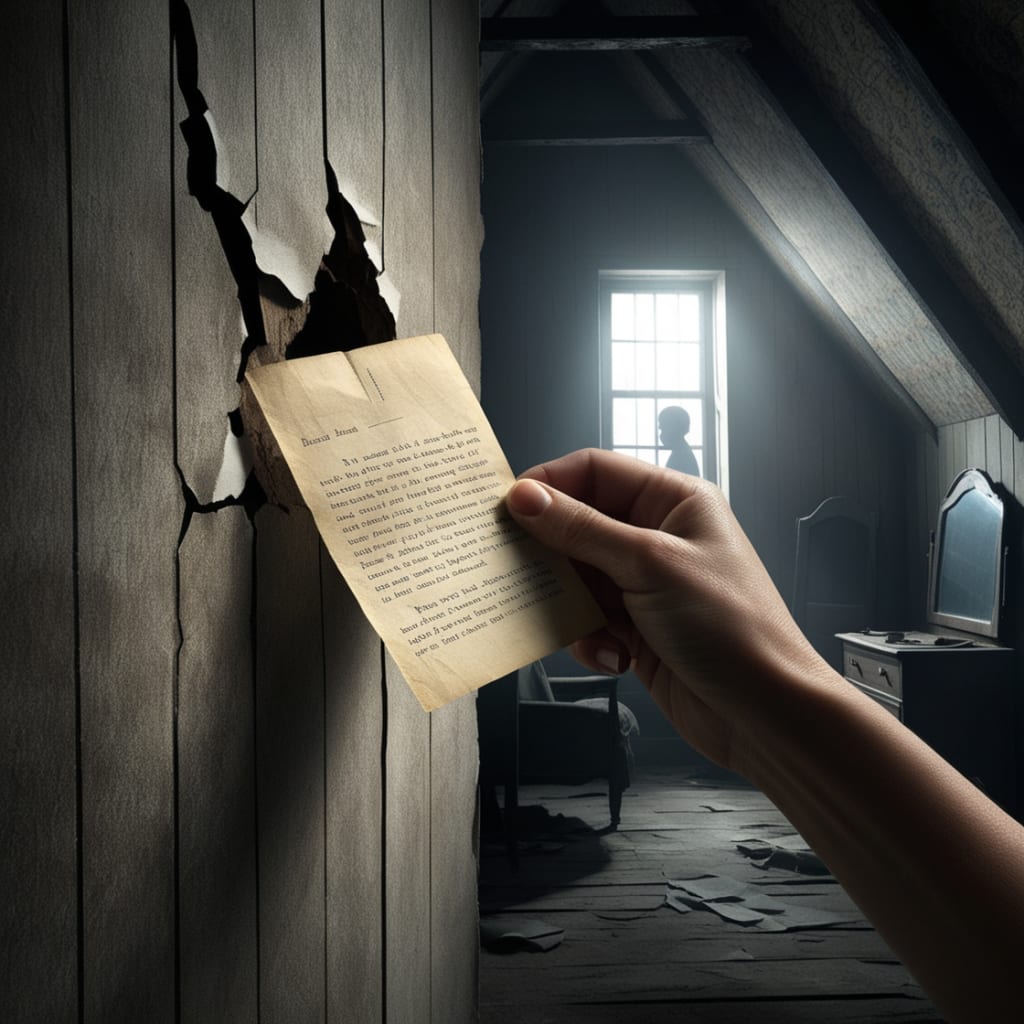
I never planned to tear down the wall in my grandmother’s house. The house, a weathered Victorian on the edge of town, had stood like a silent witness to generations of stories, arguments, holidays, and deaths. When she passed, the house was left to me—still full of her things, and her secrets.
It was during a stormy afternoon in early November that I first heard the hollow knock. I was trying to patch a leaky pipe in the upstairs bathroom when I tapped on the adjoining wall and felt something... off. The sound was different, like there was space behind it, not just insulation. A hollow pocket, hidden behind the plaster.
I didn’t think much of it at first. Old houses are full of quirks. But something about that sound nagged at me all night. A curiosity that grew until I found myself standing in that hallway again the next morning, crowbar in hand.
It took less than ten minutes to pry open a small section of the wall. Dust burst out like a breath held too long. Inside, between old studs, wrapped tightly in decaying linen, was a bundle. Not money. Not bones. But a letter—sealed in a brittle envelope with the name “Eleanor” in graceful, old-fashioned cursive.
I didn’t recognize the name.
The paper crinkled under my fingers as I slid the letter out. The ink was faded, but legible. As I read, the air around me seemed to still.
“Dearest Eleanor,
If you are reading this, then you’ve found what no one else ever could. I didn’t want to die in silence. I didn’t want my story to disappear behind polite smiles and locked doors. My name is Margaret Whitlow. I was the woman who lived in this house before the Connors bought it. And I need someone to know what happened here.
I was pregnant in the spring of 1948. My husband, Charles, didn’t want the child. He said we weren’t ready, that the war had left us broken people. But I saw the way he looked at the nurse who visited once a week. I knew. I knew what his heart truly wanted.
One night, we argued. Loudly. He pushed me. I fell. The pain in my stomach was blinding. The next morning, he told everyone I had lost the baby in my sleep. That I had tripped on the stairs. That I was fragile. He made sure no one questioned him. He was good at that.
But I remember the way he looked at me that night. Cold. Unafraid. Like he had finally erased the problem.
He buried something in the garden two days later. I never found the courage to dig it up. But I think... I think part of me is buried there too. If you care, if anyone does, please look. Don’t let him be remembered as a good man. He wasn’t.
I didn’t know how to escape. So I stayed. And then I faded.”
The letter ended there.
I sat in the hallway for what felt like hours, reading it over and over. My hands were shaking. My grandmother had never mentioned a Margaret Whitlow. The deed records later showed the house had been transferred in 1950 from a Charles Whitlow to a “new owner” in a private sale. Quiet. Hidden.
I went to the backyard the next morning. The garden, now overgrown, held decades of neglect. I started digging near the old oak tree. I didn’t expect to find anything.
But I did.
Not bones, thankfully. But a small, rusted tin box wrapped in oilcloth. Inside was a baby’s knitted sock, a gold ring with the initials "M.W.", and a newspaper clipping. A birth announcement. It read: “In loving memory of Margaret Whitlow, who died unexpectedly in her sleep.”
It was dated just a week after the letter’s date.
I sent the letter and the items to the local historical society. I didn’t want to keep them. But I also didn’t want Margaret’s story to die behind the walls she was forced to live within.
Now, I live in the house. I’ve kept the patch I tore open uncovered, like a scar. A reminder. Every so often, when the wind howls through the eaves, I imagine I hear a whisper in the hallway.
Not a ghost. Just a woman, finally heard.
About the Creator
The Character Who Isn’t on Payroll
Posted to r/nosleep I work at Disneyland. I won’t say my department, but I’m close enough to characters that I see schedules, handoffs, rotations—the boring, logistical side of “magic.” Which is why this has been driving me insane.
By V-Ink Stories3 days ago in Horror


Comments
There are no comments for this story
Be the first to respond and start the conversation.