
How Humanity Prevailed:
Chronicles of the Unforeseen Undead
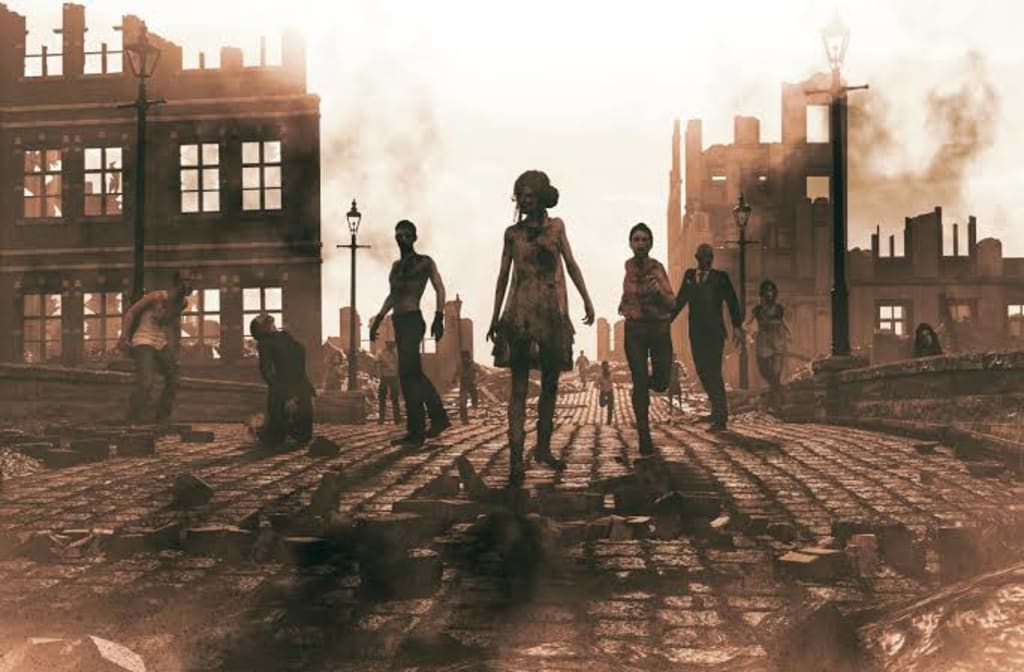
A zombie apocalypse is a hypothetical scenario often depicted in fiction, where a widespread outbreak of reanimated corpses, commonly referred to as "zombies," leads to a collapse of society and the struggle for survival among the remaining human population. This dystopian concept has gained immense popularity in books, movies, video games, and other forms of media, captivating audiences with its blend of horror, survival, and societal breakdown. While the notion of a zombie apocalypse remains fictional, it touches on real-world fears and explores themes of human nature, preparedness, and the consequences of societal collapse.
The origins of the modern zombie can be traced back to George A. Romero's 1968 film "Night of the Living Dead," which established the archetype of slow-moving, reanimated corpses hungry for human flesh. This film laid the foundation for the genre, influencing subsequent works such as "Dawn of the Dead" and "The Walking Dead" television series. The concept of zombies has since evolved to include various characteristics, such as different speeds, abilities, and causes of reanimation.
Survival Strategies:
In the event of a zombie apocalypse, survival becomes the ultimate goal. Experts suggest that preparedness, resource management, and a solid understanding of basic survival skills would be crucial. From securing shelter and clean water to foraging for food and defending against threats, individuals would need to adapt quickly and make difficult decisions to ensure their survival.
In many zombie apocalypse narratives, the outbreak is often caused by a virus or pathogen that turns humans into zombies upon infection. This serves as a catalyst for the chaos that ensues as the undead multiply and overtake cities and towns. Survivors must navigate a world where resources are scarce, infrastructure has crumbled, and danger lurks around every corner.
The human response to a zombie apocalypse varies widely in different portrayals. Some stories focus on the struggle for survival, as groups of survivors band together to find food, shelter, and safety from the relentless undead threat. These narratives often explore themes of resilience, resourcefulness, and the bonds formed in the face of adversity. Other stories delve into the darker aspects of human nature, showcasing how the breakdown of societal norms can lead to conflict, betrayal, and the rise of new power dynamics.
Preparedness and survival skills play a crucial role in the context of a zombie apocalypse. Characters often need to learn how to defend themselves against zombies, scavenge for supplies, and create makeshift weapons and fortifications. These aspects tap into primal fears and instincts while also serving as a vehicle for character development and growth.
Interestingly, the popularity of zombie apocalypse fiction may stem from its ability to reflect real-world concerns and anxieties. The collapse of society, breakdown of law and order, and the struggle for resources are themes that resonate with fears of natural disasters, pandemics, and societal instability. In a way, the zombie apocalypse acts as a metaphor for the unpredictable and chaotic nature of life, prompting audiences to consider their own preparedness and resilience.
Moreover, the zombie genre has expanded beyond traditional media into immersive experiences such as zombie-themed escape rooms, virtual reality games, and interactive events. These endeavors allow participants to step into the shoes of survivors and make decisions that affect the outcome of the story, creating a unique blend of entertainment and participation.
In conclusion, the concept of a zombie apocalypse has captured the imagination of audiences around the world, serving as a canvas for exploring a wide range of themes, from survival and human nature to societal collapse and preparedness. While the idea of reanimated corpses overrunning the world remains firmly rooted in fiction, its enduring popularity speaks to its ability to tap into primal fears and offer a compelling platform for storytelling and reflection. Whether as a source of entertainment, a thought experiment, or a reflection of societal anxieties, the zombie apocalypse continues to captivate and intrigue.
About the Creator
Keep reading
More stories from writers in Horror and other communities.
Killing him slowly
There’s an intruder in my house again. He stumbles through the door, wet carrier bags in hand. He’s bought me offerings. I show my appreciation, letting him caress my beautiful body. He wants to touch me. I rub myself against his legs. He sighs, dropping the bags. He can’t resist touching me. Running his hand slowly down my spine, I arch my back towards his caress, let out a low purr. It’s what we both need.
By N J Delmasa day ago in Horror
Marine dark waves: The consequences of a dark bottom
The seafloor loses light nearly overnight, and coastal water can occasionally change from clear to hazy. Scientists can evaluate the timing, duration, and intensity of these underwater blackouts across regions thanks to a novel surveillance system. These blackouts can swiftly damage kelp and seagrass.
By Francis Dami4 days ago in Horror



Comments
There are no comments for this story
Be the first to respond and start the conversation.