
Halloween: From Samhain to Trunk or Treat
How the Spooky Holiday Evolved Over Time

Halloween is a time for spooky fun but also some serious questions. Why do we carve jack-o-lanterns? What is the history of trick or treat? How did Samhain become Halloween? And what are some of the best Halloween events near me?
The origins of Halloween can be traced back to the ancient Celtic festival of Samhain, which marked the end of the harvest season and the beginning of the dark half of the year. The Celts believed that on this night, the boundary between the worlds of the living and the dead became blurred, and spirits could cross over. To ward off these ghosts, they lit bonfires and wore costumes made of animal skins.
When the Romans conquered the Celtic lands, they incorporated some of their traditions into their festivals. One of these was Feralia, a day in late October when the Romans commemorated the passing of the dead. Another was Pomona, a day dedicated to the goddess of fruits and gardens, whose symbol was an apple. It may explain why we bob for apples on Halloween.
As Christianity spread, it assimilated some of the pagan customs as well. In the 8th century, Pope Gregory III designated November 1 as All Saints’ Day, a time to honor all the saints and martyrs. The evening before was known as All Hallows’ Eve and later Halloween. On this night, people would dress up as saints, angels, or devils and go door to door, asking for food or money in exchange for prayers or songs. This practice evolved into what we call trick or treat today.
Halloween came to America with the waves of European immigrants, especially the Irish who fled the potato famine in the 19th century. They brought with them their tradition of carving turnips or potatoes into lanterns to represent the souls of the dead. However, they soon found that pumpkins were more abundant and easier to carve than turnips, and thus the jack-o-lantern was born.
Today, Halloween is one of the most popular holidays in the US and around the world. It is a time to celebrate creativity, imagination, and community. People of all ages dress up in costumes, decorate their homes with scary props, watch horror movies, tell Halloween jokes, and enjoy Halloween candy. Some also attend Halloween events near them, such as haunted houses, corn mazes, ghost tours, or trunk or treat.
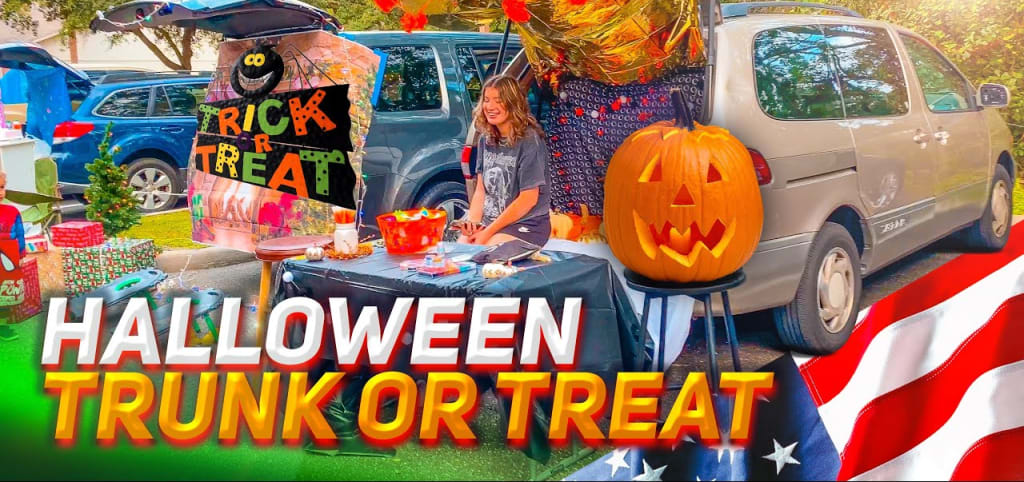
Trunk or treat is a relatively new phenomenon that involves people decorating their cars with Halloween themes and parking them in a designated area. Children can then go from car to car collecting treats in a safe and fun environment. Trunk or treat is especially popular in rural areas or places where houses are far apart.
If you are looking for some Halloween events near you, you can use Bing to search for “Halloween events near me” or “trunk or treat near me.” You will find a list of local options that suit your preferences and budget. You can also check out some online resources that offer Halloween trivia, Halloween cupcake recipes, happy Halloween images, and more.
Halloween is a holiday that has a rich and fascinating history. It is also a time to have fun and express yourself. Whether you prefer to stay at home or go out, there is something for everyone on this special night. Happy Halloween! 🎃
How did the trick-or-treat become popular?
Trick or treat became popular as a result of several historical and cultural influences. According to the web search results, here are some of the main factors that contributed to its popularity:
The ancient Celtic festival of Samhain involved people dressing up in animal skins and offering food to the spirits of the dead on the night of October 31.
The Christian holidays of All Saints’ Day and All Souls’ Day incorporated some of the pagan customs of Samhain and involved people going door to door asking for food or money in exchange for prayers or songs.
The medieval practice of souling was a form of begging for soul cakes (pastries) on November 2, the day of the dead.
The Scottish and Irish tradition of guiding involved young people dressing up in costumes and performing tricks or entertainment for treats such as fruit, nuts, or coins.
The immigration of Europeans, especially the Irish, to America in the 19th and 20th centuries brought their Halloween customs with them.
The suburbanization of America after World War II made it easier and safer for children to go from house to house collecting candy.
The commercialization and mass production of Halloween costumes and candy in the 20th century increased the appeal and accessibility of the holiday.
These factors combined to create a unique and widespread Halloween tradition that is enjoyed by millions of people every year. Trick or treat is a fun way to celebrate creativity, community and candy. Happy Halloween! 🎃
About the Creator
Ayaz Salar
With over 12 years of robust experience in the digital marketing landscape, I am a seasoned Digital Marketer specializing in SEO, PPC, and content creation.
Keep reading
More stories from Ayaz Salar and writers in Horror and other communities.
12 days of Christmas
The 12 Days of Christmas is a classic carol that many people enjoy singing during the holiday season. But did you know that you can also use it as a source of inspiration for gift-giving? Whether you want to surprise your loved ones with a themed present each day or pick one verse that suits them best, here are some creative ideas for 12 Days of Christmas gifts that will make them feel merry and bright.
By Ayaz Salar2 years ago in Beat
"Scream 7" (2026): Running out of Fresh Screams
This is the seventh time we’ve had a Ghostface crisis. Scream 7 is the latest edition of the Scream franchise. Sydney Prescott and her family are under attack by another anonymous killer dressed in a Ghostface costume. While having issues with her daughter, Tatum, they run from the bloody murders, trying to determine who is behind it all.
By Marielle Sabbag5 days ago in Horror
The Bridge That Whispers
In bridge no one used anymore. It curved gently over a narrow river, its surface cracked and moss-covered, as if time itself had tried to bury it. Locals crossed the modern bridge downstream, leaving the old one to the fog, the wind, and the stories. Tourists were told the bridge was unsafe. Children were told it was haunted. Elena heard about it on her first night in Greyhaven. She had come from the city to catalog historical structures for a regional preservation project. Greyhaven was her last stop—quiet, remote, and perfect for work. The innkeeper, a thin man with pale eyes, hesitated when she mentioned the old bridge. “Don’t go there after sunset,” he said. “It talks.” Elena laughed politely. She had spent years documenting ruins, castles, and forgotten churches. Every village had a ghost story to protect a pile of stones. Still, she noticed how the innkeeper’s hand trembled when he handed her the room key. The next morning, Elena walked to the bridge with her camera and notebook. In daylight, it looked harmless—beautiful, even. Wildflowers grew between the stones, and the river below whispered softly. She took photographs, measured the arch, and noted the erosion. There were strange carvings on the sides: not words, but twisted symbols, worn almost smooth. That night, she dreamed of water. In her dream, she stood on the bridge in thick fog. The river beneath her was silent, black as ink. From the stones under her feet came a low sound, like breath passing through teeth. Come back. She woke suddenly, heart racing. Outside her window, the fog was rolling in from the hills. Elena told herself it was only a dream caused by fatigue. But the next night, it happened again. This time, the whisper was clearer. Come back to us. On the third day, she asked a woman in the village café about the bridge. The woman stopped stirring her coffee. “They drowned there,” she said quietly. “Long ago. When the river flooded, the bridge broke in the middle. A wedding party was crossing. Carriage, horses, music… all gone. People say the stones remember the weight of them.” Elena felt a chill run down her spine. “That’s just a story, right?” The woman looked up. “Stories begin somewhere.” That evening, driven by curiosity and something darker—something pulling at her—Elena returned to the bridge at dusk. Fog wrapped around the riverbanks like a living thing. The modern bridge lights glowed far away, safe and distant. She stepped onto the old stones. The air felt colder in the center of the bridge. Her breath became visible. Then she heard it: soft footsteps behind her. She turned. No one was there. The river below began to make a different sound—not water, but voices. Murmuring, layered and slow. Stay. Elena backed away, but her foot caught on a broken stone. She fell to her knees. The carvings along the bridge seemed deeper now, sharper. They formed shapes—faces, frozen in stone, mouths open in endless screams. Hands rose from the mist. They were pale, dripping, reaching for her ankles. Elena screamed and scrambled backward, tearing her coat on the rough stone. One cold hand brushed her skin, and in that moment, she saw it: a flash of the past. Horses panicking. A carriage tipping. People crying out as dark water swallowed them. And then silence. She ran. By the time she reached the inn, her legs were shaking so badly she could barely stand. The innkeeper saw her face and said nothing—only locked the door behind her. She left Greyhaven the next morning without finishing her work. Months later, her report mentioned “structural instability” and “severe erosion.” It said nothing about whispers or hands or memories trapped in stone. But sometimes, when Elena stands on bridges in other cities—busy ones filled with traffic and noise—she feels a vibration under her feet, like a distant echo. And in the sound of rushing water, she hears a familiar voice: Come back.
By Iazaz hussain4 days ago in Horror
Who is your "Person"?
It's important to recognize that you cannot go through life as easily on your own. My name is Elizabeth and I'm a survivor of child abuse and horrific trauma. Healing from trauma is not a quick fix and recognizing that it will take time, is part of the struggle.
By Elizabeth Woods4 days ago in Psyche



Comments
There are no comments for this story
Be the first to respond and start the conversation.