
Gunkanjima: The Ghost Island of Japan’s Industrial Nightmare
From Forced Labor to Abandoned Ruins — The Haunting Legacy of Hashima Island’s Forgotten Souls
Hashima Island: Haunting Legacy of Industry and Suffering
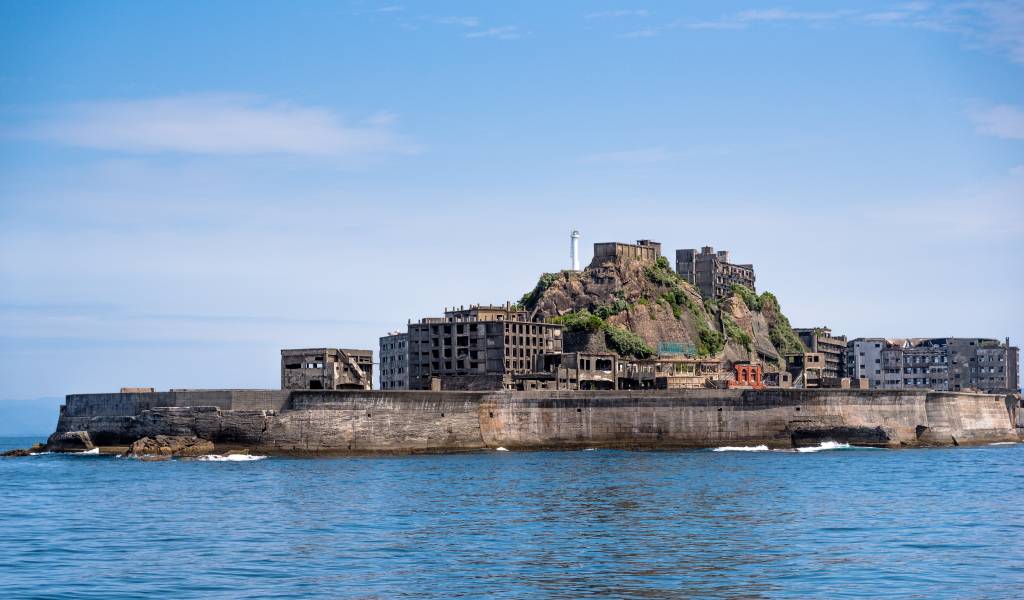
Off the coast of Nagasaki, Japan, lies Hashima Island—locally known as Gunkanjima (Battleship Island) because of its warship profile—is a crumbling relic of Japan's industrial past and haunting reminder of human subjugation. Once the most populated place on earth, this erstwhile island town is now a ghostly labyrinth of crumbling concrete, veiled in tales of suffering and phantom desolation.
The Fall and Rise of an Industrial Colossus
Discovered in the late 19th century, Hashima's immense underwater coal deposits attracted Mitsubishi, which purchased the island in 1890. In the early 20th century, the company transformed the rocky outcrop into a productive mining colony. Their kin and employees were housed in Japan's first reinforced concrete apartment towers—a typhoon-resistant wonder of technology but better known for the cramped, prison-like conditions that they imposed. In 1959, during its peak population, over 5,259 people were dwelling in a mere 6.3 hectares and an incredible 83,500 persons per square kilometer in population density.
Hashima life was tough. Laborers toiled in subterranean tunnels as deep as 1,000 meters below the ocean floor, with 95% humidity, air filled with coal dust, and temperatures well over 30°C (86°F). In towns, residents walked through narrow back streets that were dubbed "the stairway to hell," a grade of climbing that reduced many to shortness of breath. With earnings higher than Tokyo company executives, island prosperity masked the reality: Mitsubishi forcibly requisitioned Korean and Chinese laborers during World War II and subjected them to abysmal conditions. Beatings, starvation, and deaths by accident or exhaustion, survivors attest. Death tolls ranging from 137 to 1,300 are estimated.
As the 1970s witnessed Japan's shift to petroleum, Hashima's coal mines abruptly closed. In April 1974, residents fled, leaving behind possessions—cups on tables, bicycles in rusty corridors—as if time stood still. The island became a ghost town, buildings slowly devoured by salt spray and typhoons.
Echoes of the Past: Ghosts of Gunkanjima
Hashima's ghostly remains and tragic history have fueled rumors of paranormal activity. Visitors describe a stifling atmosphere, with whispers emanating from empty corridors and dark figures glimpsed through shattered windows. Tourists and workers alike report unsettling experiences:
The Lingering Souls of Laborers
Survivors like Suh Jung-woo, a Korean conscript, recalled coworkers perishing in mine disasters or leaping off seawalls to escape torture. Their troubled spirits are reported haunting the tunnels and apartment buildings. Documentary film crews and journalists who traveled to the island reported a pervasive sense of mourning, with one adding, "The whole place is just death and decay".
The Phantom Schoolchildren
The old schoolhouse on the island, its chalkboards still scrawled with teachers' notes, is a hub for ghost activity. Children's laughter or footsteps in vacant rooms are reported by locals, echoes of a community ripped from existence in a single night.
The "Stairway to Hell"
The infamous staircase, the lifeblood of the miners, now a haunt for ghost stories. Climbers feel sudden gusts of cold air, breathlessness, and the eerie pull of being pulled down—horrible reminder of the daily struggle of the miners.
The Unseen Residents
Explorers have left behind untouched personal items: family photos, toys, and even wall scuffs marking children's development. These items, untouched for decades, contribute to the island's sense of abandonment, as if former inhabitants never actually left.
A Contested Legacy
Hashima's UNESCO World Heritage designation in 2015 ignited indignation. Although Japan acknowledged forced labor in its bid, the government was accused of downplaying wartime atrocities. South Korea condemned the move as whitewashing history. Day trips currently avoid safer parts of the island but 95% of it is still off-limits, its crumbling buildings too hazardous—a testament to Japan's unfulfilled past.
Conclusion: Between Ruin and Remembrance
Hashima Island is a paradox: an ode to human ingenuity and a tombstone to the lives that have been sacrificed in the name of progress. Its spooky reputation is not derived from mystical legend but rather from the very real struggle branded onto its concrete facades. As tourism and time erode its physical presence, Hashima remains a haunting testament to the cost of industrialization—and the ghosts, either literal or metaphorical, that refuse to rest.
For the courageous enough to venture there, the island offers no tidy solutions, only suggestions of the past that Japan—and the world—must confront.
About the Creator
Kyrol Mojikal
"Believe in the magic within you, for you are extraordinary."
Keep reading
More stories from Kyrol Mojikal and writers in Horror and other communities.
Where the Forest Whispers: The Cursed History and Haunted Legends of Freetown State Forest
The Ghostly Phenomena and Haunted History of Freetown State Forest Based in Massachusetts' infamous Bridgewater Triangle—200 square miles of paranormal ferment—Freetown State Forest has become famous as one of America's hottest haunts. Its 5,441 acres of dense forests, rocky ledges, and bog are infested with centuries of tragedy, crime, and ghostly history, interwoven into an unspeakably grim tapestry of darkness still causing researchers and visitors to pause in fear to this day.
By Kyrol Mojikal10 months ago in Horror
One to See, One to Speak, One to Listen
Contains gore and horror some readers may find disturbing. Rated 14+ Author's Intro: This story is meant to revive the Gothic literature so famously crafted by one of my favourite writer's, Edgar Allen Poe, and as such, the language and style is deliberately antiquated. Thank you for reading my all time favourite work of horror - Les
By Call Me Les19 days ago in Horror



Comments
There are no comments for this story
Be the first to respond and start the conversation.