
FULL MOON NIGHT
Does full moon effect in human behaviour

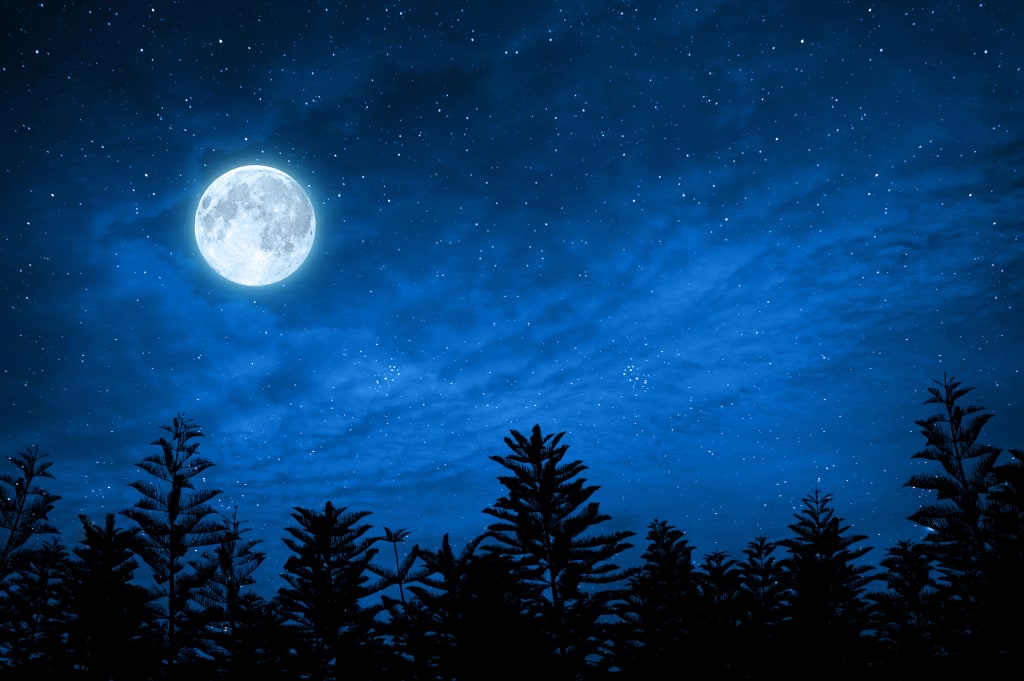
The belief that the moon has the ability to make men mad has endured for many centuries. Mankind's belief in the power of the moon is so prevalent that the word "lunatic" actually originated from the Latin word "lunaticus," which translates to "moonstruck" or "of the moon." Greek philosophers like Aristotle also suggested that the human brain, which floats inside the skull, is very much like the tides of open waters, making the organ susceptible to the gravitational pull of the moon.
The myths surrounding the moon's power grew more popular during the Middle Ages. At that time, there was a widespread belief that some people were cursed to turn into werewolves whenever there was a full moon. Even today, many continue to attribute the occurrence of strange things at night to the presence or absence of the moon in the sky. If you ask around, many people would still say that the full moon is responsible for unusual and sometimes violent behaviors, and it is even blamed for occurrences such as accidents, fights, homicides, and animal attacks.
In fact, back in 2007, the police force in some areas of the United Kingdom took the mystical powers of the moon so seriously that more officers were assigned to roam the streets at night in anticipation of increasing crime rates during a full moon. Considering that many cultures around the world believe in the effect the moon has on humans, we can't help but wonder if there is some kernel of truth in this myth.
Does a full moon affect human behavior? Numerous investigations have been conducted to discover whether the legends about the moon are somewhat true. So far, scientists have found no conclusive answer to this mystery. Most of them say that there is no correlation between the presence of a full moon and people's behavior. However, some studies here and there seem to support the legends, but most experts continue to insist that the alleged magical effects of the full moon on human behavior are non-existent.
Aside from Aristotle, modern experts and researchers also suggest that the full moon affects the human body because of the moon's power to influence water. Since our bodies are made up of mostly water, our dispositions may be altered through the disruption of the water molecules that reside in our brain and nervous system. However, the problem with this theory is that astronomers and physicists have agreed that the gravitational pull of the moon has an insignificant effect on our brain function. Even the lay astronomer George A. Bell of the University of California went so far as to say that a tiny mosquito resting on a person's arm has a stronger gravitational effect compared to that of the moon. Moreover, even if the gravitational pull of the moon could influence water, this power is not significant regardless of whether the moon is shining brightly or is not visible in the sky.
Of course, these facts are not enough to convince firm believers in the powers of the moon. In 1985, American psychologists James Rotton and Ivan Kelly conducted a meta-analysis of the findings of more than 30 studies on the lunar effect, entitled "Much Ado About the Full Moon." Their research was published in the Psychological Bulletin, and they declared that the presence of the full moon had nothing to do with the occurrence of strange and violent events such as crime, suicides, and psychological issues. They even went so far as to say that further study on the full moon effect was no longer necessary. This conclusion did not sit well with some of the more persistent believers in the moon's behavioral effect, and it most certainly did not stop further research on the subject matter.
In fact, a 2013 study found that subjects who slept in a laboratory rated the quality of their rest during the full moon as 15% lower, even when they could not detect the moon's extra light. The subjects also reported having a harder time falling asleep when the full moon was present. However, the researchers did not attribute the results of the study to the gravitational effect of the moon, but their evidence was enough for them to suggest that the lunar rhythm may play a role in the modulation of human sleep structure. It must be noted, though, that the authors themselves were careful not to jump to conclusions and avoided answering the question of whether the moon can influence other aspects of human behavior and psychology.
If scientific experts can't establish a clear correlation between the activities of the moon and human behavior, what could be the reason behind people's association with the lunar effect? According to psychologists Loren and Jean Cap of the University of Wisconsin-Madison, this perceived association may be imagined rather than real. They called people's tendency to believe in the lunar effect an "illusory correlation." This means that people tend to perceive a phenomenon where there isn't one. We interpret the events that we witness depending on our preconceptions. So, if you know about the lunar effect and believe in its validity, chances are that when something unusual happens during a full moon, you'll take notice and note it. But when nothing happens during a full moon, you may hardly remember this non-event, as our brains are selective in what we recall. We tend to remember the bizarre events we perceive during a full moon and connect them even more. In reality, this is just an illusory correlation.
As for how the notion that the full moon is connected with many bizarre events came to be, psychiatrist T.R. Race of Emory University proposed that the lunar effect may have once been a valid phenomenon at some point in our distant past, but not in the way we might expect. According to Race, before the advent of outdoor lighting and modern roofs, people relied heavily on the bright light of the moon. For those who lived outside, the full moon's brightness may have made it difficult for them to fall asleep. For those suffering from serious mental disorders, being deprived of sleep may have exacerbated their conditions, triggering aberrant behavior and aggressive tendencies. Observers seeing these mentally ailing individuals act in such a manner during a full moon may have imagined a connection between the two, and this coincidental association transformed into a long-standing myth, still believed by many today.
Race suggests that this makes the long-held belief in the full moon's influence on human behavior a cultural fossil that has been passed down from one generation to the next. Considering that we live in a world where science and logic supposedly govern our daily lives, it's a wonder why the legend of the moon's numerous powers remains so widespread today. We have the media to thank for much of it. Our fascination with the supernatural and our faith in superstitions are perpetuated by a continuous stream of Hollywood horror movies that depict scary occurrences against the backdrop of a bright full moon in the evening sky. Aside from the media, we also have ourselves to blame for choosing to continue to believe in this myth, even when evidence to the contrary has been revealed. After all, some of us would rather blame forces beyond our control for other people's unpleasant actions than believe that there is something inherently wrong with them. Should the power of the moon prove to be true later on, well, let's just be thankful that we don't rely much on the light of the full moon nowadays.
THANK YOU SO MUCH FOR READING!
About the Creator
Richchik Bardhan
A MBBS student,Love to read and write about science facts and sometimes sci-fic too because Some sci-fic can later be proven into facts someday.....
Reader insights
Nice work
Very well written. Keep up the good work!
Top insights
Easy to read and follow
Well-structured & engaging content
On-point and relevant
Writing reflected the title & theme
Keep reading
More stories from Richchik Bardhan and writers in Horror and other communities.
A CURSED DOLL
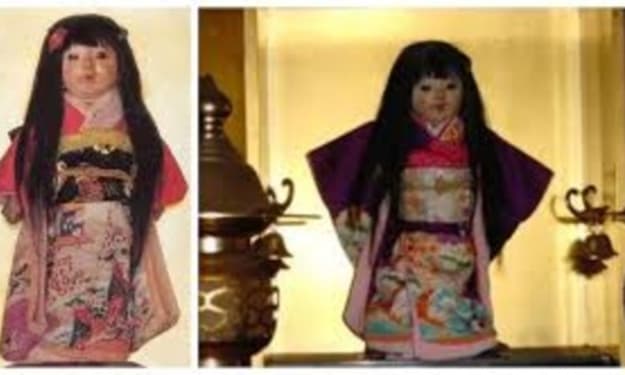
I don’t really have any phobias or debilitating fears, but there are things in this world I’m not really comfortable with. For example, sharks while I'm swimming in the ocean, scary movies, and dolls. Yes, dolls creep me out. I know that most people, especially kids, think of dolls as immensely lovable and huggable playthings. They're meant to comfort and entertain us, not scare the living bejeezus out of us! But personally, I think of them as mostly creepy and sometimes cursed. This is especially true for a particularly pee-inducing doll from Japan called the Okiku doll.
By Richchik Bardhanabout a year ago in Horror
The Screams Beneath the Floorboards
Old houses make noise. They creak, groan, and sigh as if remembering things they were never meant to keep. That’s what I told myself when I first heard it—a faint sound beneath my feet, barely louder than the wind slipping through cracked windows.
By David John5 days ago in Horror
The Devil's Cut
“Comrade, finally you’re awake.” The voice was smooth, sensual. A flickering incandescent bar was all that lit the white, sterile room. All Vladimir remembered was everything going black. He tried to move his arms and found them strapped to the gurney.
By Matthew J. Fromm6 days ago in Fiction


Comments (2)
I appreciate your work
Well written