
Exploding Heads and Psychic Terror: Cronenberg’s Scanners Still Stuns Today
In the expansive landscape of science fiction and horror, some films merely entertain, while others leave a mark on your psyche.


A Cult Classic That Defies Time
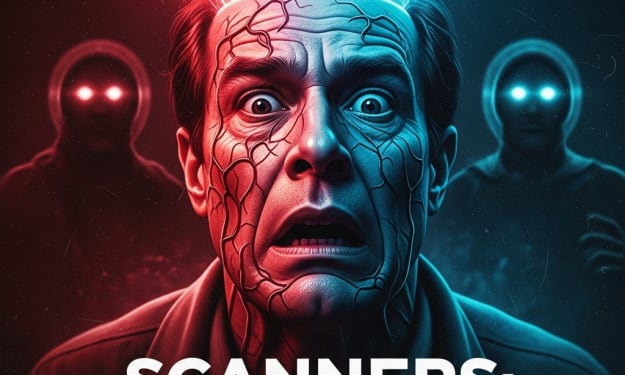
In the expansive landscape of science fiction and horror, some films merely entertain, while others leave a mark on your psyche. Scanners, released in 1981 and directed by Canadian visionary David Cronenberg, firmly belongs to the latter. Known for its shocking head-explosion scene and disturbing psychological themes, this film didn't just captivate audiences—it seared itself into genre history. While many horror films from the '80s have become campy relics of their time, Scanners continues to stun, both visually and intellectually.
What makes Scanners endure is not just the gore, although that certainly helps. It's Cronenberg’s eerie ability to make psychic terror feel so palpably real. You’re not just watching characters on screen—you’re immersed in their trauma, their pain, their struggle with identity and control. The film operates on several levels: a body horror spectacle, a corporate thriller, and a philosophical inquiry into human consciousness.
This movie wasn’t just a product of its time—it was ahead of it. It echoed Cold War anxieties, pharmaceutical distrust, and existential dread decades before these became pop culture staples. It also served as a precursor to Cronenberg's later, more refined nightmares, like The Fly and Videodrome. But make no mistake: Scanners is its own beast, one that grabs you by the brain and doesn’t let go.
The Initial Impact of Scanners in 1981
When Scanners hit theaters in 1981, audiences were not prepared. Sure, sci-fi and horror fans expected something strange from Cronenberg, who had already made a name with films like Shivers and Rabid. But this? This was something else. The now-legendary head explosion scene (which we’ll dive into soon) hit like a cinematic sucker punch. People were shocked, disturbed, and, frankly, fascinated. This wasn’t just gore for gore’s sake—it was a shocking metaphorical punch representing the chaos of mental power run amok.
Critically, reactions were mixed. Some praised the film's inventiveness and its daring visual effects. Others dismissed it for its perceived stilted acting or uneven pacing. But here's the thing: despite the divisive reviews, Scanners found an audience. It grossed over $14 million on a budget of just $4 million—a tidy profit for a strange little Canadian sci-fi horror flick.
In the years that followed, the film's cult status grew. Midnight movie screenings, VHS rentals, and horror magazine retrospectives all helped build the legend. Today, Scanners is considered one of Cronenberg's most iconic works, often cited alongside The Fly and Videodrome as defining pieces of his unique cinematic voice.
Cronenberg’s Bold Vision and Signature Style
David Cronenberg isn’t your average horror director. While others were content with haunted houses and masked killers, Cronenberg tapped into something deeper—the body as battleground, the mind as a minefield. Scanners is one of his most potent early expressions of that vision. The film explores what happens when the human brain becomes both weapon and war zone, and it's done in a way that’s deeply unsettling and weirdly beautiful.
His trademark themes—mutation, evolution, loss of bodily autonomy—are all present here. But Scanners also hints at larger societal issues: surveillance, corporate manipulation, the dehumanizing effects of technology. It's not just a story about psychic powers; it's a warning about what happens when power goes unchecked, both literally and metaphorically.
Visually, Cronenberg uses sterile environments, claustrophobic framing, and a muted color palette to great effect. The world of Scanners feels cold, distant, and clinical—like a laboratory experiment gone wrong. Add to that his use of practical effects, minimal soundtrack cues, and long, uncomfortable silences, and you've got a film that forces you to confront every moment, every twitch, every psychic rupture.
If you’re watching Scanners for the first time in 2025, you might be surprised by how modern it feels. The tech is retro, sure, and the dialogue can be a bit robotic. But the ideas? The paranoia? The fear of what’s inside your own head? Those are more relevant now than ever.
A Deep Dive Into the Plot
At its core, Scanners tells the story of Cameron Vale, a man plagued by uncontrollable telepathic abilities. When we first meet him, he's a disheveled outcast, tormented by the voices of others in his mind. Soon, he's discovered by a shadowy corporation, ConSec, which is researching psychic phenomena and seeks to use his powers against a more dangerous Scanner—Darryl Revok, the film’s menacing villain.
From there, the narrative unfolds like a cerebral thriller. Vale is trained to control his abilities and sent out to uncover Revok’s secret network of rogue Scanners. What he finds is a dark conspiracy involving mind control drugs, secret experiments, and a plot to create a new psychic elite. It's part detective story, part psychological horror, and all Cronenberg.
The film’s structure is deceptively simple, but the tension builds methodically. There’s no reliance on cheap jump scares. Instead, Cronenberg uses atmosphere, slow pacing, and surreal confrontations to keep viewers on edge. As Vale delves deeper, the stakes become not just personal but existential—who controls whom, and what defines sanity in a world of mind invasions?
By the climax, where Vale and Revok face off in a telepathic duel for dominance, the film has layered on questions of ethics, identity, and human evolution. It’s not just a battle of wills—it’s a fight for the future of mankind.
Characters That Drive the Narrative
The success of Scanners doesn’t solely rest on its special effects or its director’s vision—it thrives because of its characters. Each one serves a crucial function in unraveling the complex themes of identity, control, and power. Let’s look at the two central figures who anchor this psychic showdown.
Cameron Vale: The Reluctant Hero
Cameron Vale is one of the most unconventional protagonists in horror. Played by Stephen Lack, he starts off more victim than hero—a drifter, homeless and barely functioning due to the overwhelming noise in his head. He’s not a charming action star or a witty underdog. He’s broken, raw, and weirdly blank, which makes him the perfect vessel for the viewer to project onto.
As the story progresses, Vale transforms. He learns to harness his telepathic power, gains confidence, and begins to unravel the mystery of his own past. His evolution mirrors the narrative’s deeper themes: awakening to hidden truths, asserting control over chaos, and discovering one’s place in a world that wants to exploit your very mind.
Stephen Lack’s performance has long divided critics—some call it wooden, others see it as intentional minimalism. But in context, his detached demeanor makes sense. Vale is someone who’s been overwhelmed by others' thoughts his whole life. Of course he’s going to be a little distant, a little off. And that disconnect only makes his transformation more compelling by the film’s climax.
Darryl Revok: A Terrifying Antagonist
If Vale is the quiet storm, Revok is the thunderclap. Played with terrifying intensity by Michael Ironside, Revok is one of Cronenberg’s most unforgettable creations. A powerful Scanner who has turned his abilities into a weapon of domination, Revok is both terrifying and tragic—a man shaped by trauma, driven by vengeance, and bent on rewriting the world in his image.
From the moment we see him cause a man’s head to explode with just a glare, we know he’s not someone to be trifled with. But Ironside brings more than menace—he brings depth. Revok isn’t evil for the sake of being evil; he’s a product of the same experiments that created Vale. The difference is that where Vale seeks understanding, Revok wants control.
Their final confrontation is not just a battle of psychic strength—it’s a clash of ideologies. Revok represents power unchecked, rage without direction. Vale is the mirror opposite: power tempered by empathy and self-awareness. In this psychic duel, we’re not just watching a showdown—we’re witnessing the future of humanity hang in the balance.
About the Creator
olxia10
Discover the power of financial success with The Wealth Signal Downloads! Get it now and enjoy a more prosperous
"Scream 7" (2026): Running out of Fresh Screams
This is the seventh time we’ve had a Ghostface crisis. Scream 7 is the latest edition of the Scream franchise. Sydney Prescott and her family are under attack by another anonymous killer dressed in a Ghostface costume. While having issues with her daughter, Tatum, they run from the bloody murders, trying to determine who is behind it all.
By Marielle Sabbaga day ago in Horror



Comments
There are no comments for this story
Be the first to respond and start the conversation.