
Candyman: A Horror Film That Haunts Us Decades Later
The Slasher Movie That Really Isn't

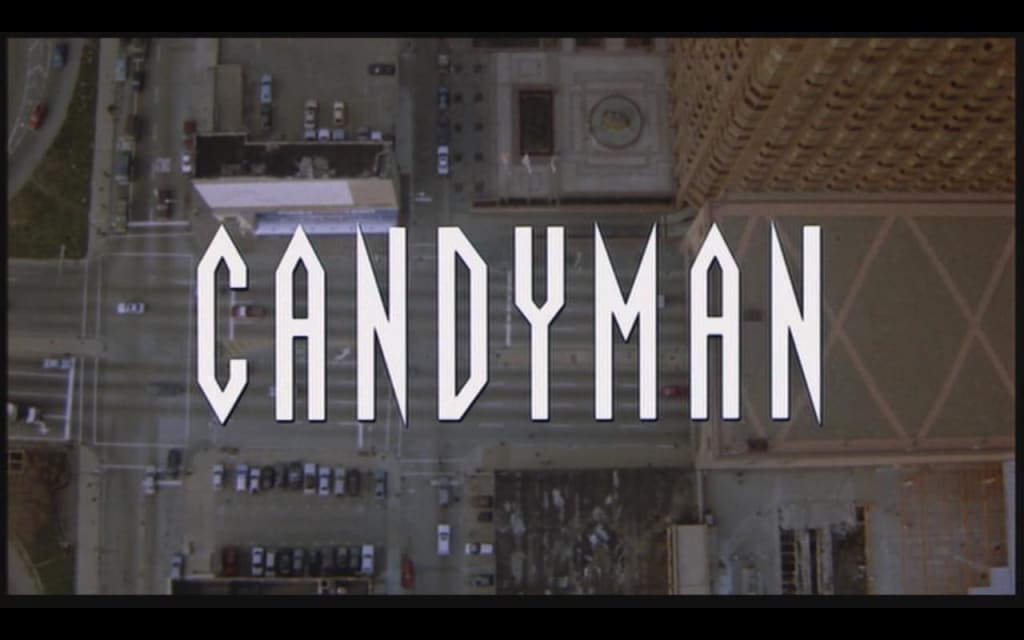
We've all seen the formula at work. A few college students go somewhere they shouldn't, ignoring the warnings and rumors of a deadly killer. The killer is a deformed hulk, showcasing clearly supernatural powers. One by one he picks off the other cast members, until it's only the girl he's focused on (which just so happens to be the pretty blonde one). In the end she seems to defeat him, taking away his weapon and claiming that power for her own.
In very broad strokes, this could describe Halloween, Friday the 13th, or dozens of other, lesser-known slasher movies. It also happens to describe the events of Candyman.
Calling Candyman a slasher movie, though, is like saying the ocean is wet; it might be true, but it does nothing to explain the depth and grandeur of a film that seems so similar to its brethren, but which is so strikingly different in ways you will remember for years after you've seen it.
For those who enjoy this piece, consider taking a look at my full Vocal archive, where you'll find other horror goodies like 5 Famous Slahsers (And Their Real-Life Counterparts) and Top 3 Hidden Gem TV Shows You Should Binge Watch (The Horror Edition).
The Story
The story of Candyman is based on "The Forbidden" by Clive Barker. While the original short story deals with classism in Britain, the story transformed to deal with the issues of race and poverty in America. And a symbol for that conversation, particularly in 1992, was the Chicago housing project Cabrini-Green.
The film follows Helen Lyle (Virginia Madsen), and her friend Bernadette (Kasi Lemmons) as graduate students who are putting together a thesis on folklore and urban legends. In pursuit of finding something new and unique which will really elevate them, they begin to track down the myth of a supernatural figure called Candyman. According to legend, he was a free black man and a talented artist who had lived over a century ago. When he fell in love with the white daughter of a wealthy man, and their affair was discovered, he was mutilated and murdered. They cut off his hand, forced a hook into the stump, then slathered him with honey and let the bees have at him. According to the story as told by one of the professors, his ashes were spread over the area where Cabrini-Green was built. Anyone who says Candyman's name into the mirror five times will summon him, and when they do he'll split them from groin to gullet with his bloody hook.
Helen makes two mistakes. First, she goes to Cabrini-Green, putting herself in serious danger to chase her story. Second, she performs this ritual. When she identifies a gang leader who was using he myth of Candyman to intimidate people, it begins to break the hold the legend has on the people. So Candyman is, as he says, obliged to come. To perform the dark miracles that restore the faith in his existence.
Candyman butchers a dog, and steals a child, leaving Helen to be blamed for his crimes. He murders Bernadette, and Helen is locked away for it. He kills the doctor overseeing Helen's psychiatric care, allowing her to escape so she can return to him. So they can both end their legends in the bonfire being built on the common of Cabrini-Green. Helen finds a mural in the Candyman's sanctuary, telling the tale of his death, and she finds her face on the wall. They are connected, and this feels like it was destined to happen.
Helen breaks away from the Candyman at the last moment, saving the child he stole and returning it to her mother before dying of her burns. But at the end of the film, when her ex-husband says her name five times in the mirror, Helen appears holding the Candyman's hook. She has become the name people whisper, and her legend is beginning to grow.
What Makes it Different
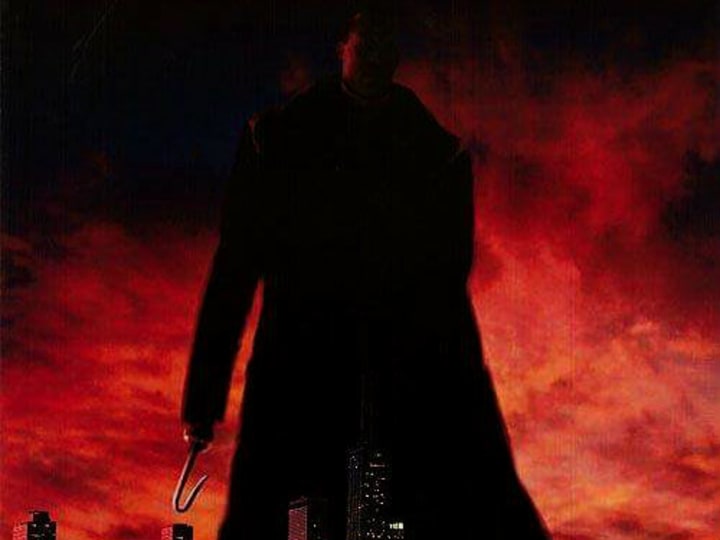
What makes Candyman different as a film is that it isn't here for the gore and the spectacle like so many slasher films and creature features were throughout the '80s and into the '90s. It addresses deep-seated issues in society, and it has perhaps the most memorable black slasher ever conceived of. But there are smaller things the film does differently, too, and when you combine all of these things together it creates this bizarre experience utterly unlike any other horror film.
First, the big stuff. 1992 was also the year of the Rodney King riots, and race relations in the United States were very much in the public eye (not unlike they are in 2020). Candyman did not shy away from the brutal history of America, and how that history fed into the present circumstances. An interracial relationship that ended in a hate crime, and the literal seeds of that past were sown in Cabrini-Green; an island of poverty and gang violence built by the affluent (and largely white populace) to keep the poor (and largely black populace) segregated. It was a powerful subtext, and one that resonates to this day.
That would have been enough to get attention, perhaps, but not for the movie to have the staying power that it does. And that is where the performances come in. Tony Todd is a legend, and as Candyman he gives the performance everything he has. Saying that he'd always wanted to play the Phantom of The Opera, we can see the meeting of the cultured and the savage in Candyman. It makes him inhuman in ways that really sell the character. He is outwardly calm and mysterious, beautiful in a classical way, but he is also twisted. His presence makes us feel like we are seeing something mystical; something almost holy. A little god who rules with his bloody hook.
Just as, if not more, important was what Virginia Madsen underwent for her role as Helen. Unlike the scream queens which were so common in horror movies, Helen seems to go into a trance when Candyman is present. It creates a sense of unreality, and puts a shiver up your spine worse than any horrified shriek. According to the behind-the-scenes commentary, Madsen actually underwent hypnosis in order to allow herself to be put into that state. When you add in that she is deathly allergic to bees, and that there was an emergency response team prepped and ready just off-camera in many scenes, it's clear to see the performers were as dedicated as they were talented.
What really puts the bow on the movie, though, are the unexpected ways it subverts our expectations as a horror viewer. In most horror films, particularly during the end of the golden age of slashers, menacing cellos would be the cue that there is danger nearby. In Candyman, though, we hear a choir singing; as if an angel is going to appear. Unlike the silent slashers that dominated the era, Tony Todd's haunting voice fills every scene he's in. Candyman's words are poetic, even when they're grisly. He'll quote Shakespeare ("Sweets to the sweet," is the most prominent example) while ripping someone's throat out with his hook. and there always seems to be a deeper meaning in what he says. More than that, though, his words tantalize us by implying there is something more, something beyond, but it's never couched in any specific, religious terms. Candyman knows the truth of the world, and he has transcended; this leaves you in awe, and terror of the thing he's become.
The ultimate subversion, though, is the ending. The Girl-Who-Lived often takes the slasher's weapon to end them in the climactic scene, but Helen undergoes a transformation all her own. Her physical death puts her on the same path as Candyman, allowing her to become, as he says, the whisper in the classroom. The writing on the wall. Helen becomes a legend, and a fresh mystery, finally embracing the gift the Candyman had been trying to give her.
As with many of Barker's best horror stories, at the core of this adaptation is a very touching, very frightening love story. And it continues to terrify.
About the Creator
Neal Litherland
Neal Litherland is an author, freelance blogger, and RPG designer. A regular on the Chicago convention circuit, he works in a variety of genres.
Blog: Improved Initiative and The Literary Mercenary
Keep reading
More stories from Neal Litherland and writers in Horror and other communities.
Top 3 Hidden Gem TV Shows You Should Binge Watch
We're all spending a lot more time in front of our screens these days, keeping ourselves inside where we're safe and waiting for the pandemic to blow over. For a lot of us, that means we've already chewed through our list of shows we've been meaning to watch, and we've chased it with our old favorites that we turn to in our times of need. If you're coming up dry for new shows to feed that hunger inside you, and you'd like some fictional fears to deal with as a change of pace, here are three spooky shows that even diehard horror fans may have missed.
By Neal Litherland6 years ago in Horror


Comments
There are no comments for this story
Be the first to respond and start the conversation.