
Behind the Veil: Secret Societies, Vanishing Truths, and the Elite's Hidden
Uncover the shadowy world of secret societies—where whispers of power, hidden agendas, and mysterious disappearances blur the line between fact and conspiracy.

Secret societies have long captured the imagination of the public, often portrayed as the puppet masters behind world events. Whether through whispered rumors, historical documents, or cinematic portrayals, these groups continue to intrigue and unsettle us. The fascination stems not just from what is known, but from what remains deliberately hidden.
What Are Secret Societies?

Secret societies are organizations that operate under a veil of mystery. Their inner workings, members, and objectives are concealed from public knowledge. While some may exist for philosophical, spiritual, or academic exploration, others are accused of influencing global policies, financial systems, and even the course of history itself.
Historically, groups like the Freemasons, Rosicrucians, and Skull and Bones have operated with varying levels of secrecy. The very nature of their existence—closed meetings, coded language, and exclusive membership—has fueled centuries of speculation.
Freemasons: Perhaps the most well-known of all, the Freemasons trace their roots to medieval stonemason guilds. While many modern lodges focus on charity and brotherhood, their secret handshakes, rituals, and symbols have long drawn interest from theorists and historians alike.
Skull and Bones: Founded at Yale University in 1832, this elite collegiate society has been linked to influential political figures in the U.S., including presidents and cabinet members. Its secretive initiation rituals and tight-knit alumni network feed rumors of its disproportionate influence.
Rosicrucians: This mystical society claims to hold ancient esoteric knowledge dating back to Egypt and Atlantis. They blend spiritualism, alchemy, and secret wisdom in a way that continues to inspire spiritual movements even today.
Bohemian Club: Known for its annual retreat in California's Bohemian Grove, this invitation-only group of powerful men from politics, business, and media is rumored to stage mock rituals and discuss policies behind closed doors.
Beyond the Mainstream: Lesser-Known Societies
While the Illuminati and Freemasons dominate public consciousness, lesser-known groups have their own share of mystery:
The Nine Unknown Men: Allegedly founded by Emperor Ashoka of India, this secret group is said to guard nine books of powerful, potentially dangerous knowledge, ranging from microbiology to the manipulation of time.
Propaganda Due (P2 Lodge): An Italian Masonic lodge that became infamous for its involvement in political scandals, financial fraud, and alleged links to assassinations. It was officially disbanded, but many believe its operations merely went deeper underground.
The Hermetic Order of the Golden Dawn: Known for influencing modern occultism, its teachings have shaped Western esoteric traditions, including tarot reading, ritual magic, and mystical philosophies. Its members once included notable figures like Aleister Crowley and W.B. Yeats.
The Bilderberg Group: Though not secret in existence, its private, invitation-only meetings of world leaders and influencers raise questions about its influence on global policy. With no public minutes or media access, suspicions remain about what is really discussed.
The Priory of Sion: Popularized by The Da Vinci Code, this supposed secret society is believed by some to guard ancient truths about Jesus Christ’s bloodline. Though evidence of its historical existence is debated, the mythology surrounding it continues to captivate audiences.
Disappearances and Deaths: When Exposure Turns Dangerous
History has seen individuals vanish or die under suspicious circumstances after probing too deeply into secret societies:
William Morgan: Disappeared in 1826 after threatening to expose Masonic secrets. His disappearance led to national outrage and the formation of the Anti-Masonic political party.
Danny Casolaro: A freelance journalist investigating a secretive network he called "The Octopus," which allegedly involved government, banking, and intelligence ties. His suspicious death was ruled a suicide, but the missing files from his research raise ongoing questions.
Max Spiers: A British conspiracy researcher who died mysteriously in Poland while investigating elite groups and alleged occult rituals. Prior to his death, he reportedly warned friends and family that he was in danger.
Gary Webb: Investigative journalist behind the "Dark Alliance" series linking the CIA to drug trafficking. Though not tied directly to secret societies, his death and the discrediting of his work raise broader concerns about transparency and hidden influence.
These cases fuel public curiosity and suspicion, especially when the stakes are high and the trails go cold. Whether coincidence or consequence, the danger faced by whistleblowers adds a chilling edge to these stories.
Elite Families and Their Speculated Influence
Names like Rothschild, Rockefeller, Morgan, and Windsor often appear in discussions about secret societies. These families undeniably wield—or have wielded—substantial influence over finance, media, and policy.
Some theories suggest that such families use their wealth and networks to participate in private gatherings where decisions affecting global markets and politics are made. Critics point to exclusive events like Bilderberg or Bohemian Grove as examples.
However, it's important to approach these claims critically. Many of these families have publicly contributed to social causes and scientific advancements. What appears as secrecy could be privacy, and what some label control might be coordination in complex global systems.Still, the intrigue persists because wealth combined with discretion often invites speculation.
Secret Societies in Popular Culture

Media and entertainment have played a significant role in shaping our perception of secret societies:
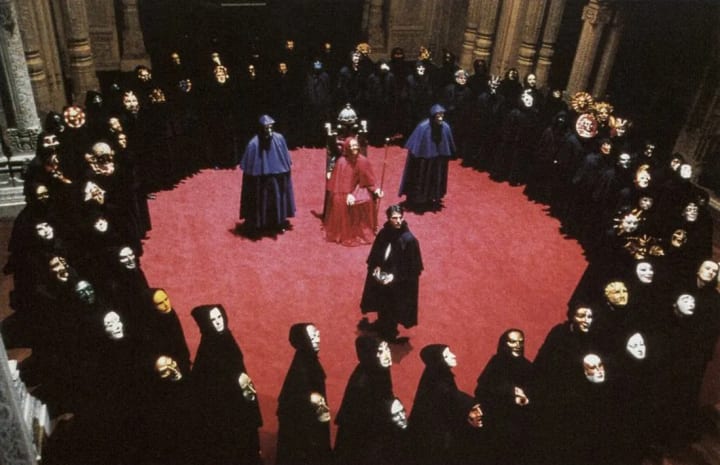
Eyes Wide Shut: Offers a surreal glimpse into elite rituals that may reflect real-life inspiration from societies such as the Ordo Templi Orientis or elite social clubs.
The Skulls: Focuses on a fictional secret college society based on Skull and Bones, exploring themes of ambition, betrayal, and elite manipulation.
National Treasure: A treasure hunt rooted in Masonic symbolism, which blends history with conspiracy adventure.
Mr. Robot: Tackles corporate secrecy and invisible power structures, mirroring how digital elites can shape modern society.
The Da Vinci Code: Revives interest in religious secret societies and hidden histories, blending legend with speculative fiction.
These portrayals mix fact and fiction, heightening public awareness and sometimes even influencing real-world beliefs about secrecy and power.
What If They're Real?
If secret societies truly operate with the kind of power some suggest, it challenges our understanding of autonomy and governance. Could they influence elections, suppress disruptive technologies, or steer public opinion through media?
It’s not just political control—some theories point to cultural engineering, economic manipulation, and the use of soft power to maintain dominance. From shaping educational curricula to deciding what narratives reach the mainstream, such influence—if it exists—is both subtle and systemic.
While definitive evidence remains elusive, the mere possibility sparks debate. Even without proof of malevolent intent, the existence of exclusive, closed-door decision-making at global levels demands scrutiny.
Why We're Drawn to the Mystery
The allure of secret societies taps into a universal human trait: the desire to uncover hidden truths. In an age of information overload, the unknown becomes even more compelling. People crave stories that offer not just suspense, but a sense of deeper meaning behind chaos.
This fascination mirrors why true crime, bizarre murder mysteries, and chilling unsolved murders attract so much attention. The mystery itself becomes the hook—and secret societies offer mystery in abundance. Whether it’s a coded document, a lost member, or an unexplained ritual, the search for answers becomes irresistible.
Final Thought: Hidden in Plain Sight
Whether entirely real or partly myth, secret societies serve as a lens through which we question the visible structures of power. They provoke thought, inspire stories, and fuel both curiosity and caution.
Could their influence be exaggerated? Possibly. Could some of it be real? Perhaps more than we think.In the end, the most powerful secrets are those we’re not even aware exist.
About the Creator
'20/20'
"Do It Again" the track that would ultimately open the Beach Boys final album on Capitol Records which was released on February 10th 1969 had originally been released as a single in August of 1968. The track was the first of many post-Pet Sounds era throwbacks to the early Beach Boys sound which would become continually more cliched and eventually lead the Beach Boys to the level of self-parody they would eventually succumb to in the 1980s while their closest contemporaries The Beatles nearing the end of their run in 1969 would go on to be viewed as the most influential band of all time. However, the song itself is not bad on its surface, and it opens with a futuristic sounding (for 1969) drumbeat captured by then-Beach Boys engineer Stephen Desper using tape delays on the drums performed by Dennis Wilson and John Guerin. The song has been re-recorded numerous times over the years on various Beach Boys-related projects most notably the 2011 re-recording at Capitol studios featuring the five surviving Beach Boys at the time backed instrumentally by various members of both the Brian Wilson Band and Mike Loves touring "Beach Boys" to promote the then upcoming Beach Boys 50th Anniversary reunion tour in 2012. The hammering and power drill sound at the end of the song was an excerpt from a track called "Workshop" that was to be a part of the uncompleted "SMiLE" album.
By Sean Callaghan6 days ago in Beat


Comments
There are no comments for this story
Be the first to respond and start the conversation.