


Introduction:
The banyan tree, revered and celebrated in various cultures across the globe, holds a mystique that goes beyond its magnificent appearance. Often associated with spirituality, the banyan tree has long been associated with tales of supernatural encounters, particularly those involving ghosts. This essay delves into the eerie world of banyan tree ghosts, exploring the myths, legends, and cultural beliefs that surround these haunting abodes. From Asia to the Caribbean, the banyan tree stands as a symbol of both beauty and dread, leaving an indelible mark on the collective consciousness of communities worldwide.
The banyan tree, scientifically known as Ficus benghalensis, is a remarkable and iconic tree that holds great significance in many cultures around the world. It is native to the Indian subcontinent but can be found in various tropical and subtropical regions across the globe. The banyan tree is known for its unique aerial prop roots that grow from its branches and descend towards the ground, forming secondary trunks. This growth pattern gives the tree a sprawling and majestic appearance, often covering vast areas and creating natural canopies.
Cultural and Symbolic Importance:
The banyan tree holds deep cultural and symbolic importance in many societies, particularly in regions where it is native or has been introduced. It is considered a sacred tree in Hinduism and is often associated with Lord Shiva. In Hindu mythology, it is believed that Lord Shiva resides or meditates under the banyan tree, making it a symbol of divine power and enlightenment.
In addition to Hinduism, the banyan tree also holds significance in other religions and spiritual traditions. For Buddhists, the Bodhi tree, a type of banyan tree, is highly revered as it is believed to be the tree under which Gautama Buddha attained enlightenment. The tree is seen as a symbol of wisdom, knowledge, and spiritual awakening.
Beyond religious contexts, the banyan tree is also celebrated for its ecological and environmental significance. Its expansive canopy provides shade and shelter to various organisms, and its roots offer stability and protection to the soil. In some cultures, the tree is seen as a symbol of longevity, strength, and resilience, reflecting its ability to survive and thrive for centuries.
Ecological Importance :
The banyan tree plays a crucial role in supporting diverse ecosystems due to its unique structure and growth habits. The aerial roots of the banyan tree not only anchor it firmly to the ground but also provide additional support for other plants and organisms. Over time, these roots can fuse together, creating a complex network that acts as a habitat for numerous organisms, including birds, insects, and small mammals.
The dense foliage of the banyan tree provides a habitat for various species of birds, which build their nests among its branches. The tree's fruits serve as a food source for many animals, while its flowers attract pollinators such as bees and butterflies. Additionally, the fallen leaves of the banyan tree contribute to the nutrient cycle, enriching the soil and supporting the growth of other plants in its vicinity.
Due to its ability to tolerate different soil conditions and climates, the banyan tree can colonize disturbed areas and act as a pioneer species, facilitating the restoration of degraded ecosystems. Its extensive root system helps prevent soil erosion and stabilizes riverbanks, making it an important tree for maintaining the ecological balance in riparian zones.
Cultural Practices and Uses :
The banyan tree has been interwoven into the cultural practices and daily lives of people in many regions. In India, it is not uncommon to find banyan trees near temples, where they are considered sacred and often adorned with garlands and threads as offerings. People also seek shade and solace under the banyan tree, using its peaceful ambiance for meditation, gatherings, and religious ceremonies.
In traditional medicine, various parts of the banyan tree, including its bark, leaves, and aerial roots, have been used for their medicinal properties. The tree has been employed in the treatment of ailments such as diarrhea, diabetes, respiratory disorders, and skin infections. Its latex has been used for wound healing, and its leaves are believed to possess anti-inflammatory properties.
Historical and Cultural Significance of Banyan Trees:
To understand the significance of banyan tree ghosts, it is essential to explore the historical and cultural roots of banyan trees themselves. Revered in various religious and mythological traditions, these majestic trees hold deep symbolic and spiritual meanings. In Hinduism, the banyan tree represents immortality and is considered the abode of gods and spirits. The Bodhi tree, a type of banyan, is revered as the tree under which Gautama Buddha attained enlightenment.
In many Asian cultures, banyan trees are believed to possess a strong connection to the spirit realm. It is believed that spirits and ghosts can take refuge within the sprawling roots and branches of these trees. This belief is deeply ingrained in the cultural fabric of many societies, and ghost stories associated with banyan trees have been passed down through generations.
Ghostly Legends and Myths:
Banyan tree ghost stories are rife with tales of otherworldly encounters, supernatural happenings, and eerie phenomena. These legends often depict banyan trees as portals to the spirit realm, attracting both benevolent and malevolent entities.
One prevalent belief is that the souls of the departed, unable to find peace, seek solace in the shelter of banyan trees. These spirits are said to wander beneath the tree's branches, manifesting themselves as apparitions or causing mysterious phenomena such as strange sounds, flickering lights, or cold gusts of wind.
In some cultures, it is believed that banyan tree ghosts are protectors of the land. These spirits are seen as guardians, ensuring the well-being and safety of the surrounding community. People often make offerings and prayers to these spirits, seeking their favor and protection.
However, not all banyan tree ghosts are benevolent. Some tales describe vengeful spirits or malevolent entities lurking within the tree's shadowy depths. These ghosts are believed to haunt the vicinity, tormenting those who cross their paths. The stories of vengeful spirits taking revenge on their perpetrators or causing harm to unsuspecting individuals serve as cautionary tales, reinforcing the belief in the power and presence of banyan tree ghosts.
Psychological and Sociocultural Perspectives :
The existence of banyan tree ghosts can be examined from psychological and sociocultural perspectives, shedding light on why these beliefs persist within communities.
Psychologically, the banyan tree's eerie appearance, with its sprawling branches and hanging roots, can evoke feelings of awe, mystery, and fear. These natural elements, combined with the perpetuation of ghost stories through generations, contribute to a heightened sense of the supernatural surrounding banyan trees. The power of suggestion and collective imagination can amplify experiences, leading individuals to interpret ordinary occurrences as supernatural phenomena.
From a sociocultural standpoint, banyan tree ghost beliefs often serve various purposes within communities. They can act as cautionary tales, reinforcing societal norms and discouraging undesirable behavior. These beliefs
About the Creator
Barnabas Payam
I write my writings humorously, poetically and artistically about the changes in the spiritual condition of human beings to live peacefully and cheerfully.
Keep reading
More stories from Barnabas Payam and writers in Horror and other communities.
Fear of the Devil
It can be said that this fear of the devil started to be born when man was born with fear. It can be said that the fear of the devil starts when the devil is born in our heart. The devil is an evil spirit, and whenever it enters into the hearts of men, man is afraid of the devil.
By Barnabas Payam4 years ago in Horror
"Scream 7" (2026): Running out of Fresh Screams
This is the seventh time we’ve had a Ghostface crisis. Scream 7 is the latest edition of the Scream franchise. Sydney Prescott and her family are under attack by another anonymous killer dressed in a Ghostface costume. While having issues with her daughter, Tatum, they run from the bloody murders, trying to determine who is behind it all.
By Marielle Sabbag3 days ago in Horror
The Bridge That Whispers
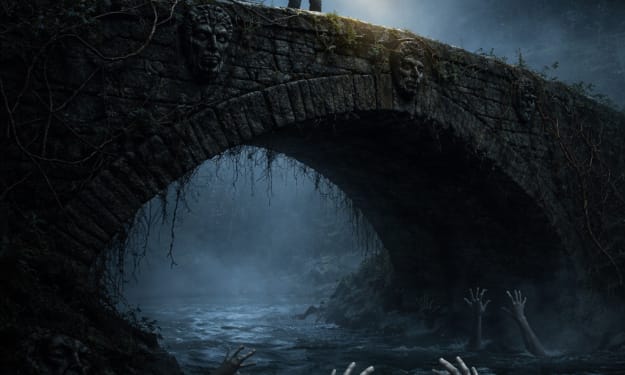
In bridge no one used anymore. It curved gently over a narrow river, its surface cracked and moss-covered, as if time itself had tried to bury it. Locals crossed the modern bridge downstream, leaving the old one to the fog, the wind, and the stories. Tourists were told the bridge was unsafe. Children were told it was haunted. Elena heard about it on her first night in Greyhaven. She had come from the city to catalog historical structures for a regional preservation project. Greyhaven was her last stop—quiet, remote, and perfect for work. The innkeeper, a thin man with pale eyes, hesitated when she mentioned the old bridge. “Don’t go there after sunset,” he said. “It talks.” Elena laughed politely. She had spent years documenting ruins, castles, and forgotten churches. Every village had a ghost story to protect a pile of stones. Still, she noticed how the innkeeper’s hand trembled when he handed her the room key. The next morning, Elena walked to the bridge with her camera and notebook. In daylight, it looked harmless—beautiful, even. Wildflowers grew between the stones, and the river below whispered softly. She took photographs, measured the arch, and noted the erosion. There were strange carvings on the sides: not words, but twisted symbols, worn almost smooth. That night, she dreamed of water. In her dream, she stood on the bridge in thick fog. The river beneath her was silent, black as ink. From the stones under her feet came a low sound, like breath passing through teeth. Come back. She woke suddenly, heart racing. Outside her window, the fog was rolling in from the hills. Elena told herself it was only a dream caused by fatigue. But the next night, it happened again. This time, the whisper was clearer. Come back to us. On the third day, she asked a woman in the village café about the bridge. The woman stopped stirring her coffee. “They drowned there,” she said quietly. “Long ago. When the river flooded, the bridge broke in the middle. A wedding party was crossing. Carriage, horses, music… all gone. People say the stones remember the weight of them.” Elena felt a chill run down her spine. “That’s just a story, right?” The woman looked up. “Stories begin somewhere.” That evening, driven by curiosity and something darker—something pulling at her—Elena returned to the bridge at dusk. Fog wrapped around the riverbanks like a living thing. The modern bridge lights glowed far away, safe and distant. She stepped onto the old stones. The air felt colder in the center of the bridge. Her breath became visible. Then she heard it: soft footsteps behind her. She turned. No one was there. The river below began to make a different sound—not water, but voices. Murmuring, layered and slow. Stay. Elena backed away, but her foot caught on a broken stone. She fell to her knees. The carvings along the bridge seemed deeper now, sharper. They formed shapes—faces, frozen in stone, mouths open in endless screams. Hands rose from the mist. They were pale, dripping, reaching for her ankles. Elena screamed and scrambled backward, tearing her coat on the rough stone. One cold hand brushed her skin, and in that moment, she saw it: a flash of the past. Horses panicking. A carriage tipping. People crying out as dark water swallowed them. And then silence. She ran. By the time she reached the inn, her legs were shaking so badly she could barely stand. The innkeeper saw her face and said nothing—only locked the door behind her. She left Greyhaven the next morning without finishing her work. Months later, her report mentioned “structural instability” and “severe erosion.” It said nothing about whispers or hands or memories trapped in stone. But sometimes, when Elena stands on bridges in other cities—busy ones filled with traffic and noise—she feels a vibration under her feet, like a distant echo. And in the sound of rushing water, she hears a familiar voice: Come back.
By Iazaz hussain2 days ago in Horror
A Historic Declaration
We the People of the Husbands of the United States of America, in Order to form a more perfect Union, and I mean you...with me...establish Justice, insure domestic Tranquility, provide for the common defence, promote the general Welfare, and secure the Blessings of Liberty to ourselves, after Puberty, do ordain and establish this Declaration of Co-Dependence.
By Gerard DiLeo6 days ago in Humans



Comments
There are no comments for this story
Be the first to respond and start the conversation.