
Banuaya: The Guardian of the Drowned Forest
Horror / Mythology


In the heart of South Sulawesi lies a lake that locals refuse to name aloud. Official maps call it Danau Larangan, but the people of the surrounding villages know it by its older name — Banuaya, the "Mother of Drowned Souls".
Long ago, before the arrival of the Dutch or even the Bugis kingdom, there was a vast kingdom nestled in the highlands of Sulawesi. This kingdom was prosperous, but proud — so proud that they mocked the spirits of the mountain and water. The king, Rakkeang, refused to offer sacrifices to the Penguasa Danau, the spirit believed to protect the balance between land and lake.
The shamans warned him. The waters will rise, they said. The forest will drown, and the souls will be claimed.
Rakkeang laughed. "Let the spirits come," he said. "I do not bow to wind and water."
That very night, the ground trembled and the sky turned black. A deafening roar came from the earth, and a sinkhole swallowed the heart of the kingdom. Trees twisted and snapped. Entire villages vanished into the deepening waters. What was once a fertile basin became an enormous, bottomless lake.
The king’s palace? Gone — now buried under the center of the lake, marked by a circle of dead trees that never rot and never fall.
Locals say when you walk near the lake during the rainy season, you can hear whispering. The language is old — not Bugis, not Torajan, not even Makassarese. It's the voice of the drowned, calling out in longing or rage. The forest surrounding the lake, once lush, is now thick with vines and gnarled branches that seem to move ever so slightly when you're not looking.
The bravest hunters tell of seeing Banuaya herself — not a ghost, but a guardian spirit, part woman, part eel, with jet-black hair that floats in the air and eyes like sunken pearls. She emerges when someone dares disturb the water, especially during the sacred nights of bulan gelap, the dark moon.

Those who try to fish the lake too greedily — gone.
Those who chop wood too close — missing.
Those who mock the spirits — found days later, faces twisted, lungs full of black water, even when they died on dry land.
To this day, every year, the surrounding villages perform the Ritual of Ashes — burning dried palm leaves and tossing the ashes into the wind to ask for forgiveness. It is said that if the ashes fly toward the lake, the spirits are still watching. If the ashes fall back to the earth, a sacrifice is required.
Some say that's why every few years, a child disappears from the nearby hamlets. No one reports it. No one investigates. The village elders simply say, “Banuaya menuntut kembali apa yang dulu direnggut darinya.”
(Banuaya reclaims what was once taken from her.)
Visitors and outsiders often laugh off the legend, daring each other to swim in the water or call her name three times by the edge of the lake.
They stop laughing when their boat capsizes with no wind.
When their reflection doesn’t move in the same way.
Or when they see long black hair trailing behind them — even though they're alone.
So if you ever find yourself in Sulawesi, near a lake surrounded by dead trees and a stillness too deep for comfort, remember this:
Do not speak her name. Do not disturb the water.
And if the wind whispers something you don’t understand... run.
About the Creator
Maulana Dimasiqi Akhnakhauri Akeyla Syah
Horror Mythology Indonesia
Reader insights
Outstanding
Excellent work. Looking forward to reading more!
Top insights
Excellent storytelling
Original narrative & well developed characters
Compelling and original writing
Creative use of language & vocab
Easy to read and follow
Well-structured & engaging content
Masterful proofreading
Zero grammar & spelling mistakes
On-point and relevant
Writing reflected the title & theme
Keep reading
More stories from Maulana Dimasiqi Akhnakhauri Akeyla Syah and writers in Horror and other communities.
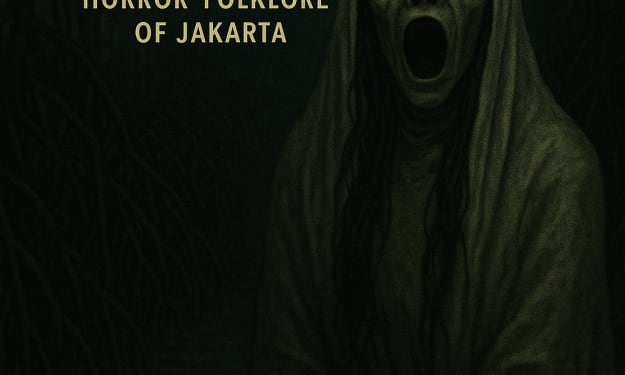
The Laughter in The Mangrove
Long before skyscrapers pierced the sky of Jakarta, before the malls and toll roads, the northern coastline was home to a dark, untamed mangrove forest. The locals called it Bakau Hitam, the Black Mangrove. Fishermen avoided it, and even the bravest never stayed past sundown. They whispered of something ancient—Nyai Rara Kunti, the forgotten sea mother of the Java Sea, who was banished inland after a betrayal by the gods of the southern ocean.
By Maulana Dimasiqi Akhnakhauri Akeyla Syah11 months ago in Horror


Comments (3)
This story is fascinating. It makes me wonder how much truth there is to these local legends. I've heard similar tales from other parts of the world. Do you think there could be some natural event that inspired these stories? Maybe an earthquake or a flood? It's interesting how the locals have such a deep connection to this place and its history. Also, the description of Banuaya sounds really cool. I'd love to hear more about the specific details of her appearance and what she does. Have you ever heard any other stories about her interactions with humans? It seems like she's not to be trifled with. I'm curious what you think about the significance of the name "Mother of Drowned Souls." What do you think it represents in terms of the local culture and beliefs?
WOW
Well written :/