
Arms Float, Heads Don't
Foggy Waters

Arms float, heads don’t. You learn something new every day.
Did you know that the human head is back-heavy? Thanks to your spinal cord, you’re unable to tell from your own. The closest you might ever get is to witnessing it is to cradle a baby’s in your palm, observing the way it hangs, unsupported by the strength of its upper back. Severed heads, however, roll, but only once. There’s not enough momentum and the skull isn’t spherical enough to get in a second spin. And heads that have been sitting at the bottom of Loch Dorchadas until bloated and blue, don’t roll at all. I’ve seen it myself.
I was new to Dorchadas, a quiet village with a population of just two hundred odd in the rural east of Edinburgh. I was reluctant to join its village police crew, but a promotion was a promotion, after all. ‘And besides, I could do with the fresh air and a slower pace of life’. It turns out that ‘slower’ has a scale, and its lower end is a nightmare.
The investigation began after a Mrs. Braithwaite knocked herself unconscious whilst walking Wilson, her aged-grey bloodhound, and stumbled across a colourful branch floating on top of the undisturbed water. It was when Wilson made a dash to retrieve it and began swinging it between his jowls that Mrs. B planted herself against the fence. I laughed when I heard it.
Loch Dorchadas was a deep, black oval at the bottom of the village highland, past the Edwardian church and down a narrow, winding natural staircase. I had never seen water so dark and at night, you could be fooled into thinking the loch held the night sky. The trees were all yellows and oranges at this time of year, and Edinburgh being Edinburgh, they were perpetually wet and the soil soggy. Sunlight rarely reached the loch, leaving a family of half-grown trees bent and twisted surrounding it as if on guard duty. What they guard is anybody’s guess.
To our surprise, the lab report claimed the arm and head didn’t belong to the same person. Neither did the foot, or the eye, or the pair of ears that the divers brought back when they finally deemed it important enough to put on their itinerary. Nobody had been reported missing in Dorchadas, as is standard in remote places where people live for a love of privacy, so that didn’t clear things up. And the parts were too decayed to identify, anyway. It seemed at first, as though the evidence led to no one and nothing, except the loch itself.
The drainage revealed more parts of all kinds, all separate, all pallid and rotten, and all leading to the centre of the lake bed. I doubt this was the intended resting place for the victims but with this case, I was at a loss. With the numbers of presumed dead on the loch’s death toll, we set up and hid cameras in the trees. Thanks to their knots and gnarled branches, it was easy to fit them in, you see. Day one and the cameras were already broken, projecting a stream of fuzz and black and white dots. Until morning came that is, and they were fine again. All six of them, all at 7:34:03. “Sod’s law,” I had said.
Naturally, we had to stake it out, owing to all the suspicious body parts floating about like a murderer’s soup kitchen. It was cold on the night and the air was sharp, gales whistling through the cracks of my banged-up Ford Escort. Not even my thermals or knitted blanket could shield me from the wind around that black lagoon. You always miss what you don’t have. Nothing is colder than dying, it turns out.
Its funny. I can’t really picture it, but I remember screaming, or attempting to. I also remember a whistling in my ears and the smell of decaying foliage. When its hand, I suppose you could call it, pulled me out of the car and dragged me through the sludgy bog and ropes of tree roots, I just remember how cold it was, how the cold began in my ankle and ballooned up my leg and to my chest, freezing my organs from the inside out. I barely noticed the water as it began surrounding my neck and filling into my nose and eyes, or the rushing in my ears. By then it was too late, and I never saw the hand again, nor what it had belonged to.
I lie here, at the bottom of Dorchadas, breathing in the water, its sharp fangs biting into my lungs. The earth grabs me, and its stony claws cut into my flesh. Why won’t I drown? Have I drowned already? My lungs revolt, pumping my guts out to breathe but it doesn’t come. My arms flail, grabbing at anything and everything. They feel heavy and I grow tired, my mind turning dreamy and thoughtless, the pressure of the water crushing down on me, the pain bursting along every inch of skin. I see nothing through the black water and my ears rush with its light flow. My right hand touches something other than soft mud. Bony and jagged. I pick it up. It feels greasy, even under the water, a layer of slime and webbing blanketing it. A femur. I’ve seen enough of them in the last few days to know.
It’s hard to track time down here. It’s almost as if it resets. As if every passing thought gets moved along into that fading memory you get of a dream before it’s gone entirely – like sliding back the carriage of a typewriter to start a new sentence. My own solitary sentence down here has been too long and the thought of bail a cruel joke.
The loch was drained again not too long ago. I must’ve been here a while. The clothes looked different, and no one had a moustache this time. I wonder what became of my Escort. I suppose that would depend on if it still exists, and I wonder to myself how far that goes; If I own the car, does it disappear from memory, just like me? Just like the other victims of the lake? Or is it just there, no owner, no trace of anything until its sudden appearance in the newly revised world where I never existed? I have no answers.
They found me again today. Took them long enough. Almost all the flesh was gone this time, like soggy tissue paper. I didn’t think it would be so weird to see your own skull. But then, I’ve never really given it any thought.
New fella on the job. Dropped me right on my forehead. If only that were the extent of my pain, I believe I thought to myself. But that’s now a lower leg, my nose, a fragment of my right hip, and of course, the skull. I wish I knew what happens when they collect it all. Am I released? Do I get to ‘move on’, as they say? Can they find it all? What if a finger is left behind? What if the skin counts? Blood? My very DNA? Well then that would make it impossible, wouldn’t it? Because then I would be the loch itself. Nonsense.
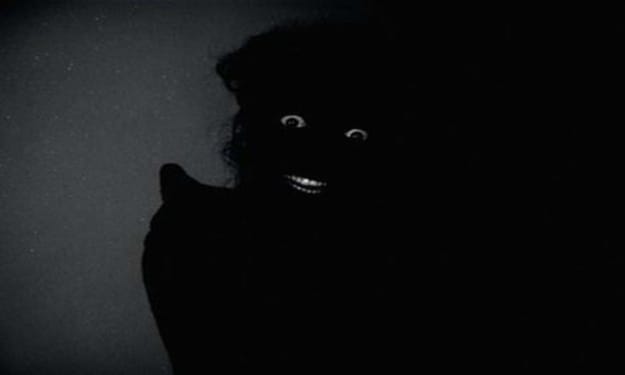
Pain truly is in the mind, because no matter how many parts they find and pull from this graveyard of ink, it never weakens, it never wains. It’s all there is, and it’s all that keeps me conscious, unable to rest or sleep. I’m the one who stares in the dark.
As I see the new faces with their strange haircuts and holding their flat mobile telephones, looking down on the hole that is me, I realise that the loch is pain, and thus, so am I. It’s lonely down here, and I wonder if the new people will have a stakeout, too, as I once did. Who knows. But in any case, arms float and heads sink. I learned that today. Or was it yesterday?
About the Creator
Keep reading
More stories from Nathan Humphrey and writers in Horror and other communities.
Finders Keepers
It was sitting there, like a guest in its own right, on the table in the corner of the food court in the Ramsgorge Shopping Centre - like a holy book on its lectern, stood in a church of obesity and type-two diabetes. Lewis queried it with the slits of his eyes and decided that if it were not claimed in the last twenty minutes of his shift at the Quirky Chicken, he would claim it for his own. Were it a comic book or a magazine, he would have binned it there and then. But it looked ominous, important - and Lewis felt a certain apprehensiveness wash over him. It stood about an inch and a half thick, with soft, black leather wrapped around it like snakeskin. A short stack of dense pages sat between the lips of hide like a row of yellowing teeth. Squashed between the paper was a purple velvet tongue. Lewis felt himself drawn to find out what was on that page two thirds of the way down where the bookmark stood guard, and found that he was relaying a customer's Satay Chicken Meal Deal with a jumble of mispronounced vowels and consonants that left a perplexed look on the balding man's face in front of him. They laughed it off and Lewis handed over the receipt - but he was concerned. What is it about that book that has such a hold on me?
By Nathan Humphrey5 years ago in Horror
The Character Who Isn’t on Payroll
Posted to r/nosleep I work at Disneyland. I won’t say my department, but I’m close enough to characters that I see schedules, handoffs, rotations—the boring, logistical side of “magic.” Which is why this has been driving me insane.
By V-Ink Stories5 days ago in Horror



Comments
There are no comments for this story
Be the first to respond and start the conversation.