
"Aokigahara: Japan’s Haunted Suicide Forest and Its Dark Secrets"
"Where Beauty Meets Darkness: The Haunting Truth of Aokigahara"
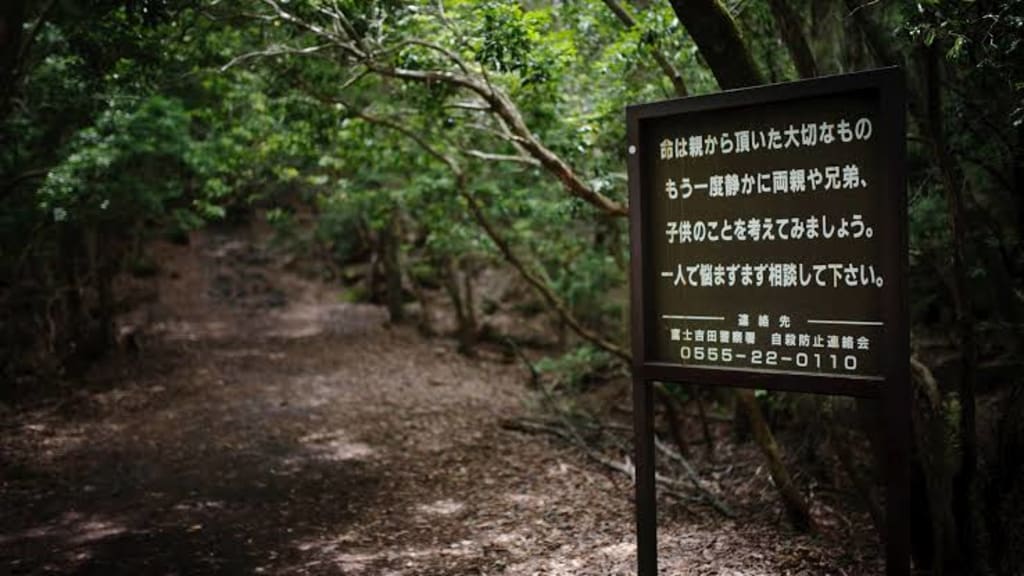
Japan’s Aokigahara Forest, often called the "Suicide Forest," is one of the most infamous natural locations in the world—not for its beauty or wildlife, but for the chilling stories and dark history that cling to its ancient trees. Nestled at the northwest base of Mount Fuji, this dense forest spans over 35 square kilometers and is both mesmerizing and terrifying. To many, it is a place of silence, mystery, and unexplainable dread.
But beyond the rumors and sensationalism, Aokigahara’s real-life horror stories reveal deep human tragedy, cultural complexities, and a haunting reflection on despair that resonates far beyond Japan’s borders.
A Forest Shrouded in Mystery and Myth
Aokigahara, also known as the Sea of Trees (樹海, Jukai), has long been a place of folklore and superstition. Its dense growth and rocky, uneven terrain create a natural maze, where even experienced hikers can easily lose their way. The forest floor is covered with thick moss, and the towering trees absorb sound, creating an eerie silence that amplifies the feeling of isolation.
In Japanese mythology, Aokigahara has been considered a home for yūrei—vengeful spirits or ghosts believed to linger in places where people have died tragically. It is said that these spirits can mislead travelers, causing them to become lost forever. This folklore has contributed to the forest’s ominous reputation.
The Tragic Reality: A Destination for Suicide
Aokigahara’s quiet beauty belies a grim truth. Since the 1950s, the forest has become a notorious site for suicides. The first well-known case that brought public attention was the death of the famous Japanese author Seichō Matsumoto in 1960, who described the forest in his novel Kuroi Jukai (The Black Sea of Trees). After the book’s publication, the number of suicides reportedly increased, cementing the forest’s dark legacy.
Though the exact number fluctuates yearly, official reports estimate that dozens of people enter Aokigahara each year intending to end their lives. Some years have seen over 100 suicides discovered within the forest’s borders. The Japanese government and local authorities have tried multiple times to combat this tragic phenomenon by placing signs urging people to reconsider, providing suicide prevention phone numbers, and increasing patrols.
The forest has thus become a symbol of sorrow and mental health struggles in Japan, a stark reminder of how societal pressures and isolation can push people to the brink.
The Haunting Stories from Within the Trees
Walking through Aokigahara is an unsettling experience. The forest is so dense that sunlight barely penetrates, and the thick canopy muffles sound. Visitors report an overwhelming feeling of silence and loneliness, and many recount a strange sense of being watched or followed.
Survivors and forest patrols have shared stories of people who enter with a clear purpose but end up wandering for hours, disoriented and sometimes rescued before tragedy strikes. Some describe hearing faint cries or whispers, although no one else is around.
One particularly chilling story involves a hiker who found a note tied to a tree, pleading for help and describing feelings of despair and loneliness. The note was left behind by someone who had lost their way and couldn’t find a way out, caught in both the physical maze of the forest and the mental maze of despair.
Rescue teams have reported finding personal belongings scattered along the forest paths—backpacks, shoes, and even cameras—indicating that many people have passed through in distress. Some items remain untouched for years, frozen in time like eerie remnants of untold stories.
Cultural and Social Context
Understanding Aokigahara’s role as a suicide site requires some insight into Japanese society. Japan has historically struggled with mental health stigma. Although attitudes are gradually changing, there remains a significant social pressure to conform, succeed academically and professionally, and uphold family honor. Failure or hardship is often faced silently, as individuals fear shame or burdening others.
The pressure cooker environment can exacerbate feelings of isolation and hopelessness. For some, Aokigahara becomes a final escape from the unbearable weight of expectations.
Moreover, Japanese culture traditionally views death and the afterlife differently than Western perspectives. Suicide has been depicted in literature and art, sometimes even romanticized in samurai and poetic traditions. While this is changing, the cultural lens adds complexity to the way suicide is understood and addressed in Japan.
Efforts to Change the Narrative
In recent years, there have been significant efforts to shift the perception of Aokigahara from a place of despair to one of healing and respect. Mental health advocates and local organizations have launched campaigns aimed at suicide prevention and mental health awareness.
The installation of signs at the forest entrances is one example. These signs don’t just warn visitors about the consequences of suicide; they also encourage people to think about their loved ones and seek help. Messages like “Your life is a precious gift” and phone numbers for counseling services aim to offer hope.
In addition, forest patrol volunteers regularly search the area for those in distress, offering a helping hand to anyone who might be considering suicide.
Documentaries and films about Aokigahara, while sometimes criticized for sensationalism, have also helped bring international attention to Japan’s mental health crisis and inspired conversations about how societies can better support those struggling.
The Forest’s Dual Nature: Beauty and Horror
One of the most haunting aspects of Aokigahara is how it balances its natural beauty with the horror of its reputation. The forest is home to many species of plants and animals and is an important ecological area. The silence and stillness that visitors find unsettling are also part of what makes the forest so unique.
Tourists and hikers visit the forest to experience its beauty and tranquility. However, the forest’s dark history always lingers in the background, reminding visitors that nature is not just a peaceful refuge—it can also hold stories of human pain and suffering.
Personal Reflections from Visitors
Many who have ventured into Aokigahara share profound reflections after their experience. Some speak of an almost spiritual encounter, where the forest’s silence forces them to confront their own fears and thoughts. Others describe a deep sadness that permeates the atmosphere, a reminder of the countless lives lost there.
One visitor wrote in a travel journal, “Walking through Aokigahara feels like stepping into another world, where time stands still, and the line between the living and the dead blurs. It’s beautiful and terrifying all at once.”
Such reflections show that beyond horror stories and sensational headlines, Aokigahara is a place that challenges our understanding of life, death, and what it means to be human.
Conclusion: Beyond the Darkness
Aokigahara Forest is more than just a “suicide forest.” It is a complex, multifaceted place where nature’s beauty intertwines with human tragedy. Its chilling reputation is rooted in real stories of pain and despair but also highlights the urgent need for compassion, mental health awareness, and societal change.
By learning about Aokigahara’s history and the stories it holds, we are reminded of the importance of reaching out to those in need and addressing the silent struggles many face. The forest’s silence may be deafening, but it also calls on us to listen—to stories of loss, hope, and healing.
In the end, Aokigahara is a mirror reflecting humanity’s darkest moments and the resilience that lies beyond.
About the Creator
Keep reading
More stories from Farhan Rafid and writers in Horror and other communities.
The Secret Below
In the fall of 2018, in a sleepy town just outside Asheville, North Carolina, a young couple—Adam and Rachel Morgan—moved into a charming but timeworn two-story house built in the early 1900s. They were drawn in by its creaky character, wraparound porch, and rustic wooden floors. The house had been vacant for two years, owned previously by a reclusive elderly man who died with no next of kin.
By Farhan Rafid10 months ago in Horror
Architecture of the Scythe Pt. 4/5
The Geometry of a Fugitive Rain in the District of Rust doesn't wash things clean; it just turns the soot into permanent, oily stain. The kind of rain that feels like it’s trying to dissolve pavement, a slow-motion acid bath for a city that has already lost its soul.
By Nathan McAllister6 days ago in Horror
My First Time Skiing and I Got Lost, Alone, in the French Alps
Looking back, I can trace some of my life’s biggest adventures to a simple action from my sister. She’d introduced me to Tommy (a very long time ago), a colleague of hers, who had overshared his penchant for Italian-looking women, and I ticked that box.
By Chantal Christie Weissabout 10 hours ago in Humans




Comments
There are no comments for this story
Be the first to respond and start the conversation.