
A Small-Town Cop’s Tale: Peaceful Patrols and a Haunting Mystery
From Quiet Patrols to an Unsolved Nightmare

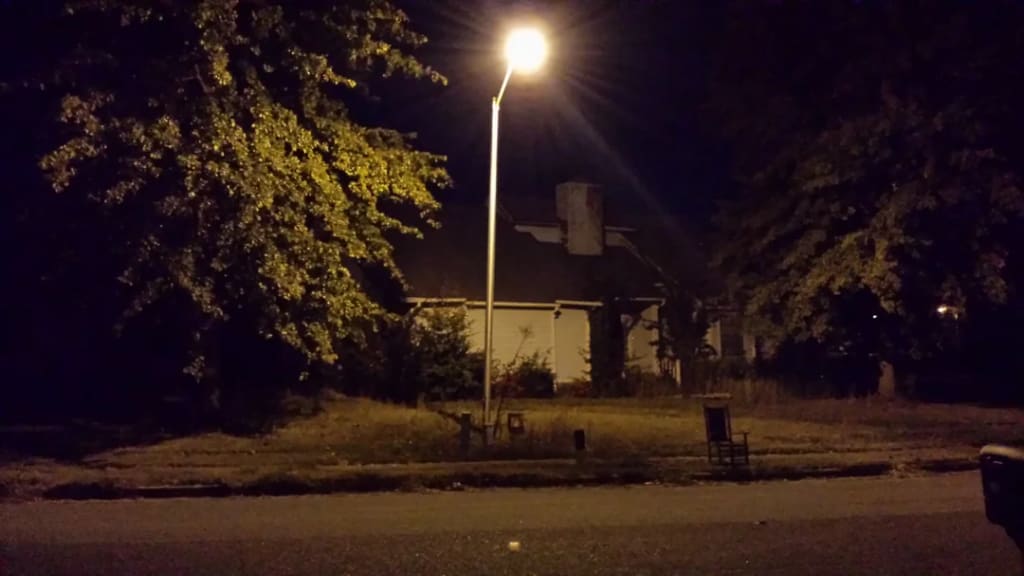
Being a police officer in a small Minnesota town isn’t exactly the stuff of action movies. With a population of just 10,000, surrounded by endless stretches of farmland, my days are more about quiet routine than high-stakes drama. Compared to the chaos of policing in cities like New York or Los Angeles, where every shift could bring a new crisis, my job feels almost tranquil. Crime here is mostly tame—think rowdy bar fights, teenage pranks, petty theft, or the occasional drunk driver weaving through our sleepy streets. Sure, I’ve handled a few cases of domestic violence and assault over the years, but those are rare blips in an otherwise calm existence. Most folks would call it boring. I’d call it steady.
But there’s one case that still lingers in my mind, a shadow that refuses to fade even after seven years. It’s the kind of story that makes you question what you think you know about the world—a chilling exception to the predictable rhythm of small-town life.
My town is the kind of place you’d breeze past on a highway, a dot on the map surrounded by fields, unnoticed and unremarkable. Our police force is lean: me, my partner Jerry, night-shift officers Pete and Vance, the chief, and Karen, a retired librarian who doubles as our part-time dispatcher. Our department occupies a modest corner of the municipal building—two offices, three jail cells that rarely see use, and a coffee pot that’s probably older than I am. It’s a simple setup for a simple job.
That all changed one dreary afternoon in late March or early April of 2014. Rain tapped against the windows as Jerry and I cruised through town on patrol. The radio crackled, and Karen’s voice broke the monotony: “Possible 10-82 at the Garrity house on Turner Road.” For the uninitiated, that’s police code for a burglary. We acknowledged the call and turned the cruiser toward the outskirts of town, unbothered. We knew who lived there—Eileen Garrity, a widow in her late 60s or early 70s, alone in a weathered farmhouse since her husband’s stroke three years prior. Her two grown kids lived far away and never visited. Over time, she’d earned a reputation as the town eccentric—some whispered “crazy”—a reclusive woman who rarely left home, relying on weekly grocery deliveries.
Eileen had a habit of calling us with wild claims: intruders in her attic (raccoons), UFOs in her cornfield (National Guard jets from a base 50 miles away). We’d check her property, calm her nerves, and leave, knowing we’d be back in a few weeks for the next imagined emergency. It was almost a ritual, a quirky footnote in our otherwise dull days. The chief would sigh and shake his head; Pete and Vance would smirk and call her loony. Jerry and I just felt sorry for her—a lonely, fragile woman rattling around in that creaky old house, a mile from her nearest neighbor. We worried she might be slipping into dementia or worse, but her kids brushed off our calls about getting her help.
That day, though, something felt different. When we pulled up, Eileen stood on her porch, a frail silhouette against the gray sky. I’ll never forget how she looked—gaunt, almost skeletal, her cheeks hollow, dark circles framing bloodshot eyes. Her tangled gray hair hadn’t seen a brush in days, maybe weeks, and her wrinkled dress hung off her like a sack. She stared at us with an eerie vacancy, a thousand-yard stare I’d only seen in photos of shell-shocked soldiers. Jerry and I exchanged a glance—something was seriously wrong.
“What’s the trouble, Mrs. Garrity?” Jerry asked, keeping his tone light.
“There’s something in my house,” she replied, her voice flat and trembling, like someone teetering on collapse. Not “someone”—“something.” That word stuck with me.
“Stay here,” I said, nodding to Jerry. “We’ll check it out.” We drew our sidearms and stepped inside, expecting another false alarm. Five minutes later, we’d swept the place—first floor, then upstairs. No intruders, no signs of a break-in. But what we found rattled me more than any burglar could.
The house was a wreck. Dirty dishes towered in the sink, trash and laundry strewn across the floors. Eileen had always kept it spotless before. In the living room, her blankets and pillow lay rumpled on the couch, surrounded by half-empty coffee mugs, food containers, a Bible, and a rosary. She’d clearly been camping out there for weeks. Upstairs, her bedroom was abandoned, the bed stripped bare. Then there was the shotgun—an old double-barrel propped in the corner, probably her husband’s. Jerry checked it: two spent shells, fired recently. Every mirror in the house was smashed, and every closet door was nailed shut. The one in the front hall had a gaping hole blasted through it, shotgun pellets peppering the splintered wood. What had she been shooting at?
We holstered our weapons and turned to head back outside—only to find Eileen standing silently behind us, her hollow eyes boring into us. We both jolted; we hadn’t heard her come in.
“No sign of anyone,” Jerry said, forcing a smile. “Must’ve slipped out. You’re safe now.”
Her face twitched, a flicker of dread crossing it. “No,” she whispered. “I’m not safe. It’s still here. It’s hiding. You couldn’t find it because it didn’t want you to. After you leave, it’ll come back for me.” Her voice broke, and she crumpled into sobs, her frail frame shaking uncontrollably.
We guided her to the couch, sitting on either side, coaxing her to explain. What she told us sent a chill through me, each word tightening the knot in my gut.
“It started a month ago,” she began. “Scratching at my bedroom closet door—soft, steady, every night. I thought it was a mouse, but it came from too high up. I’d open the door after it stopped, and nothing was there. When I tried during the scratching, I’d freeze—something felt wrong, like it wanted me to let it out.” She found claw marks inside the closet, six feet up, like human fingernails had gouged the wood.
A week later, it got worse. “I woke up to a voice—Bill’s voice, my husband’s—calling me from the closet. He said God sent him to take me to heaven, where we’d be young again.” She paused, swallowing hard. “I almost unlocked it, thinking it was a dream. But it wasn’t Bill—not really. The way it spoke was off, like a stranger wearing his voice. When I wouldn’t open the door, it turned angry, cursing me, pounding the wood. It didn’t sound human anymore.”
She fled to the couch that night and never went back upstairs. The pounding spread to every closet in the house, all at once, the same guttural voice taunting her. She nailed the doors shut, but two weeks ago, she saw it. “I was washing my hands, and in the mirror—my face was gone. It was a skull in a hooded robe, grinning, with red eyes and horns. It reached out with claws, trying to grab me.” She shattered every mirror after that.
“It was quiet during the day,” she said, “until three days ago. Now it’s constant. This morning, the pounding shook the doors so hard I knew it’d break through. I prayed, read the Bible—it laughed at me. So I grabbed Bill’s shotgun and fired into the closet. Silence… then red eyes glowed in the hole. It chuckled and said, ‘Tonight.’”
She broke down again, sobbing into her hands. Jerry and I sat there, stunned, trading uneasy looks. We didn’t believe her—not literally—but her terror was real. Something had snapped in her mind, and she couldn’t stay here alone. We stepped outside to talk.
“She needs help,” Jerry said. “A hospital, maybe a psych ward.”
I nodded. “Tonight, though, she’s not staying here. Let’s get her to a motel.”
Back inside, we told her the plan, adding that we’d find a priest to “exorcise” the house tomorrow—a white lie to ease her mind. She hugged us, tears of relief streaming down her face. We drove her to a cheap motel in town, checked her in, and watched her smile faintly as she said she couldn’t wait to sleep without fear. We smiled back, but the second we left, our faces fell.
Back at the station, we briefed the chief. He agreed she needed to be committed and vowed to track down her kids himself if they wouldn’t step up. But that chance never came.
At 4 a.m., my phone jolted me awake. The chief’s voice was terse: “Get to the motel. Now.” I dressed, dread pooling in my stomach, fearing she’d harmed herself. When I arrived, crime scene tape blocked her room. The chief, Jerry, Pete, Vance, and a few state cops stood outside, their faces grim.
“She’s gone,” the chief said.
“Dead?” I asked, heart sinking.
“No—gone. Vanished.”
He led me inside. Blood streaked the walls, floor, ceiling—fresh, wet, everywhere. The bed sheets were shredded, yanked off as if she’d clawed at them while being dragged. Ten thin trails of blood stretched across the carpet—finger marks, desperate and smeared—leading to the closet. I stared at the open door. Empty. No blood, no body, nothing. The room’s door and windows had been locked from the inside when Pete and Vance arrived, alerted by screams reported at 2 a.m.
We never found her. Seven years later, that night still haunts me—the blood, the claw marks, the impossible emptiness of that closet. In a town where nothing happens, some things defy explanation.
About the Creator
KWAO LEARNER WINFRED
History is my passion. Ever since I was a child, I've been fascinated by the stories of the past. I eagerly soaked up tales of ancient civilizations, heroic adventures.
https://waynefredlearner47.wixsite.com/my-site-3
Keep reading
More stories from KWAO LEARNER WINFRED and writers in Horror and other communities.
Jim Jones Rises to Power by Exploiting Idealism and Faith
Jim Jones was born in 1931 into a life of poverty and neglect in rural Indiana. From a young age, he found solace in religion and developed a fascination with death. As a child, he held funerals for dead animals and commanded other children in morbid funeral marches. Though isolated and bullied by peers, Jones became obsessed with the Bible and communism, foreshadowing the ideological basis of the cult he would later create.
By KWAO LEARNER WINFRED2 years ago in Horror
Lideco Ghost Town Vietnam: Inside Hanoi’s Most Mysterious Abandoned City
Approximately 15 km to the west of Hà Nội city center, in Hoài Đức District, is one of the most fascinating ruin sights in Vietnam, which is the remnants of a large housing estate called Lideco Bắc 32. This location does not appear to be a typical residential area to tourists who visit there or those who hear of its existence; it is more of a ghost town.
By Kyrol Mojikal2 days ago in Horror
Miss Persephone's Manual to a Seemingly Ordinary Life
Miss Persephone was found at the dining table, her blue eyes swollen, her tears arriving and retreating like the tides of the ocean. Earlier that day, her family had visited her in the retirement home where she had lived for eight years. It was her eightieth birthday.
By Imola Tóth3 days ago in Fiction



Comments
There are no comments for this story
Be the first to respond and start the conversation.