
A Filmmaker's Guide to: “The Exorcist” (1973)
An Appreciation of Cinema (Pt.4)

In this chapter of ‘the filmmaker’s guide’ we are going to explore some of the films that have changed our outlook of the possibilities in cinema in some way, shape or form. These can include, but are not limited to: revolutionary cinematography, narratives that challenge the social structure and the common view, trademark styles of auter cinema, brilliant adaptations of novels and other works, films of philosophical value and films that touch our hearts and souls with their incredible underlying messages and morals. Within each of the films in this chapter there is a certain something that makes them special and a certain something that makes them linger long after we have watched them for the first time. Lasting impressions are difficult to create, but I think that the films we will briefly touch on in this chapter are some of the films we will never ever forget.
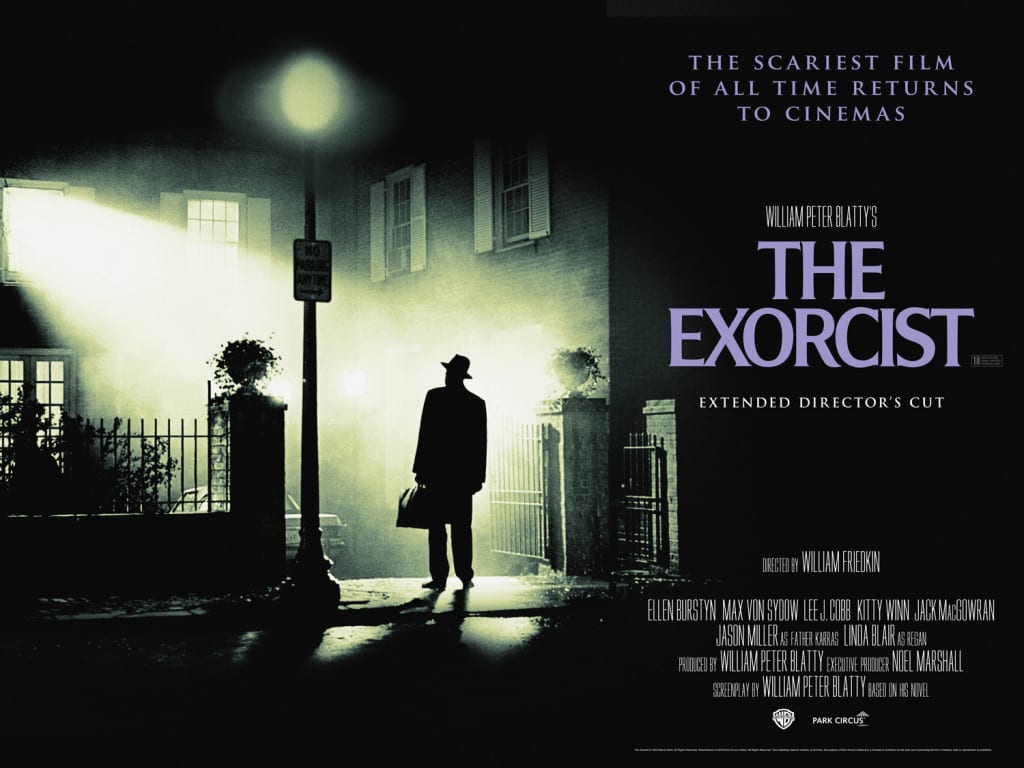
“The Exorcist” (1973) dir. by William Freidkin
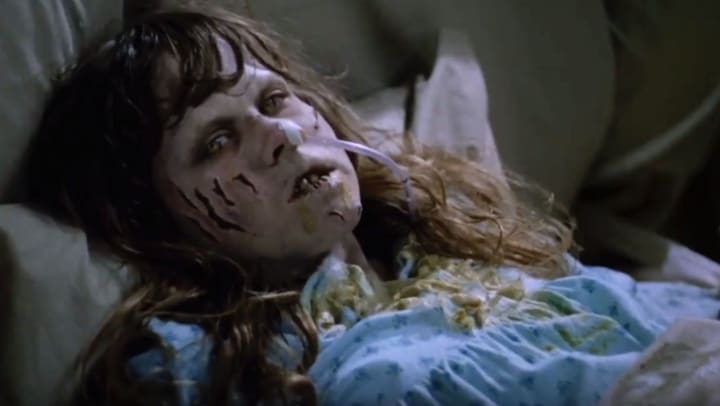
As one of my personal favourite films of all time, “The Exorcist” (1973) has some sort of everlasting effect on the human psyche not because of its terrifying aspect but because all of the hurt and harm in this film is happening to a small child. It’s not like “The Bad Seed” (1956) or “The Omen” (1976) where the children are the emitters of this evil, instead the evil is living inside of a child, hurting her and slowly killing her. Her physical appearance is rugged and scarred and, the more you watch the film the more you realise that this is actually more upsetting than scary. Apart from that there are the other characters, Chris - the mother of Reagan, who gives a brilliant performance as the overtly concerned mother who is going crazy over her daughter’s supposed illness. But another performance is that of Father Karras who becomes the central character of the narrative and through his character, we see the conflict of the day between faith and depression and how difficult faith can be. Father Karras is ultimately the greatest character in the film by my opinion, Jason Miller’s performance of the character would definitely be in my top five film performances of all time.
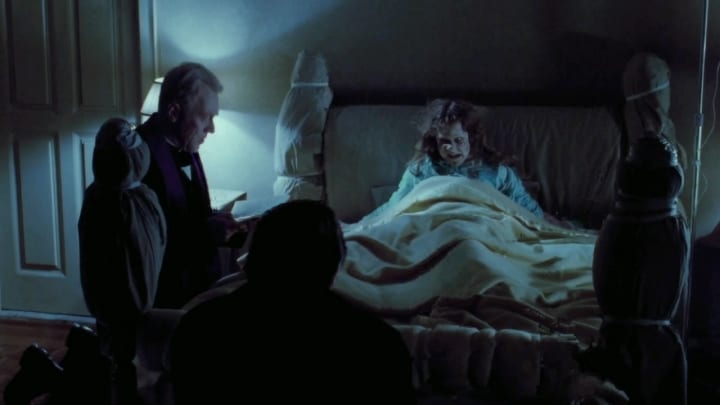
Released on Boxing Day, 1973, “The Exorcist” (1973) quickly became one of the most terrifying things to ever grace the screen. Based on the terrifying novel by William Peter Blatty, the filming style and the cinematic techniques for colour change in the film, I feel really did reflect the different atmospheres and messages offered to us in the book. In 2010, “The Exorcist” (1973) was entered into the National Film Registry as being culturally significant and by God, it was well overdue.
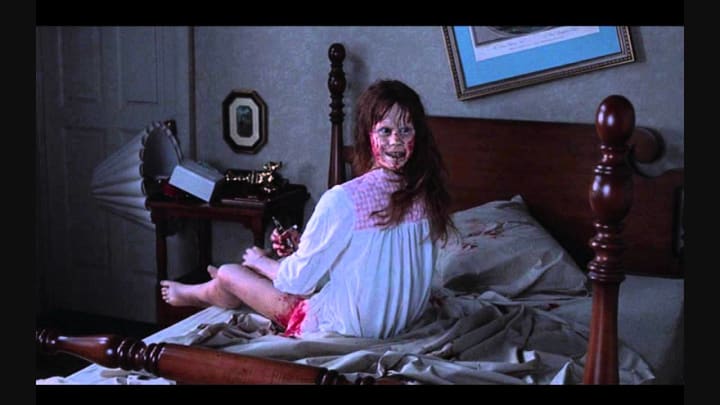
The film may have been a commercial success but the reception to the film by some seemed mixed due to the subject nature and times at which the film was released. An era in which people were rediscovering Christianity and Christian-Cult groups reigned supreme meant that the film had a lot of people writing angry letters to the director and his team. Ultimately, in the UK, it was not shown on television until 2001 and not released on video until the 1980s, which may have been unusual for films but people did not feel it was unusual for this film. Many people not only believe that it is the best film ever made, but even the likes of Martin Scorsese think that it is one of the greatest films to ever grace the screen. Various critics have tried to comment on the fact that both Freidkin and Blatty were Christians who were trying to inspire an influence for God within this work but this has never really been confirmed by the men themselves and since Blatty is now dead, it probably never will be. I will always believe that the very best thing about this film is that even though it was made in the 70s, it can still terrify people today and that is ultimately what is important.
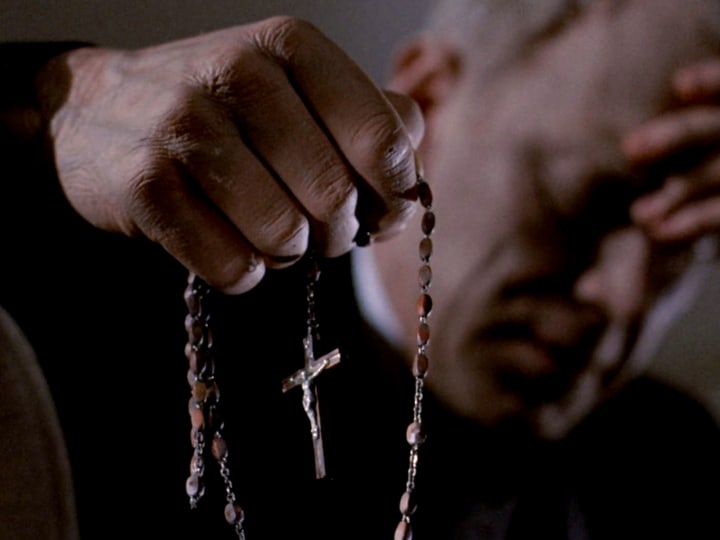
“There is one outside chance for a cure. I think of it as shock treatment - as I said, it's a very outside chance...Have you ever heard of exorcism? Well, it's a stylised ritual in which the rabbi or the priest try to drive out the so-called invading spirit. It's been pretty much discarded these days except by the Catholics who keep it in the closet as a sort of an embarrassment, but uh, it has worked. In fact, although not for the reasons they think, of course. It's purely a force of suggestion. The victim's belief in possession is what helped cause it, so in that same way, a belief in the power of exorcism can make it disappear.”
- ‘The Exorcist’ (1973)
About the Creator
Annie Kapur
I am:
🙋🏽♀️ Annie
📚 Avid Reader
📝 Reviewer and Commentator
🎓 Post-Grad Millennial (M.A)
***
I have:
📖 280K+ reads on Vocal
🫶🏼 Love for reading & research
🦋/X @AnnieWithBooks
***
🏡 UK
Keep reading
More stories from Annie Kapur and writers in Horror and other communities.
A Filmmaker's Review: “The Omen” (1976)
Over many years I have watched “The Omen” (1976) multiple times and have never actually brought myself to review it mostly because I was conflicted about the film. There are many things that make this film one of the greatest thrillers of all time and many things that make this film an amazing lesson in horror. I have been mostly conflicted about what I should cover. As someone who did their MA Thesis mostly in physical and visual body horror, I would like to concentrate on this particular realm in the film and tell you exactly why this is one of the best films to watch for this particular case. In this, we cover the way in which the human body is used as a medium and a force for the tension, the climax and the shock that we feel when something frightening happens. This film, mostly relying on tension, builds to a climax using the human body as the catalyst purely because it is the very thing the film is about: the antichrist has embodied the child. After we understand this, the body horror seems to work in incredible ways if we add to it the Latin Choir that keeps playing every single time the child is responsible for something evil. It is not the child’s body, but the bodies of the other characters that become part and parcel to the horror as the film builds to its climax seemingly at the end of the narrative.
By Annie Kapur5 years ago in Horror
Smart phones, Humans and Aliens.
WARNING. I will be tapping into one of your favorite creative tensions: The absurdity of humans worshipping their glowing rectangles as if they were tiny oracles. There’s something deliciously poetic about that contradiction, and it lends itself beautifully to an instructive proviso.
By Novel Allen4 days ago in Poets


Comments
There are no comments for this story
Be the first to respond and start the conversation.