
7 Greatest Horror Movie Mysteries Revealed
The horror genre is the most complex in cinema, that's why it has always generated great mysteries

Horror movies entertain with a spooky style through convoluted plots. Many of these stories leave questions that are never solved.
Here are seven famous horror movie questions, revealed.
#1.The Substance, 2024, Coralie Fargeat
What internal conflict does ElisabethSparkle experience regarding her identity and Sue?

Elisabeth's journey begins with her dismissal from a fitness show on her 50th birthday, a moment that starkly highlights the entertainment industry's ageism. This event triggers her desperation to reclaim her youth and relevance, leading her to use The Substance, which creates Sue. However, this decision fractures her identity, as she grapples with the reality that her worth is tied to her appearance and societal expectations of beauty.
Elisabeth's reliance on The Substance to maintain her youth leads to an addiction that strips her of control over her life. As she becomes more dependent on Sue's existence, she loses sight of her own identity. This addiction manifests physically and psychologically, as Elisabeth's body begins to decay while Sue flourishes. The horror of this transformation serves as a metaphor for the lengths to which individuals might go to conform to societal ideals, ultimately resulting in a loss of self.
#2.Black Swan, 2010, Darren Aronofsky
What does Nina Sayers feel at the end of the story?

At the end of Black Swan, Nina Sayers experiences a complex mix of emotions that culminate in a tragic yet artistically profound moment. After a harrowing journey marked by obsession and psychological unraveling, Nina performs the role of the Black Swan flawlessly, achieving the perfection she has long sought. However, this moment of triumph is overshadowed by her descent into madness.
In the film's climactic scene, Nina, dressed as the White Swan, performs beautifully but ultimately succumbs to her inner turmoil. As she completes her performance, she feels a profound sense of accomplishment, stating, "I felt it. It was perfect," just before she fatally stabs herself with a shard of glass. This moment encapsulates her tragic realization that her pursuit of perfection has led to her destruction.
Nina's final feelings can be interpreted as a bittersweet blend of joy and despair. She achieves her artistic goal but at the cost of her life, suggesting that her ultimate fulfillment comes only through her tragic end. The film leaves viewers questioning whether her death signifies a release from her struggles or a tragic consequence of her relentless pursuit of perfection.
Thus, Nina's final moments reflect a haunting duality: the ecstasy of artistic achievement intertwined with the horror of self-destruction, making her journey both a tragic and beautiful exploration of the costs of ambition in the world of ballet.
#3.Nightmare on Elm Street, 1984, Wes Craven
What is the final ending of the movie Nightmare on Elm Street?
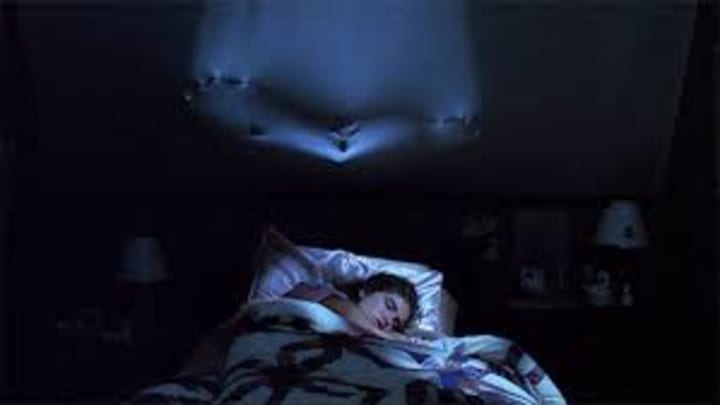
The ending of A Nightmare on Elm Street (1984) is both iconic and ambiguous, leaving viewers with lingering questions about the nature of reality and the character of Freddy Krueger.
In the climax, Nancy Thompson, played by Heather Langenkamp, realizes that Freddy Krueger draws power from her fear. To defeat him, she decides to confront him directly in the dream world. She sets traps in her home, successfully bringing Freddy into the real world. After a tense battle, she appears to overcome him by turning her back on him, effectively taking away his power.
Following this confrontation, the film presents a seemingly happy ending where Nancy wakes up to a bright morning, and her friends, who had previously died, are alive again. However, this tranquility is shattered when Freddy's arm bursts through the window, grabbing her mother, indicating that Freddy is not truly defeated and can return at any moment. This twist suggests that Nancy's victory may be illusory, reinforcing the idea that Freddy represents an inescapable evil.
Wes Craven, the film's creator, originally envisioned a more definitive ending that would leave the audience questioning the reality of the events. However, studio pressures led to a more ambiguous conclusion that set the stage for sequels, ultimately undermining the finality of Nancy's apparent victory.
The ending of A Nightmare on Elm Street encapsulates the struggle against an unstoppable force, leaving viewers with a chilling reminder that nightmares can persist even after waking.
#4.Sleepaway Camp, 1983, Robert Hiltzik
Why didn't anyone realize that Angela Baker was actually a boy and not a girl?
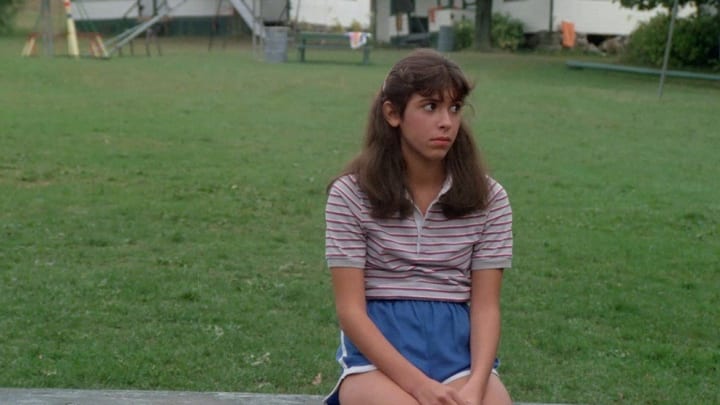
In the movie Sleepaway Camp, the character Angela Baker, who is revealed to be a boy named Peter Baker, is a complex figure whose gender identity and the circumstances surrounding it contribute to the film's shocking twist. The reason why other characters did not realize Angela was actually a boy stems from several factors related to the narrative and character development.
Angela, originally Peter, was forced to live as a girl by her Aunt Martha after a tragic boating accident that claimed the lives of her father and twin sister. Aunt Martha, believing she was raising her deceased niece, imposed a female identity on Peter, which included cross-dressing and adopting a feminine persona. This forced gender identity was maintained throughout Angela's childhood, leading her to present as a girl at Camp Arawak, where the story unfolds.
Angela is portrayed as a shy and introverted girl, which aligns with traditional expectations of femininity. Her long hair and feminine clothing further obscure her biological sex. The film plays on the audience's expectations and societal norms regarding gender presentation, allowing Angela to blend in as a girl without raising suspicion among her peers.
The narrative exploits trans panic as a shock element, culminating in the climactic reveal of Angela's true identity. This twist serves both as a plot device and a commentary on societal fears surrounding gender nonconformity.
Ultimately, the combination of Angela's forced gender presentation, her physical appearance, and the cultural context of the time allowed her to be perceived as a girl by the other campers. The film's shocking ending, where Angela's true identity is revealed, is designed to provoke a strong reaction, reflecting the horror genre's tendency to exploit societal fears about gender and sexuality.
#5.Insidious, 2010, James Wan
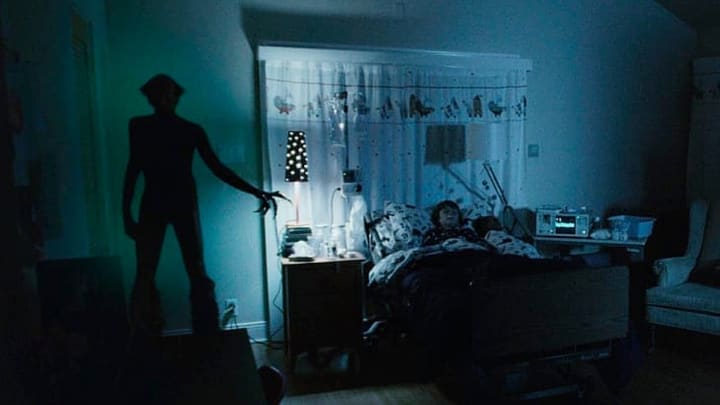
Why Josh Lambert doesn't remember he can astral travel?
In the Insidious film series, particularly in the first two movies, Josh Lambert's inability to remember his capability for astral travel is a significant plot point. This memory loss is a result of a traumatic experience during his childhood.
As a child, Josh Lambert possessed the ability to astral project, allowing his spirit to leave his body and explore the spirit realm known as The Further. However, during one of his astral travels, he inadvertently brought back a malevolent spirit, referred to as the Bride in Black, which began to haunt him. To protect him from the dangers associated with his abilities and the haunting, his mother, Lorraine, sought the help of Elise Rainier, a psychic medium. Elise performed hypnosis on young Josh to suppress his memories of astral projection and the events in The Further, effectively erasing his awareness of these abilities.
This suppression of memory was intended to keep Josh safe from the psychological and supernatural dangers linked to his powers. As a result, when Josh grows up and faces similar supernatural threats through his son Dalton, he does not initially remember his own abilities or the traumatic experiences of his childhood. The hypnosis not only erased his memories but also left him vulnerable to the same dark forces that had previously haunted him.
Josh Lambert does not remember his capability for astral travel due to the deliberate suppression of his memories through hypnosis, aimed at protecting him from the dangers associated with his abilities and the haunting he experienced as a child. This theme of memory and trauma is central to the narrative of the Insidious series, illustrating how past experiences can shape and haunt individuals in profound ways.
#6.The Craft, 1996, Andrew Fleming
Why is Nancy Downs freaking out?
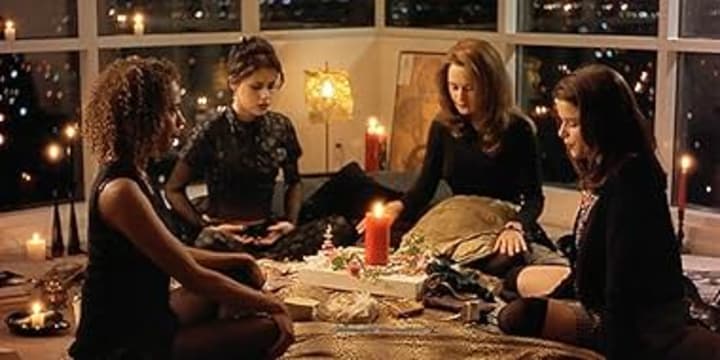
Nancy Downs, a central character in The Craft, experiences a significant emotional and psychological breakdown throughout the film, leading to her increasingly erratic behavior. Her freaking out can be attributed to several intertwined factors:
Nancy's life is marked by trauma and instability. She lives in a rundown trailer park with an abusive stepfather, Ray, and a mother who is emotionally distant. This abusive environment contributes to her feelings of anger, isolation, and desperation for power and control.
Initially, Nancy is drawn to witchcraft as a means to escape her harsh reality. However, her desire for power becomes obsessive. After invoking the spirit of Manon, she gains significant magical abilities, which she begins to misuse. This newfound power exacerbates her instability, leading her to engage in increasingly dangerous and immoral actions, such as manipulating her friends and seeking revenge against those who wronged her.
As the film progresses, Nancy's relationships deteriorate, particularly with Sarah, the new girl who initially joins their coven. When Sarah attempts to distance herself from Nancy and the coven, Nancy feels betrayed. This sense of betrayal triggers a violent reaction, as she lashes out at Sarah and attempts to regain control through intimidation and manipulation.
Nancy's mental health deteriorates as she becomes consumed by her power and the fear of losing it. Her actions become increasingly erratic, culminating in violent confrontations and a complete breakdown. By the end of the film, she is depicted as having lost her grip on reality, ending up in a mental institution, which reflects the film's commentary on the consequences of unchecked ambition and the societal perception of women who seek power.
Nancy Downs' freak-out is a complex interplay of her traumatic upbringing, obsessive quest for power, feelings of betrayal, and eventual mental instability, making her one of the most compelling and tragic characters in The Craft.
#7.The Perfection, 2019, Richard Shepard
What do Charlotte and Lizzie really feel about each other?
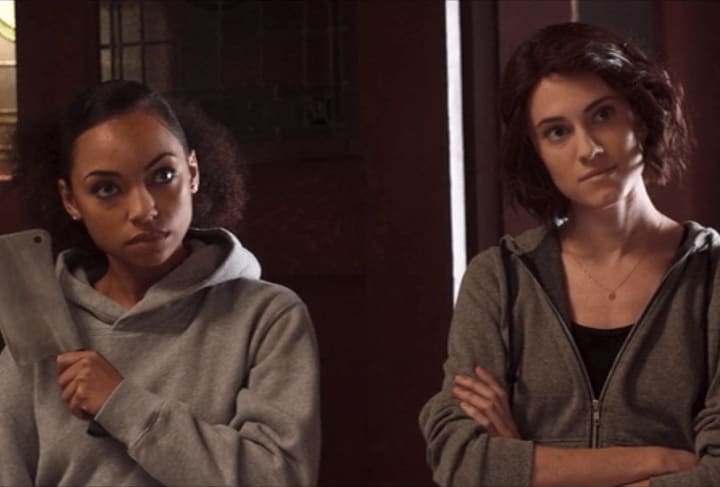
The relationship between Charlotte and Lizzie in The Perfection is complex and multifaceted, characterized by a blend of admiration, rivalry, and deep emotional connection.
Initially, Charlotte and Lizzie share a strong mutual admiration. Charlotte, a former prodigy, feels a sense of idolization towards Lizzie, who has achieved the fame and success that Charlotte lost due to personal tragedy. Their reunion in Shanghai is marked by a palpable chemistry, where Charlotte expresses genuine adoration for Lizzie's talent and beauty. This admiration quickly evolves into a romantic and sexual attraction, culminating in a passionate encounter between the two women.
Despite their initial connection, the film introduces elements of rivalry. Charlotte's return to the music scene and her interactions with Lizzie are tinged with the complexities of jealousy and competition. Critics note that the film plays with the audience's expectations, suggesting that Charlotte's motivations might stem from envy of Lizzie's success. However, this rivalry is complicated by the underlying emotional bond they share, making it difficult to categorize their relationship strictly as one of competition.
As the plot unfolds, the relationship takes a darker turn, revealing deeper themes of trauma and revenge. Both characters are victims of a manipulative and abusive music academy, which adds layers to their connection. Their bond is tested through extreme circumstances, including a shocking act where Charlotte convinces Lizzie to harm herself as part of a twisted plan to escape their past and confront their abusers. This act, while horrific, is framed within the context of their shared trauma, suggesting that their feelings for each other are intertwined with their experiences of violence and survival.
Charlotte and Lizzie's relationship is a blend of admiration, rivalry, and a deep emotional connection forged through shared trauma. Their interactions reflect a complex dynamic that challenges traditional narratives of female relationships, showcasing both the beauty and horror of their bond. The film leaves viewers questioning the nature of their feelings, as they navigate a world filled with manipulation, revenge, and the quest for personal redemption.
About the Creator
Ninfa Galeano
Journalist. Content Creator. Media Lover. Geek. LGBTQ+.
Visit eeriecast ,where you'll find anonymous horror stories from all over the world. Causing insomnia since 2023.
Keep reading
More stories from Ninfa Galeano and writers in Horror and other communities.
The Amityville Horror Franchise: Ranking from the best to the worst movie
The original Amityville Horror film, released in 1979, is primarily inspired by the tragic real-life events surrounding the DeFeo family murders that occurred on November 13, 1974. Here’s a detailed overview of the events that led to the film's creation:
By Ninfa Galeano8 months ago in Horror


Comments (2)
The Substance is masterfully directed, it blew my mind that a woman was directing this masterpiece.
Elisabeth & Sue, BEST couple in horror genre.