
11 Creepy Urban Legends
These stories have been around for years, from monsters to ghosts, here are 11 hair-raising urban legends.

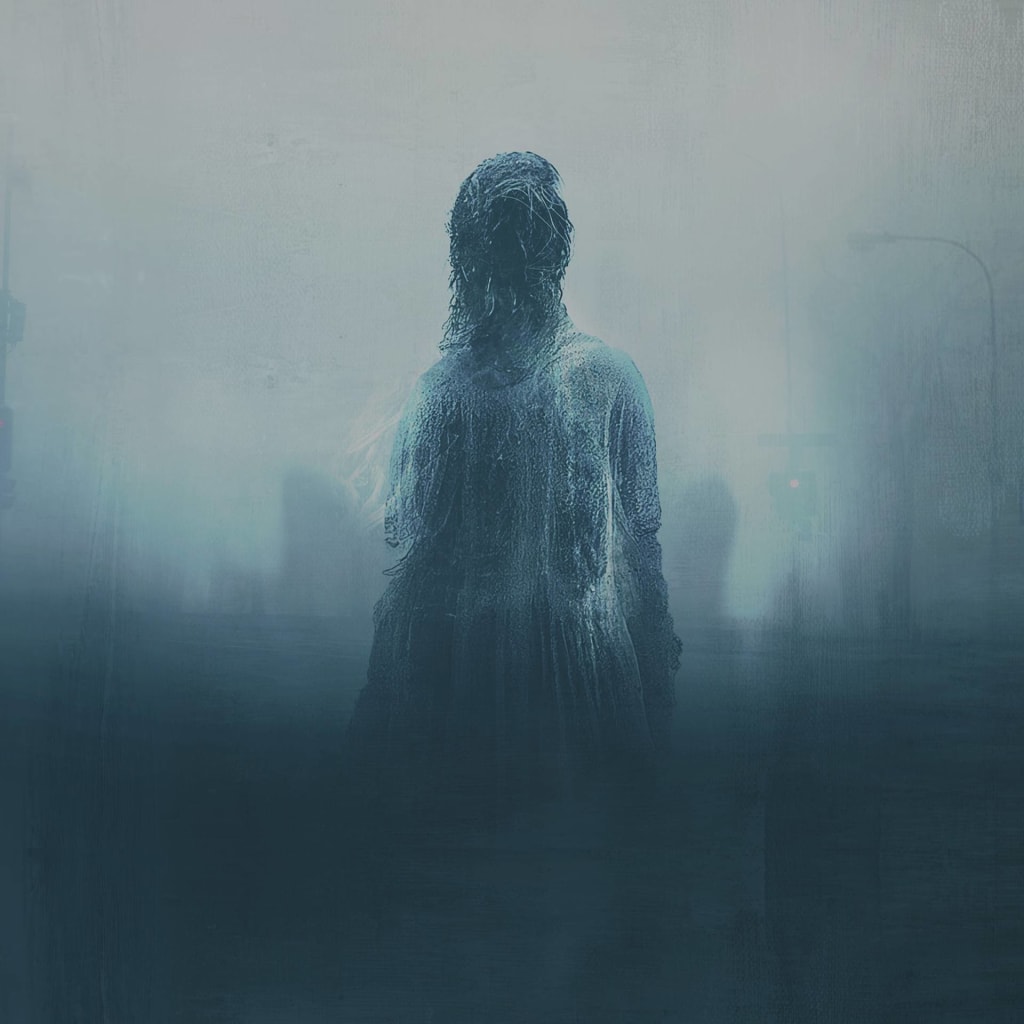
Urban legends have existed for ages, people would warn one another of bloodthirsty entities, like the Chupacabra of Puerto Rican lore or the Jersey Devil of New Jersey Pine Barrens.
Urban myths are naturally imaginative, and some have been supported by the sincere accounts of multiple people. For example, in 1966, a number of rural West Virginians all separately witnessed a 10-foot, tailed creature that was flying between trees. This would suggest that the legend may have been more than just a fantasy.
But what could be more horrifying about these legends are how they take on a life of their own and inspire real fear or even violence.
Slender Man
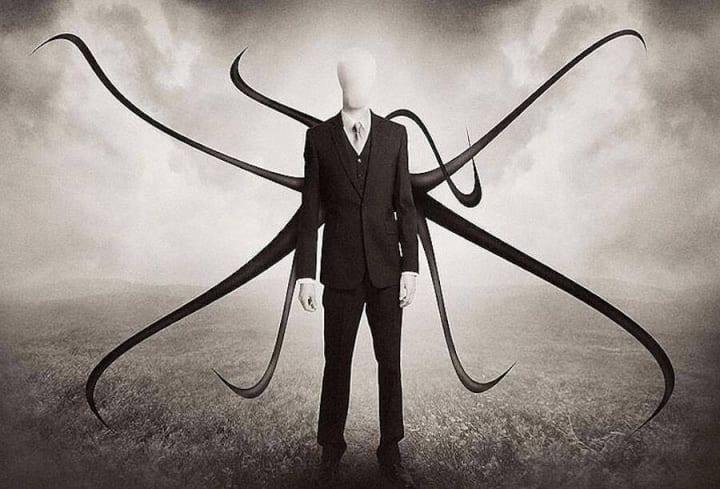
Slender Man started on the internet as a "creepypasta," or scary urban legend that was built online before he ended up in real life.
The myth of Slender Man was created for a June 2009 Photoshop contest that was held by a website called "Something Awful." People were presented with a challenge to take mundane every day photos and make them scary by adding realistic imagery of the paranormal. One contestant, Eric Knudsen, was inspired by the "surreal imaginings" of H.P. Lovecraft. So he designed a tall, thin, eerie figure.
Knudsen's creativity was quickly co-opted by countless internet users. days later someone made a horror film with a found footage aesthetic. It told a story of young students being stalked by a Slender Man like figure. New images were then made and a spooky mythos that lived offline was also created. According to creepypasta forms, Slender Man beckoned children into the forests where he would then order them to kill in order to become his proxies.
On May 30th, 2014, two 12-year-old girls named Morgan Geyser and Anissa Weier believed the urban legend. So, the pair lured their friend into the woods outside their Milwaukee suburb where they planned to murder her and leave her as an offering for Slender Man. They stabbed their 12-year-old friend, Payton Leutner, 19 times and then left her in the woods to die.
Leutner managed to survive, she was bleeding from her torso, arms, and legs, but she dragged herself to a nearby path and was discovered by a cyclist who quickly called 911. Geyser and Weier were arrested shortly after Leutner was rescued.

Geyser and Weier admitted to police they had planned the attack for months, starting in December 2013. Weier claimed that Geyser was the one to propose the idea, they both believed that it would earn them entry into Slender Man's home and a place as his proxies. They believed so deeply in the urban legend that they used a kitchen knife to attempt to murder their friend they had known since they were in fourth grade.
The state of Wisconsin decided to try the two girls as adults and Geyser was diagnosed with schizophrenia. A jury found Weier no criminall responsible because she suffered from a "shared delusional disorder." Geyer was sentenced to 40 years under institutional care.
La Llorona

La Llorona, or the weeping woman, is a tragic figure in Mexican folklore. She is a ghostly apparition that wears white and wanders the country's watersides in profound grief. Some whisper that she steals children to drown them in a nearby body of water. Her story is possibly centuries old and has gained some renewed attention after the release of the movie The Curse of La Llorona.
There is several origin stories for the myth of La Llorona, the earliest dates back 400 years ago. Some believe that la Llorona is a conflation of two Aztec myths, or maybe she is based off of these as well.
The Aztec myth describes a similar, willowy and white figure that was one of 10 goddesses or omens that heralded the conquest of Mexico. She was called Chiuacoatl, or Snake Woman. She is described to be a savage beast and an evil omen who walked around at night and cries into the moonlight. Another goddess named Chalchiuhticue, or the Jade-skirted one, oversaw the waters and she is known to drown people and the Aztecs would sacrifice children to honor her.
But the more modern version describes a beautiful young peasant woman that was named Maria who married a wealthy man. The two lived happily and had two children together, but Maria's husband became unfaithful. One day, Maria and her children caught him being romantically engaged with another woman by the river.
Maria was enraged so she threw her children into the river and drowned them. After her anger subsidized and she realized what she had done, she spent the rest of her life in profound grief and hopelessly wandered the waterside hoping to find her children.
The urban legend could just remain a story, if it wasn't for the chilling accounts of those who have claimed to have seen her.
Patricio Lujan claimed to have had his first encounter with the woman when he was a boy in the 1930s in New Mexico. According to Lujan, even his parents saw the strange woman near their property in Santa Fe, she was drifting towards the local creek wearing a white dress that covered her tall, slender body. Once she reached the water, she vanished.
"She just seems to glide as if having no legs," Lujan said about the woman.
Lujan wouldn't be the first nor the last to describe an encounter with the weeping woman. The urban legend is popular in the southern states of the U.S and Mexico and many are convinced they have witnessed it for themselves.
Mothman

The first ever report of Mothman was November 12th, 1966. Multiple sightings of the monster that year challenged the notion that this bizarre creature was just in people's imagination.
On that November day in 1966, a Clendenin, West Virginia gravedigger claimed that they saw an unsettling creature that looked like a "brown human being" that soared over his head and moved from tree to tree at high speed. Three days after this, four people who drove through the nearby town of Point Pleasant saw a gray-winged entity that stood at seven feet tall standing in front of their car. Roger Scarberry and Steve Mallet said that the creature had bright red eyes and a wingspan that reached 10 feet.
Each witness commented on the speed of the creature, one of them even claimed that it fled at up to 100 miles an hour and appeared to dislike the car's headlights. They also claimed that the being chased their vehicle out of town before it vanished into a field.
"If I had seen it while by myself, I wouldn't have said anything," Said Scarberry, "But there were four of us who saw it."
The years following saw an ominous increase of sightings of the creature across the state of West Virginia. The creature was featured in The Gettysburg Times eight times since the gravediggers initial report, this included two firefighters that described a very large bird that had large red eyes.
Salem, West Virginia resident, Newell Patridge, claimed that he saw two red eyes staring back at him after his TV displayed bizarre patterns and he went outside to investigate a strange noise. This same night his dog vanished.
With all the believers, there will always be skeptics. West Virginia professor of wildlife biology, Dr. Robert L. Smith dismissed the legend as simply a misidentification of a sandhill crane bird. Others are convinced that the myth was spread by a committed prankster.
Some believed that the Mothman was a harbinger of doom. This idea was only reinforced on December 15th, 1967 when Point Pleasant's Silver Bridge collapsed. Cars and pedestrians were thrown into the icy Ohio River below and 46 people died.
Author John Keel linked this bridge collapse with the Mothman's sightings. He wrote a book in 1975 titled The Mothman Prophecies, this book was later adapted into a film under the same name.
Chupacabra
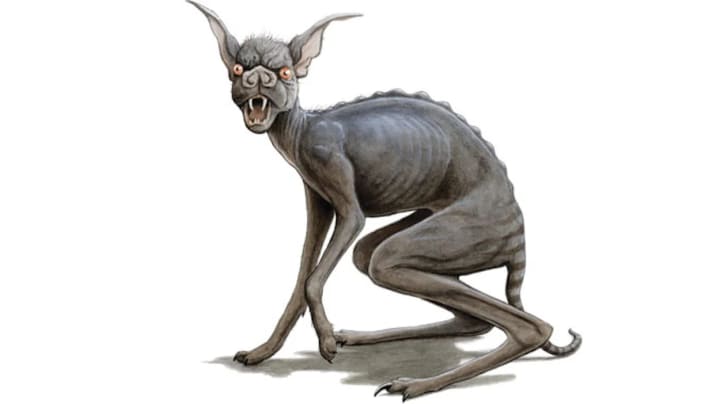
The Chupacabra, or "goat-sucker," has been described to be the size of a small bear, with scaly skin, and a spike tail. It is said to drink the blood of livestock across the Americas.
It is a staple in Puerto Rican folklore, its said to feed on everything from chickens and sheep to rabbits and dogs. Skeptics are quick to dismiss the Chupacabra as simply an urban legend, but many have claimed to have lost their farm animals to the bizarre beast. They have found the inexplicably bloodless corpses of their animals to prove it.
The earliest recorded sightings of the beast happened in a small town of Moca in 1975. Livestock was found completely drained of their blood and only had small puncture wounds in their chests. Many were quick to suspect a local Satanic cult, as more farms reported dead animals that were all bled dry through these small circular incisions.
In 1995, Madelyne Tolentino watched from her window in her Canovanas, Puerto Rico home as a bipedal creature was hopping around her property. She described it to reek of Sulphur. Others corroborated her description, but they said the creature they spotted was hairless.
This same year, eight sheep were found dead with three puncture wounds to their chest and they were reportedly drained of blood. 150 farm animals and pets were reportedly killed in this manner in Tolentino's town. But it didn't end here.
Sightings of the monster continue to this day and across the world. In October 2018 and December 2018, there were reports of suspected Chupacabra attacks in Manipur, India. And a man named Mundo Ovni allegedly recorded an attack on chickens in 2019 in the Suburuquillo sector of Lares, Puerto Rico.
"I was of course initially skeptical of the creatures existence," Said Benjamin Radford, American writer, "At the same time I was mindful that new animals have yet to be discovered. I didn't want to just debunk or dismiss it. If the Chupacabra is real, I wanted to find it."
Redford embarked on a years-long quest to find or disprove if the Chupacabra exists. He concluded that the legend was merely spurred by anti-U.S. sentiment within Puerto Rico. He believed that the locals there feared that Americans set up an experimentation program in the El Yunque rainforest and that they let loose a hairless beast.
There was a sci-fi movie released called Species. It features an alien-human hybrid that ravaged the land and drank blood. The movie was partially filmed in Puerto Rico. Tolentino saw the film the same year that she reported her Chupacabra sighting.
"It's all there," Radford said, "She sees the movie, then later she sees something she mistakes for a monster."
Farmers continued to find bodies of hairless, four-legged creatures with burnt-looking skin well into the 2000s. Authorities identified the creatures as dogs with mange, this condition rendered them patchy, scaly, and largely hairless. Despite this explanation, the urban legend has yet to be fully dismissed.
Mapinguari

The Mapinguari is a monstrous entity that lives deep in the Amazon rainforest. There have been various depictions of the beast, ranging for a hair humanoid cyclops that walks on two legs to something that resembles a giant ground sloth that has been extinct for thousands of years.
Native tribes in the Amazon have their own version of the beast. Even tribes that have not encountered the beast have similar descriptions of the Mapinguari, The name Mapinguari translates to "the roaring animal," or "the fetid beast." The creature is said to be bipedal, seven feet tall, having long, curling claws. Others have also claimed that the creature has a gaping mouth on its stomach.
Scientists have gone on countless expeditions to find the creature. The endeavor has remained fruitless and the former director of research at the Gold institute in Belem, David Oren, has developed a theory.
"It is quite clear to be that the legend of the Mapinguari is based on human contact with the last ground sloths, thousands of years ago. We know that extinct species can survive as legends for hundreds of years. But whether such an animal still exists or not is another questions, one we can't answer."
The ginormous prehistoric sloth is known as Megatherium and it inhabited South America for 5.3 million years until it went mysteriously extinct at the end of the Pleistocene era. Scientists have discovered fossils of the giant ground sloth that date back 11,000 years ago, and this suggests that it cohabited with humans. The animal is said to have emitted a foul stench and fed on large animals such as cattle.
Some believe that this creature lives on. Lucas Karitana of the Karitiana tribe located in Brazil is adamant that his son has encountered the creature in the forest. The young man escaped, the Mapinguari left the area in ruins, "as if a boulder had rolled through and knocked down all the trees and vines."
It could be that scientists are correct and the myth is the remnants of a prehistoric man's imagination or the beast isn't extinct and survived for millennia, and it secretly dwells in the Amazon.
Bloody Mary

I'm sure you've heard that if you stare into your bathroom mirror and repeat "Bloody Mary" into it you will summon the spirit of a woman. That woman is believed to be Queen Mary I of England.
Some are adamant that Mary's name must be repeated 13 times, and others claim that three times is enough. Some also claim that when she appears she will be holding a dead baby and others insist that she will come after you or your own children when she is summoned.
The tale is rooted in medieval history and it begins with the birth of the first queen regent of England, Queen Mary I. She was the eldest surviving child of King Henry VIII, she didn't fulfill her father's desperate, lifelong hope to have a male heir. She was ignored by her father and declared illegitimate by Parliament.
She was isolated and her life was plagued by pain. Mary experienced terrible menstrual pains and irregularity in her cycles, she also experienced deep bouts of depression. Mary ended up taking the throne at age 37 after she married Philip of Spain and became pregnant with his child.
When her due date came, her baby never did. The country was shocked. Mary looked pregnant, but after her due date passed, so did her belly. Mary was struggling with her false inexplicable false pregnancy. She signed an act into law known as Marian Persecutions. 240 men and 60 women were burned at the stake for being Protestant.
The monarch believed that she was punished by God for her actions and she died at 42 without bearing any children.
There are other stories of the myth of Bloody Mary, more on the paranormal side. The most famous is the tale of a witch named Mary who is said to have been executed for studying black magic.
Mary would appear in a mirror during diving rituals in medieval times in order to seek vengeance. Some believe that this mirror-witch kills her summoner upon arrival. Other claim that she drags her victims through the mirror into her world.
Candyman
The urban legend of the Candyman begins and ends with the eponymous 1992 horror film. The legend that the film is based on is inspired by Chicago's inner-city violence, segregation laws, and slavery, and systemic racism.
The film is also based on the 1981 short story by Clive Barker The Forbidden, in which Candyman was originally depicted to be a white man dressed in a patchwork outfit. It is set in the slums of Liverpool, England, it tells the story about a young woman who is studying graffiti and finds herself hunted by a deadly figure.
The same year that Barker published his story, the Cabrini-Green housing projects in Chicago recorded 11 murders and 37 murders by gunfire, all in the span of three months. It was the combination of Barker's short story and America's bloody, racist climate that worked to inspire the urban legend.
In the film there is an urban myth that revolves around a former slave named Daniel Robitaille. He was a successful shoe manufacturer, he soon became a respectable painter and was commissioned to paint a portrait of a woman named Caroline Sullivan. The pair ended up falling in love and Sullivan became pregnant out of wedlock.
An enraged white mob subsequently cut Robitaille's right hand off, then smeared it in honey, and let a swarm of killer bees sting the man to death. Robitaille returned as an angry ghost and he vowed to kill anyone who uttered the name "Candyman" five times into a mirror. He would appear behind the summoner and kill them with his hook hand.
The film took cues from Chicago's violent realities during the 80s and was shot in Chicago at the Cabrini-Green projects. One chilling murder that took place at the Cabrini-Green project inspired the movie.
It was on April 22nd, 1987, a mentally ill woman named Ruthie Mae McCoy called 911 for help. She claimed that someone was trying to invade her home through the bathroom mirror. The neighbors reported gunshots after this, but it still took police two days to report to the scene, they found McCoy shot to death ad a hole in the bathroom wall.
Phantom Social Workers
This legend began in the 1990s, when British newspapers started to report on unidentified men who posed as social workers and took children from their homes for an "evaluation."
According to the legend, one man, who would often be accompanied by several women, would be masquerade as a social worker. The man would enter and inspect homes and examine children for signs of abuse, he would then whisk them away and they would never be seen again.
The myth spawned hysteria, this led to local law enforcement in South Yorkshire to create a task force to investigate. Operation Childcare received more than 250 reports of this sort of abduction as a result, but only two proved to be valid.
One of the reports was from Anne Wylie, she claimed that a woman that was pretending to be a social worker suddenly appeared in her home after her toddler had been hospitalized for asthma.
The woman in question had no identification and was accompanied by a man who was waiting outside. Wylie was suspicious, so she demanded more information. The woman placed her son's medical records on the table. After the two left, Wylie confirmed they weren't social workers at all.
Even with this report, in the four years that Operation Childcare was active, there was no arrests made. Authorities instead blamed the press for hyping a small, legitimate problem into large-scale paranoia that then created an urban legend.
There were at least two groups of people who were abducting children by posing as social workers. The authorities believed that these people were actually vigilantes that believed it was their duty to protect children from abuse, this was during a wake of a major child abuse scandal in the 80s.
This scandal involved two pediatricians, Maretta Higgs and Geoffrey Watt. These two doctors developed a diagnostic test to detect sexual abuse in children, this involved probing the area around a child's anus. This would end up traumatizing the subjects more than it did save.
There were dozens of children that were referred to a Middlesborough hospital as a result, there was a record 24 children being admitted in one day. They removed a total of 121 children from their homes and incorrectly identified 94 of these children as abuse victims.
So, it is no wonder than in 1991, a year after the "phantom" social worker scare, legislators implemented the Children Act. This enforced strict regulations for social workers.
Jersey Devil

The Jersey Devil has kept residents awake at night for more than 300 years. The beast has many descriptions, it has been described as a horse-faced demon with bat wings to a dog-headed entity that has talons similar to a dragon. It is one of America's oldest urban myths, and the origins of the creature vary. It is unarguable that the urban myth first appeared in the Jersey Pine Barrens.
It is said that the Jersey Devil, also called the Leeds Devil, dates back to 1735. A woman named Mother Leeds learned she was pregnant with her 13th child. She was desperate, so she cursed the unborn child, when the child gave birth 9 months later, a winged creature slithered out of her body and then escaped from the chimney. There are different versions of the story, some say that Mother Leeds is a witch that was impregnated by the devil on purpose.
The Jersey Devil is described to fly across the land and kill local children in early accounts. The myth grew stronger over time and Emperor Napoleon's older brother Joseph reported seeing the creature in New Jersey in 1820.
In 1840, there were mysterious killings of livestock, this was tied to the beast. Newspapers around New Jersey started to report on a number of sightings in 1909, this was when people started to find mysterious footprints on the ground, shadows that fell across their windows, and unidentified and decomposed carcasses found in the woods. Citizens were terrified, so they closed schools for a week in January in 1909 and the "Jersey Devil" was now the beasts official name.
In 1960 there was a reward of $10,000 on behalf of Camden merchants for those who managed to capture the beast. It has yet to be claimed.

Edward Mordrake

Edward Mordrake was described as a man who was doomed with a second face on the back of his head. His situation was popularized by George Gould and Walter Pyle in a science textbook in 1896. Mordrake's story is a fabrication-turned-urban legend.
A story published on December 8th, 1895 in the Boston Sunday Post, titled "The Wonders of Modern Society," described a man named Edward Mordrake who had a second, female face, they said "lovely as a dream, hideous as a devil." The face would whisper "such things as they only speak of in hell" to Mordrake during the ngiht and it would sneer at him whenever he was crying.
He was driven insane by the face, it was said he ended his own life at age 23. His suicide note begged for the face to be destroyed, "lest it continues its dreadful whispering in my grave."
Gould and Pyle popularized the tragic tale in their book Anomalies and Curiosities of Medicine. It was published the year after Mordrake died.
Those who are born with an extra face rarely live long and none are capable of independent speech, since there is only one brain. It was in 2015 when the Museum of Hoaxes uncovered the original Boston Sunday Post article about Mordrake was written by a science-fiction author and was baseless.
The article cited the "Royal Scientific Society," as one of the most substantial sources, but this specific organization didn't exist.
The writer also made references to the Fish Woman of Lincoln (a mermaid-type creature) and the Norfolk Spider (a human head with six legs) were also entirely fabricated. No literary or scientific database yielded anything similar to the creatures.
The urban myth of Edward Mordrake had endured. More recently chronicled in American Horror Story to chilling effect. What is most ghastly about this urban legend is how quickly a narrative can take hold and reverberate in popular consciousness for centuries.
Skinwalkers

The Navajo Skinwalker is a humanoid shapeshifter that can transform into a four-legged beast, it terrorizes families in the American Southwest. The Skinwalker has deep roots in Native American lore.
Mainstream America heard about this legend in 1996, when The Deseret News publishedan article about a Utah's family's experience with a ferocious beast that killed its cattle. They moved to their new ranch only 18 months prior. Terry Sherman, the father of the family, spotted the creature for the first time.
He claimed that the beast was three times bigger than a wolf and had glowing red eyes. Even more disturbingly, it appeared unfazed when he shot at it. The Shermans ended up moving out shortly after the incident and several new owners of the home reported similar encounters. This property is known as Skinwalker Ranch today. It is believed to be a hub of paranormal activity.
"Skinwalker," according to The Navajo-English Dictionary, was translated from the Navajo yee naaldlooshii, this means "by means of it, it goes on all fours." Navajo folklore describes a range of these creatures, and the Pueblo, Apache, and Hopi people all have their own origin stories for the beasts.
There are some traditions that claim that the creatures are borne of Navajo medicine men who, initially benevolent, abuse their powers for personal gain. They are bestowed with mythical powers of evil, these tribesmen can then transform into any animal or person, but, they have a ravenous bloodlust after they discover their new found abilities. They are near-impossible to kill unless it is with a knife or bullet that has been dipped in white ash.
The Navajo are vehemently opposed to discussing the Skinwalker with outsiders, and even with those among them.
There have been inexplicable sightings on the Sherman's ranch, the area is a hotbed of paranormal activity. On March 12th, 1997, biochemist Dr. Colm Kelleher reported a Skinwalker on the property, it was perched 20 feet off the ground and 50 feet away from the man. He described it as hard to see clearly, but the creature was nonhuman.
"The large creature lay motionless, almost casually, in the tree. The only indication of the beast's presence was the penetrating yellow light of the unblinking eyes as they stared fixedly back into the light."
About the Creator
Max
I wish for a better world



Comments
There are no comments for this story
Be the first to respond and start the conversation.