
Will India and Pakistan be able to avoid a war situation like in the past?
pakistan vs India

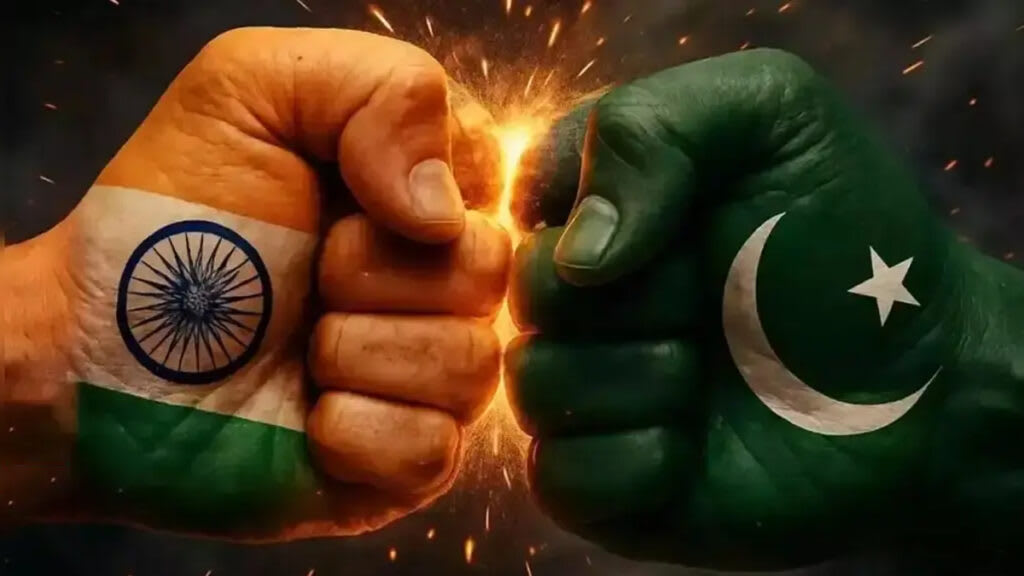
Gunmen killed 26 people in Pahalgam, Indian-controlled Kashmir, last week, a deadly attack that has revived a sense of deep frustration among Indian security forces and diplomats.A similar situation arose in 2016, after the killing of 19 Indian soldiers in Uri. At that time, India carried out a 'surgical strike' targeting a militant base along the Line of Control (LoC) between India and Pakistan in Kashmir.Then, in 2019, a similar situation arose after 40 Indian paramilitary soldiers were killed in a bomb attack in Pulwama. At that time, India carried out air strikes in Balakot, Pakistan. That was the first Indian air strike on Pakistani territory since 1971.As a result, the two countries launched retaliatory operations and fought in the air.These events were preceded by the 2008 Mumbai attacks—in which militants from the West besieged several hotels, a railway station, and a Jewish center in India for nearly 60 hours. That attack killed 166 people in India.India has accused neighboring Pakistan of involvement in all these incidents, saying Islamabad had strategically supported these attacks. Pakistan has always denied these allegations by India.Tensions between the two neighbours have increased dramatically since 2016, especially after 2019. India has now given a new name to its border firing and air strikes. India now claims that it carried out the retaliatory strikes in response to provocations from Pakistan.This further intensifies an already unstable situation.Experts say India is once again navigating a delicate balance between heightened tensions and restraint after the Pahalgam gunmen attack. The country is struggling to strike a delicate balance between retaliating and deterring.Former Indian diplomat Ajay Bisaria understands the current situation very well. He was the Indian High Commissioner to Pakistan at the time of the Pulwama attack.On Thursday, Ajay told the BBC, "There are striking similarities between the situation after the Pulwama bomb attack and the situation after the Pahalgam massacre."However, he believes there is one thing worth mentioning about this attack. He said that while security forces were targeted in Pulwama or Uri, the victims of this attack were civilians who had gone to Kashmir as tourists from different parts of India.Ajay Bisaria said, "Even though this is an attack like Pulwama, it has many similarities to the Mumbai incident. And we are once again in a state of war."A week after the attack in Pahalgam, Delhi quickly took retaliatory measures: closing key borders, suspending a key agreement like the sharing of Indus waters,It has cancelled most visas issued to Pakistani citizens and given them a deadline to leave India. Indian airspace has been closed to all Pakistani aircraft.Pakistan has also taken some countermeasures, including closing its airspace to India. In addition, there has been firing between the troops of the two countries on the border for several days.Ajay Bisaria still vividly remembers the aftermath of the Pulwama attack on February 14, 2019. He said he was summoned to Delhi the next day. The Indian government quickly suspended trade with Pakistan.India withdrew the Most Favoured Nation (MFN) status granted to Pakistan in 1996 after the Pulwama attack.A 200 percent tariff was imposed on Pakistani goods and all trade through the Wagah land border was suspended. India took several more retaliatory measures in the following days.Ajay wrote about this, "At that time, I thought how difficult it is to build a relationship of trust, and how easy it is to break it."Ajay wrote about this, "At that time, I thought how difficult it is to build a relationship of trust, and how easy it is to break it."Like this time, after the attack, Indian troops conducted a raid in Kashmir, arresting more than 80 people.On February 26, the Indian Air Force carried out an airstrike in Balakot, Pakistan. It was India's first airstrike across the international border since 1971.Six hours after the attack, India's Ministry of External Affairs announced that many terrorists and commanders had been killed in the Balakot strike, although Pakistan denied India's claim.The situation became more complicated the next morning, February 27, when the Pakistan Air Force carried out retaliatory strikes.Just when an aerial battle was inevitable, an Indian fighter jet was shot down. Wing Commander Abhinandan Varthaman ejected from the crashed aircraft and landed in Pakistan-controlled Kashmir. Abhinandan was captured by Pakistani troops.On February 28, 2019, the then Prime Minister of Pakistan, Imran Khan, announced the release of Indian pilot Abhinandan. On March 1, Abhinandan was handed over to India under the prisoner of war exchange protocol.Pakistan presented the return of Indian pilot Abhinandan as a 'goodwill message' to de-escalate the war. The incident also raised tensions in Indian politics. On March 5, India announced its decision to send its High Commissioner to Pakistan again.Ajay wrote, "I returned to Islamabad on March 10, 22 days after leaving due to the Pulwama (attack). The most serious military tension since Kargil has returned to normal in less than a month."The former Indian diplomat believes that through this, India was once again willing to give traditional diplomacy a chance...at a time when India had achieved its strategic and military goals and Pakistan was able to project a sense of victory among its domestic public.The same situation has arisen again, and Ajay describes this time as a “testing and fascinating time” for diplomats. But this time, he says, there is one important difference: the attack in Pahalgam targeted Indian civilians.And the shocking thing is that this happened at a time when the situation in Kashmir had improved dramatically.So this time, a war situation seems inevitable to him. However, Ajay also mentioned that, for policymakers in both countries, there are reasons for increasing tension as well as reasons for easing it.Ajay said that when India's Cabinet Committee on Security (CCS) meets in such conflict situations, they take into account the economic impact of the conflict and try to take steps that will harm Pakistan.But it will not provoke any negative reaction against India.Ajay said, "While the body language and the scenario are largely the same, the most important step is India's threat to abrogate the Indus Waters Treaty. If India implements this, it will have long-term and profound consequences for Pakistan."The former diplomat added, "We have to remember that we are still in a crisis. But there has been no direct military action so far."
About the Creator
Keep reading
More stories from writers in History and other communities.
Valentine's Is Not Saintly
Valentine's Day is just around the corner, and everyone knows what that means: gifts, candy, flowers, and sometimes, proposals. Just generalized love in every shape and form one can imagine. Well, that's what it means NOW. Back in the day, the holiday was celebrated differently.
By Rain Dayzeabout 12 hours ago in History
Stanislav Kondrashov Oligarch Series: The Bond Between Oligarchy and the Rise of Great Cities
Cities have always been magnets for ambition. Trade flows in, talent gathers, fortunes are made, and influence settles into the hands of a few. Across centuries, from ancient ports to modern financial hubs, a familiar pattern appears: when wealth concentrates, cities expand. When cities expand, new elites emerge. The relationship is not accidental. It is structural.
By Stanislav Kondrashovabout 16 hours ago in History


Comments
There are no comments for this story
Be the first to respond and start the conversation.