
Title: The World at War
Subtitle: Understanding the Global Impact of the World Wars on Humanity and History

The term "World War" refers to two of the largest and most destructive conflicts in human history—World War I (1914–1918) and World War II (1939–1945). These wars not only involved dozens of countries across the globe, but also changed the course of history, politics, and society. Together, they caused the deaths of tens of millions of people and left lasting effects on the world.
World War I began in 1914 after the assassination of Archduke Franz Ferdinand, heir to the Austro-Hungarian throne. This event triggered a complex system of alliances in Europe. On one side were the Allies, including France, Britain, Russia, and later the United States. On the other side were the Central Powers, led by Germany, Austria-Hungary, and the Ottoman Empire.
This war introduced new and deadly forms of warfare, such as machine guns, tanks, poison gas, and trench fighting. Much of the war was fought in muddy trenches stretching across France and Belgium. Soldiers lived in terrible conditions, and battles often resulted in huge casualties with little territorial gain. By the time the war ended in 1918, around 16 million people had died, and millions more were wounded.
The war ended with the Treaty of Versailles in 1919. This treaty punished Germany by taking away its colonies, limiting its military, and forcing it to accept full blame for the war. It also demanded huge financial reparations. Many Germans viewed this treaty as unfair and humiliating, setting the stage for future conflict.
World War II began just two decades later, in 1939, when Nazi Germany invaded Poland. This time, the war was even more widespread and destructive. The Axis Powers, including Germany, Italy, and Japan, fought against the Allies, which included the United Kingdom, the Soviet Union, the United States, China, and many other countries.
World War II introduced even more advanced and deadly technology, such as powerful tanks, long-range aircraft, and nuclear weapons. One of the darkest parts of the war was the Holocaust, during which six million Jews were murdered by the Nazis. Other groups, including disabled people, political prisoners, and minorities, were also targeted.
The war took place across Europe, Africa, Asia, and the Pacific. Major turning points included the Battle of Stalingrad, where the Soviet Union stopped the German advance, and D-Day, when Allied forces landed in Normandy to begin liberating Europe from Nazi control.
The war ended in 1945, after Germany surrendered in May and Japan surrendered in August following the atomic bombings of Hiroshima and Nagasaki by the United States. The total number of deaths is estimated at 70 to 85 million, making World War II the deadliest conflict in history.
The impact of the world wars was global. After World War I, empires such as the Austro-Hungarian, Ottoman, and Russian empires collapsed. New nations were formed, and the League of Nations was created in an attempt to maintain peace. After World War II, the United Nations was established, and the Cold War began between the United States and the Soviet Union.
The wars also brought major social changes. Women entered the workforce in large numbers, colonial territories began fighting for independence, and the world became more aware of human rights issues. Scientific and technological advancements made during the wars also led to progress in medicine, communication, and industry.
In conclusion, the world wars were defining events of the 20th century. They caused enormous loss of life and destruction but also led to major changes in the global order. Understanding these wars helps us appreciate the importance of peace, cooperation, and the need to prevent future global conflicts. war plays an important role in societies.
About the Creator
Keep reading
More stories from Muhammad Sanan and writers in History and other communities.
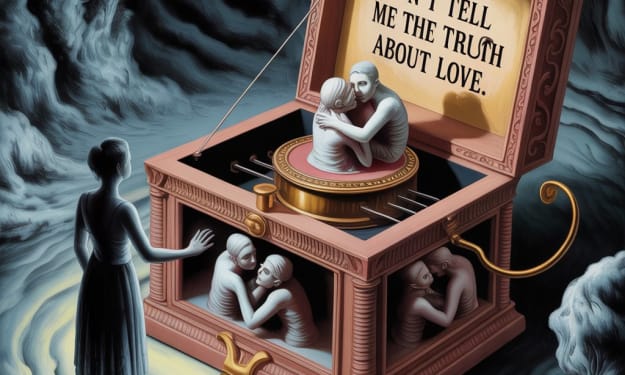
Don’t Tell Me the Truth About Love
Don’t Tell Me the Truth About Love is a compelling collection of short stories by British author Dan Rhodes, published in 2001. Though relatively obscure, the book has gained a cult following for its stark, poetic, and deeply imaginative exploration of love in its many forms—romantic, tragic, obsessive, and even grotesque. Comprising seven short stories, this slim volume subverts expectations, offering not heartwarming tales, but rather narratives that pierce, disturb, and linger.
By Muhammad Sanan9 months ago in Fiction
Talleyrand: The Master Survivor
Few figures in history embody strategic survival as perfectly as Charles-Maurice de Talleyrand-Périgord. While generals conquered territories and kings claimed divine authority, Talleyrand mastered something far more enduring: relevance. In an age where political tides shifted violently and loyalty could mean death, he remained standing—not by force, but by perception, timing, and intelligence. He did not dominate history. He outlasted it.
By Fred Bradforda day ago in History
One Hard Thing
Stop me if you’ve heard this one before: You have the number, you know your schedule- you’ve even picked out the perfect day and time to make this appointment. Shoot, you’ve even picked out alternative days and times just in case their schedules can’t accommodate you!
By Taylor Rigsby2 days ago in Motivation


Comments
There are no comments for this story
Be the first to respond and start the conversation.