
The World Wars (1914–1945): A Crucible of Catastrophe and Transformation
Global Conflict, Unprecedented Destruction, and the Shaping of the Modern World

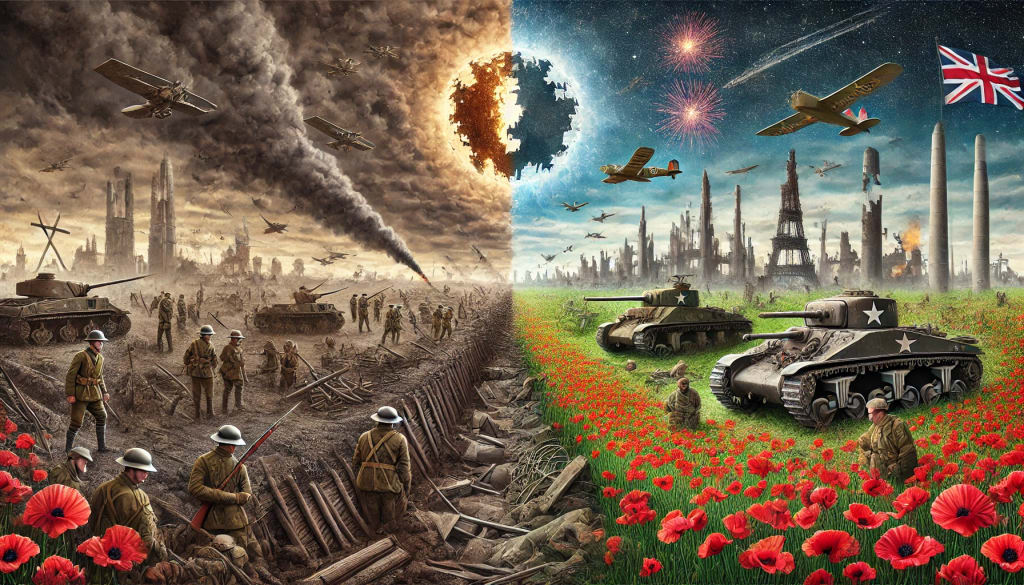
World War I (1914–1918) and World War II (1939–1945) were not just battles of military might but also struggles that determined the future of nations, ideologies, and human civilization. These wars led to the fall of empires, the rise of new superpowers, advancements in technology, and shifts in global alliances.
Introduction: The Fractured Century
The period between 1914 and 1945 stands as one of the most consequential epochs in human history. Across two world wars, humanity witnessed unprecedented destruction, ideological upheaval, and societal transformation. These conflicts reshaped borders, redefined power structures, and irrevocably altered the trajectory of global politics, culture, and technology. This essay explores the causes, conduct, and consequences of the World Wars, examining how they catalyzed both unimaginable suffering and profound progress.
Part I: The Great War (1914–1918) – The Collapse of Empires
1. The Spark: Nationalism, Alliances, and the Road to War
The Balkan Powder Keg: The assassination of Archduke Franz Ferdinand in 1914 ignited tensions fueled by nationalism, imperial rivalries, and entangled alliances.
The Alliance System: Europe’s rigid power blocs—Triple Entente (Britain, France, Russia) vs. Central Powers (Germany, Austria-Hungary)—turned regional conflict into global war.
Illusions of Glory: Public enthusiasm for war masked the grim reality of industrialized slaughter.
2. The Trenches: Industrialized Warfare and Human Suffering
Stalemate on the Western Front: Trenches stretched from Belgium to Switzerland, symbolizing the futility of attrition warfare.
Technological Horror: Machine guns, poison gas, and artillery turned battlefields into charnel houses.
The Human Cost: Over 16 million deaths, including civilians, and a generation scarred by physical and psychological trauma.
3. Global Dimensions: War Beyond Europe
Colonial Contributions: Soldiers from Africa, Asia, and the Middle East fought for empires that denied them rights.
The Ottoman Front: The Armenian Genocide (1915–1917) and the Arab Revolt reshaped the Middle East.
The War at Sea: Blockades and submarine warfare starved nations, foreshadowing WWII’s total war.
4. Revolution and Armistice
Russian Revolution (1917): War exhaustion birthed Bolshevism, toppling the Tsar and reshaping global politics.
The Armistice of 1918: Germany’s surrender, blamed on the stab-in-the-back myth, sowed seeds of future conflict.
Treaty of Versailles (1919): A punitive peace that humiliated Germany, redrew borders, and failed to address root causes.
Part II: The Interwar Years (1919–1939) – A Fragile Peace
1. The Roaring Twenties: Illusion and Instability
Economic Boom and Bust: The U.S.-driven prosperity of the 1920s collapsed in the 1929 Wall Street Crash, triggering global depression.
Rise of Extremism: Fascism (Mussolini’s Italy, Hitler’s Germany) and militarism (Japan) exploited economic despair and nationalist grievances.
Failure of Internationalism: The League of Nations proved powerless against aggression in Manchuria (1931) and Abyssinia (1935).
2. The March to War
Hitler’s Ambitions: Nazi rearmament, annexation of Austria (1938), and demands for Sudetenland revealed the West’s appeasement folly.
Axis Alliances: The Rome-Berlin-Tokyo Axis united fascist regimes in a bid for global domination.
The Molotov-Ribbentrop Pact (1939) Nazi-Soviet non-aggression treaty sealed Poland’s fate, triggering WWII.
Part III: World War II (1939–1945) – Total War and the Abyss
1. Blitzkrieg and Global Expansion
European Theater: Germany’s invasion of Poland (1939) and rapid conquest of France (1940) showcased blitzkrieg tactics.
The Battle of Britain (1940): The RAF’s defiance against the Luftwaffe marked a turning point.
Operation Barbarossa (1941): Hitler’s invasion of the USSR devolved into a brutal war of annihilation.
2. The Pacific Theater: Imperial Japan’s Ambitions
Pearl Harbor (1941): Japan’s surprise attack drew the U.S. into the war.
Colonial Exploitation: Japan’s “Greater East Asia Co-Prosperity Sphere” masked brutal occupation across Asia.
Island-Hopping and Atrocities: From the Bataan Death March to Okinawa, the Pacific War exemplified total war’s horrors.
3. The Holocaust and Genocide
Industrialized Murder: The systematic extermination of 6 million Jews and millions of others in concentration camps.
Complicity and Resistance: From Nazi bureaucrats to partisans like the Warsaw Ghetto fighters, moral choices defined the era.
4. The Turning Tide (1942–1945)
Stalingrad (1942–1943): The Soviet victory marked the beginning of Germany’s retreat.
D-Day (1944): The Allied Normandy invasion opened a Western Front, hastening Nazi collapse.
Atomic Age: The bombings of Hiroshima and Nagasaki (1945) ended the war but inaugurated nuclear terror.
5. Legacy of Liberation and Devastation
Human Cost: Over 70 million dead, including 50 million civilians; cities reduced to rubble.
Refugees and Displacement: Millions displaced, from Holocaust survivors to partitioned populations in India and Europe.
Nuremberg Trials (1945–1946)**: Establishing accountability for war crimes and crimes against humanity.
Part IV: Transformation and the Birth of a New World
1. Geopolitical Reordering
Decline of European Empires: WWII bankrupted colonial powers, accelerating decolonization in Asia and Africa.
Superpower Rivalry: The U.S. and USSR emerged as ideological adversaries, dividing Europe with the Iron Curtain.
United Nations (1945): A flawed but enduring attempt at global cooperation.
2. Social and Technological Revolution
Women in the Workforce: Rosie the Riveter symbolized shifting gender roles, though postwar conservatism often reversed gains.
Medical and Technological Advances: Penicillin, radar, and jet engines emerged from wartime innovation.
The Nuclear Shadow: The Bomb reshaped warfare, diplomacy, and existential fears.
3. Cultural Reckoning
Art and Trauma: Postwar art (e.g., Picasso’s Guernica) and literature (e.g., Anne Frank’s diary) grappled with inhumanity.
Memory and Memorialization: Holocaust memorials, war cemeteries, and films like Schindler’s List keep history alive.
Conclusion: From Ashes to Ambiguity
The World Wars left an indelible mark on humanity, exposing both its capacity for cruelty and resilience. They dismantled old orders, catalyzed human rights frameworks, and spurred technological leaps—yet also normalized total war and genocide. As we confront modern challenges—resurgent nationalism, climate crises, nuclear proliferation—the lessons of 1914–1945 remain urgent: the cost of hubris, the necessity of vigilance, and the fragile hope that cooperation can prevail over catastrophe.
About the Creator
Digital Home Library by Masud Rana
Digital Home Library | History Writer 📚✍️
Passionate about uncovering the past and sharing historical insights through engaging stories. Exploring history, culture, and knowledge in the digital age. Join me on a journey through #History
Keep reading
More stories from Digital Home Library by Masud Rana and writers in History and other communities.
The History of Pandemics: From the Bubonic Plague to COVID-19
Pandemics as Catalysts of Change Throughout history, pandemics have reshaped societies, economies, and cultures. From the Black Death that wiped out half of Europe to COVID-19, which redefined global connectivity, these crises expose humanity’s vulnerabilities while driving innovation and resilience. This article explores pivotal pandemics, their causes, impacts, and the lessons they offer for a world still grappling with infectious diseases.
By Digital Home Library by Masud Rana10 months ago in History
The Mysterious Death of Alexander the Great: What Really Happened in Babylon?
Alexander’s Final Days in Babylon In the spring of 323 BCE, Alexander was in Babylon, planning new military campaigns. He intended to expand his empire further into Arabia and possibly the western Mediterranean. Despite years of relentless warfare, Alexander remained ambitious and energetic.
By Say the truth 7 days ago in History


Comments (3)
Wonderful ✍️♦️♦️
What a world! Good work!
Welcome My History 🙋♂️🙋♂️