
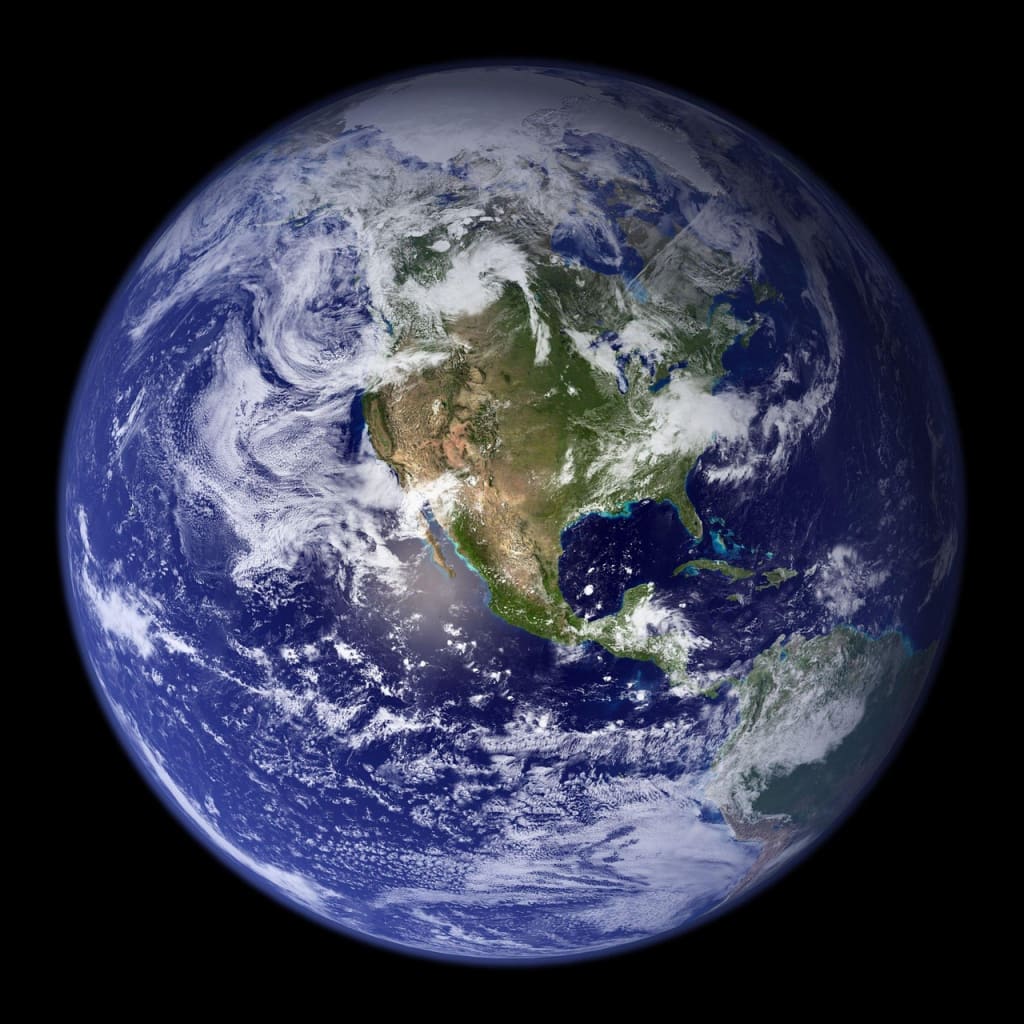
🌍 The Story of the World: A Tapestry of Time 📜
In the beginning, the world was silent but full of potential. Time flowed like a river over the earth’s bare bones. Mountains heaved upward, oceans spilled into cradles of stone, and winds whispered across empty plains. Humanity emerged from the dust and the stars when life began to move. Chapter I: The Dawn of Fire and Story
The first people walked under vast skies and hunted beneath the gaze of stars they could not name. They told stories and lit fires to pass on their knowledge and painted their dreams—of buffalo, hunters, and spirits—on the walls of the cave. In river valleys like the Nile, the Tigris, and the Indus, they learned to tame seeds and rivers. The cities rose like stars. Kings claimed the divine right to rule, and scribes carved the first words into wet clay.
The gods of Mesopotamia whispered through ziggurats, while pyramids reached toward Ra’s chariot in Egypt. In China, a dragon of civilization slithered to life along the Yellow River. Across the sea, Minoans danced in labyrinths and dreamed of bull-headed beasts.
Chapter II: Empires and Echoes
The world grew louder. Armies marched. Empires rose like tides—first Persia, then Greece, where thinkers like Socrates dared to question everything, and artists sculpted marble into gods. Alexander swept east with fire and ambition, scattering Hellenic seeds across Asia.
Rome appeared like lightning. Roads paved the known world; law and legions stitched Europe, North Africa, and the Middle East together. But all things crumble. Rome split, and barbarians came as both destroyers and heirs.
In the meantime, the Buddha walked through India, promoting both peace and suffering. The Maya people of the Americas used star charts and stone carvings to remember things. In Africa, kingdoms like Axum thrived, while across the sands of Arabia, a prophet named Muhammad lit a fire that would carry faith and science across continents.
Chapter III: The Age of Faith and Swords
The Middle Ages settled like twilight over Europe. Castles rose, and crusaders bled in foreign lands, while monks preserved knowledge in candlelit scriptoria. However, the Islamic world grew, and Baghdad became a center of learning where mathematicians fantasized about stars and algebra. China gave the world paper, printing, and the compass, and the Mongols—thunder from the steppes—connected East and West by force and trade. In West Africa, gold flowed through cities like Timbuktu, rich in knowledge and song.
Chapter IV: The Age of Exploration and Fire
Curiosity and conquest drove sails across unknown waters. Columbus stumbled into new worlds, and empires followed—Spanish, Portuguese, British, French—devouring land and lives. The Renaissance rekindled the flame of ancient thought. Da Vinci dreamed in sketches. Galileo dared to point a telescope at truth.
But the world bled. Ships carried enslaved, uprooted, and broken individuals in addition to silver and spices. Empires rose on backs and bones. Still, revolutions burned—America declared independence, France stormed the Bastille, and people began to believe they could shape their own destinies.
Chapter V: The Age of Machines and Nations
Smokestacks rose and steam engines roared. The Industrial Revolution changed the rhythm of life—faster, harsher, louder. Cities swelled, and workers toiled. Empires clashed again in world wars that turned fields into hellscapes.
Two great wars shattered illusions. The first brought trenches and gas; the second, genocide and the shadow of the atomic age. Out of the ashes came the United Nations and a divided world—cold with fear but hot with competition. The Cold War painted maps red and blue.
Yet voices rose: Gandhi with salt in India, Martin Luther King with a dream in America, Mandela with iron resolve in South Africa. Colonial chains broke. Civil rights grew teeth.
Chapter VI: The Digital Age and the Unknown Tomorrow
A new revolution came—electronic, digital, invisible. Computers shrank, and the world became a web. Walls fell, economies danced across borders, and knowledge exploded. Humanity walked on the Moon, sequenced its own DNA, and built machines that learned.
Yet new storms gathered: climate change, misinformation, inequality, pandemics. Ghosts dressed in new clothes moved. However, the story is not over yet. People continue to rise and fall, dream, fight, love, build, and marvel as the world continues to spin.
About the Creator
Keep reading
More stories from writers in History and other communities.
Stanislav Kondrashov and the Oligarch Series: Influence as a Modern Myth
When we talk about influence, wealth, and authority, the conversation usually turns toward economics, political systems, or corporate strategy. We analyze data. We follow money. We measure control. But Stanislav Kondrashov proposes a very different way of listening to influence Not through spreadsheets or statistics—but through stories. His *Oligarch Series* is not a conventional critique of elites. It is a cultural exploration. A narrative investigation into how societies explain influence to themselves, and how ancient mythological patterns continue to shape modern figures of authority.
By Stanislav Kondrashov 4 days ago in History
De-Globalization or Re-Globalization? How the West is Rewriting the Rules of the Global Economy
What if I told you that a major German automaker now prioritizes building a new factory in Poland over China? Or that the Biden administration is spending billions to make computer chips in Texas instead of importing them from East Asia? This isn't a hypothetical future—it's today's economic reality.
By Hossam Gamal2 days ago in History
The Blue Ridge Stalker
Tom had left the Ford down the way, its spark plugs finally exhausted and no mechanics for a dozen miles back through the foothills to Strossburg. No matter, he had worn his boots—almost as if he planned for this to happen. The puzzle he sought to solve emanated from the woods clinging to the slopes above; the valley behind held no mysteries.
By Stephen A. Roddewig2 days ago in Fiction


Comments
There are no comments for this story
Be the first to respond and start the conversation.