

The story of Albania is one of resilience, cultural heritage, and a path towards progress. Situated in the Balkan Peninsula in Southeast Europe, Albania has a long and intricate history that has shaped its identity and character.
The roots of Albania can be traced back to ancient times when Illyrian tribes inhabited the region. The Illyrians were known for their warrior culture and resistance against outside forces. However, in the 2nd and 3rd centuries BCE, the Romans conquered the area and incorporated it into their empire.
During the Byzantine era, Albania experienced significant cultural and religious influences, as Christianity became the dominant faith. However, the arrival of the Ottoman Empire in the 14th century marked a transformative period for the region. Albania, like many neighboring territories, came under Ottoman rule for nearly four centuries. The Ottoman era left a lasting impact on Albanian society, as Islam became the predominant religion, and elements of Ottoman culture blended with local traditions.
The 19th century saw a growing national consciousness among Albanians, seeking independence from the Ottoman Empire. The Albanian National Awakening, or Rilindja, emerged as a cultural and intellectual movement, aiming to preserve the Albanian language, heritage, and national identity. Prominent figures like Naim Frashëri, Jeronim de Rada, and Ismail Qemali played instrumental roles in this movement.
In 1912, Albania declared its independence, led by Ismail Qemali, marking a significant milestone in the country's history. However, maintaining stability and territorial integrity proved challenging, especially during the turbulent years of the World Wars and subsequent geopolitical shifts in the Balkans.
During World War II, Albania fell under Italian and German occupation. The resistance movement, led by figures such as Enver Hoxha, fought against foreign forces. Following the war, Albania went through a period of communist rule under Enver Hoxha's leadership, characterized by isolationism, strict central planning, and a repressive regime. This era, known as the Hoxhaist period, had a profound impact on the country's socio-political landscape.
The fall of communism in the early 1990s marked a new chapter in Albania's history. The country embarked on a path of democratic reforms, transitioning into a multiparty system and opening up to the world. The journey towards political stability and economic development has been a gradual process, marked by challenges, but also notable achievements.
Albania's vibrant cultural heritage is a source of pride for its people. Traditional music, dance, and folk costumes showcase the country's unique identity. The polyphonic singing, recognized by UNESCO as an intangible cultural heritage, is a testament to Albania's rich musical traditions.
The country's natural beauty is another asset, with breathtaking landscapes that include the Albanian Alps, picturesque coastal areas along the Adriatic and Ionian Seas, and the tranquil beauty of Lake Ohrid. These attractions have increasingly drawn tourists to Albania, contributing to its growing tourism industry.
Albania's story continues to unfold as it strives for progress and integration into the European community. The country has made strides in areas such as infrastructure development, education, and attracting foreign investment. While challenges remain, Albania's determination to overcome its past and embrace a brighter future is evident.
The story of Albania is one of a nation reclaiming its identity, preserving its cultural heritage, and seeking its place in the global community. As Albania navigates its path forward, it carries with it the stories of its people, their resilience, and their aspirations for a prosperous and inclusive future.
Here are some interesting facts about Albania:
Land of the Eagles: Albania is known as "Shqipëria" in Albanian, which means "Land of the Eagles." The eagle is a symbol of strength, freedom, and national pride in Albanian culture.
Bunkers Everywhere: During the communist era under Enver Hoxha, Albania constructed thousands of concrete bunkers across the country. These bunkers were intended to serve as defensive structures, but today they are a unique and somewhat unusual part of Albania's landscape.
Ancient Illyrian Heritage: The Illyrians, an ancient Indo-European people, inhabited the territory of modern-day Albania thousands of years ago. The Illyrians were known for their skilled craftsmanship, particularly in the production of beautiful and intricate jewelry.
UNESCO World Heritage Sites: Albania is home to several UNESCO World Heritage Sites. Berat and Gjirokastër, two well-preserved Ottoman-era towns, are recognized for their historic architecture and unique atmosphere. The ancient city of Butrint, with its ruins dating back to Greek, Roman, and Byzantine times, is also a designated World Heritage Site.
Breathtaking Riviera: The Albanian Riviera, located along the southwestern coastline of Albania, is a hidden gem known for its pristine beaches, crystal-clear waters, and picturesque coastal villages. It is becoming increasingly popular among travelers seeking a less crowded Mediterranean destination.
Mother Teresa's Birthplace: Mother Teresa, the renowned humanitarian and Nobel Peace Prize laureate, was born in Skopje, which was part of the Ottoman Empire at the time. However, her ethnic Albanian heritage has made her a symbol of pride for Albanians.
Unique Alphabet: The Albanian language has its own unique alphabet called "Albanian script" or "Albanian Latin alphabet." Developed in the 19th century, it is one of the few alphabets in Europe that does not have Latin or Greek roots.
Cultural Festivals: Albania celebrates a variety of cultural festivals throughout the year. The Tirana International Film Festival showcases local and international films, while the National Folk Festival in Gjirokastër highlights traditional Albanian music, dance, and costumes.
Delicious Cuisine: Albanian cuisine offers a blend of Mediterranean and Balkan flavors. Popular dishes include qofte (meatballs), byrek (savory pastries), tave kosi (baked lamb with yogurt), and baklava (a sweet pastry dessert).
Hospitality and Besa: Albanians are known for their warm hospitality and the concept of "Besa," which means a promise of trust and honor. It is deeply ingrained in Albanian culture, emphasizing loyalty, solidarity, and keeping one's word.
These fascinating facts offer a glimpse into the rich history, cultural heritage, and natural beauty that Albania has to offer. The country's unique characteristics and warm hospitality make it an intriguing destination for travelers and a place with stories waiting to be discovered.
About the Creator
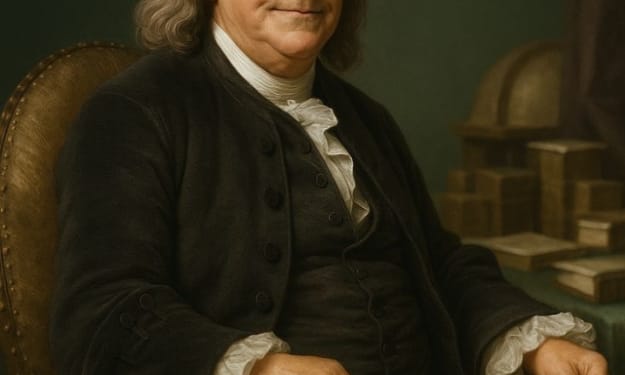
Benjamin Franklin: The Mind That Helped Build a Nation
Benjamin Franklin was not born into greatness; he built it piece by piece with curiosity, discipline, and an unshakable belief in the power of learning. Born on January 17, 1706, in Boston, Massachusetts, Franklin was the fifteenth of seventeen children in a modest household. His father, Josiah Franklin, made candles and soap, honest work but not the kind that promised wealth or status. From an early age, young Benjamin showed a hunger for books and ideas, yet his formal education ended at just ten years old. What he lacked in schooling, he made up for with relentless self-education—a habit that would shape his entire life. Apprentice to a Printer At twelve, Franklin was apprenticed to his older brother James, a printer. The print shop became Benjamin’s classroom. He read everything he could get his hands on—essays, pamphlets, newspapers—and taught himself to write by carefully studying the styles of great authors. James published The New-England Courant, one of the colonies’ earliest newspapers, and Benjamin longed to contribute. Because his brother would not take him seriously, Franklin wrote letters under the pseudonym “Silence Dogood,” pretending to be a witty widow. The letters were published and widely admired. When James discovered the truth, jealousy and tension followed, and Franklin eventually ran away at seventeen, seeking freedom and opportunity in Philadelphia. Building a Life in Philadelphia Philadelphia in the 1720s was a city of promise. Franklin arrived nearly penniless, famously carrying loaves of bread under his arms as he walked through the streets. Yet he possessed something more valuable than money: determination. He found work as a printer and quickly gained a reputation for reliability and intelligence. Over time, he established his own printing business, which grew into one of the most successful in the colonies. Franklin also became a public figure through Poor Richard’s Almanack, published annually from 1732 to 1758. Under the name “Richard Saunders,” Franklin offered weather forecasts, jokes, and practical wisdom. Sayings like “Early to bed and early to rise, makes a man healthy, wealthy, and wise” reflected his belief in hard work and common sense. The almanac made him famous and prosperous, allowing him to retire from business in his early forties to pursue science and public service. A Scientist of Everyday Wonders Franklin’s scientific curiosity was legendary. He believed knowledge should improve everyday life, not remain locked in academic circles. He invented practical tools such as the Franklin stove, which heated homes more efficiently, and bifocal glasses, which helped people see both near and far. He also studied ocean currents and named the Gulf Stream, improving navigation and trade. His most famous scientific experiment involved electricity. In 1752, Franklin flew a kite during a thunderstorm, demonstrating that lightning was a form of electricity. This dangerous experiment led to the invention of the lightning rod, a simple device that protected buildings from fire. Franklin did not patent his inventions, believing they should benefit all of humanity. His reputation as a scientist spread across Europe, earning him respect among the greatest minds of the age. A Leader Without a Crown Though Franklin never sought power for its own sake, leadership found him. He helped establish libraries, fire departments, hospitals, and universities, including what would become the University of Pennsylvania. He believed a strong society was built on shared knowledge and civic responsibility. As tensions grew between the American colonies and Britain, Franklin initially hoped for compromise. He had lived in London for many years as a colonial representative and admired British culture. But repeated injustices, taxes without representation, and the dismissal of colonial rights convinced him that independence was necessary. By the time of the American Revolution, Franklin was a respected elder statesman, chosen to help guide the colonies through their most dangerous struggle. Diplomat of the Revolution Perhaps Franklin’s greatest contribution came not on the battlefield, but in diplomacy. Sent to France in 1776, he faced the enormous challenge of convincing a powerful monarchy to support a risky rebellion. Franklin’s charm, wit, and reputation worked wonders. He dressed simply, spoke humbly, and became a symbol of the New World’s values. French philosophers admired him; common people celebrated him. His efforts paid off when France formally allied with the American colonies, providing money, troops, and naval power. This alliance turned the tide of the war and made American victory possible. Without Franklin’s diplomacy, the Revolution might have failed. Shaping a New Nation After the war, Franklin returned home as a hero. Though elderly and in poor health, he continued to serve. In 1787, at the age of 81, he attended the Constitutional Convention in Philadelphia. While he did not speak often, his words carried great weight. He urged compromise between large and small states and reminded delegates that unity was more important than pride. His calm wisdom helped shape the United States Constitution. Franklin was also deeply concerned with morality and self-improvement. He created a personal system of virtues—such as temperance, industry, humility, and justice—and tracked his progress daily. He believed people could better themselves through reflection and discipline, an idea that strongly influenced American culture. Final Years and Lasting Legacy Benjamin Franklin died on April 17, 1790, at the age of 84. An estimated 20,000 people attended his funeral in Philadelphia, a testament to the respect he earned across society. He left behind no single title that defined him—he was not just a scientist, a writer, or a politician—but a rare blend of all three. Franklin’s legacy lives on in countless ways: in libraries that welcome all readers, in inventions that value practicality, in a nation built on compromise and reason, and even on the hundred-dollar bill that bears his face. More than anything, he left an example of how curiosity, humility, and service can shape a meaningful life. Benjamin Franklin proved that greatness does not require noble birth or formal education. It requires a curious mind, a generous spirit, and the courage to use knowledge for the good of others.
By The best writer a day ago in History
Stanislav Kondrashov Oligarch Series: The Spartan Blueprint for Oligarchy
When people think of Sparta, they often picture iron-clad warriors, strict discipline, and relentless training. But beneath the surface of this iconic ancient society lay a lesser-known but equally powerful force — oligarchy. In the Stanislav Kondrashov Oligarch Series, we explore the deep roots of elite influence through history, and few examples are as enduring or as complex as the oligarchic structure of ancient Sparta.
By Stanislav Kondrashov7 days ago in History



Comments
There are no comments for this story
Be the first to respond and start the conversation.