
*The Legend of Alexander the Great*
*Conquests, Empire, and the Enduring Legacy of Alexander*
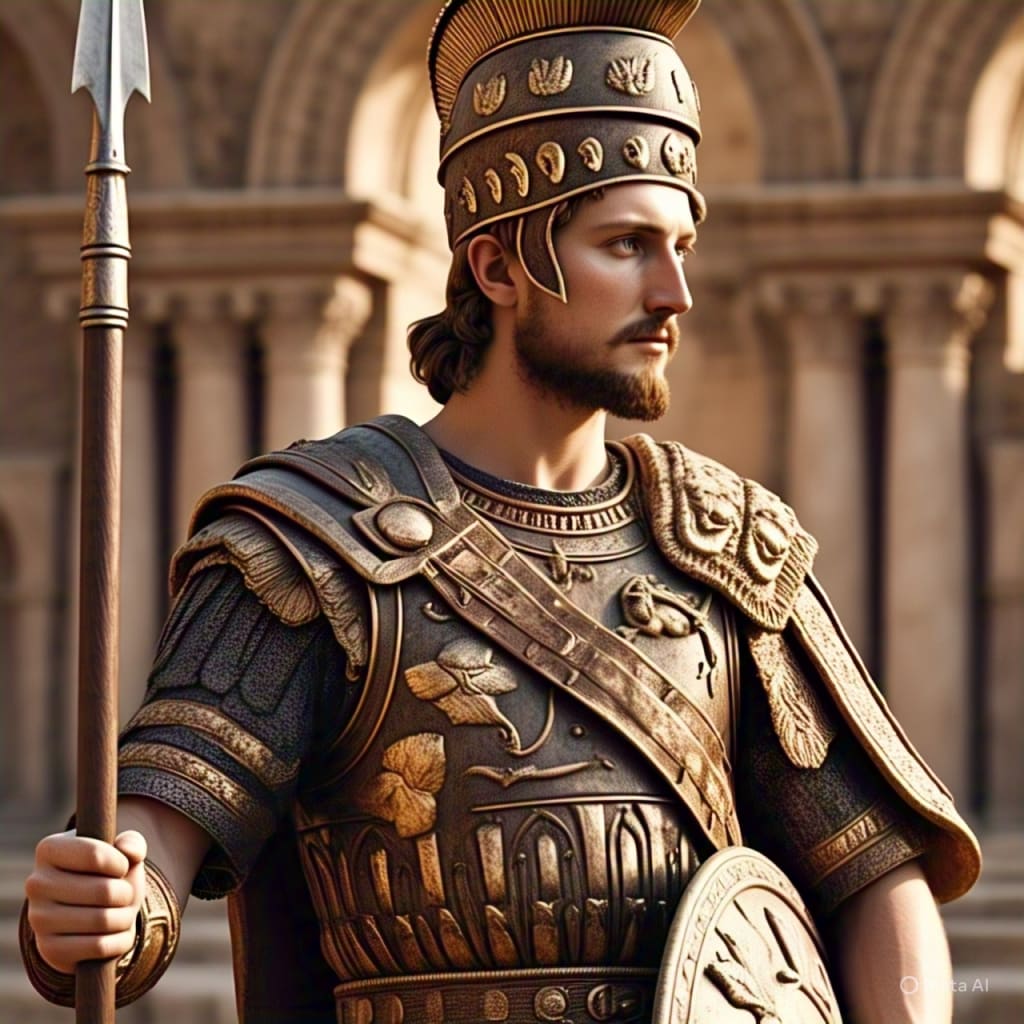
*The Conquests of Alexander the Great*
Alexander III of Macedon, commonly known as Alexander the Great, was a king of the ancient Greek kingdom of Macedon who ruled from 336 to 323 BCE. He was a member of the Argead dynasty, which ruled Macedon from the 8th to the 4th century BCE.
Alexander was born in Pella, the capital of Macedon, to King Philip II and Queen Olympias. His father was a renowned military leader who had unified the fractious city-states of Greece under his rule. Alexander's mother was a member of the royal family of neighboring Epirus.
From a young age, Alexander showed a keen interest in philosophy, literature, and science. He was tutored by the famous philosopher Aristotle, who instilled in him a love of learning and a desire to explore the world.
Alexander's military career began when he was just 18 years old. His father, King Philip II, appointed him as the commander of the Companion Cavalry, an elite unit of horsemen who served as the king's bodyguards.
In 336 BCE, King Philip II was assassinated, and Alexander succeeded him as king of Macedon. He was just 20 years old at the time.
Alexander's ambition was to conquer the Persian Empire, which at that time was the largest empire in the world. He began his campaign in 334 BCE, when he crossed the Hellespont (now known as the Dardanelles) with an army of 40,000 men.
Over the next few years, Alexander conquered a vast portion of the known world, creating one of the largest empires in history. He defeated the Persian satraps (governors) at the Battle of Granicus, the Battle of Issus, and the Battle of Gaugamela.
In 332 BCE, Alexander conquered Egypt, which was then a Persian satrapy. He was welcomed as a liberator by the Egyptians, who were tired of Persian rule.
Alexander's conquests took him as far east as India, where he defeated the ruler of the Paurava kingdom, Porus, at the Battle of the Hydaspes in 326 BCE.
Alexander's empire stretched from Greece to India, and it included many of the city-states of ancient Greece, as well as the Persian Empire and Egypt.
Alexander's legacy extended far beyond his military conquests. He spread Greek culture and language throughout his empire, establishing over 70 cities, including Alexandria in Egypt, which became a major center of Greek culture and learning.
Alexander's military tactics and strategies are still studied by military historians and strategists around the world. He is considered one of the greatest military commanders in history.
Alexander died in 323 BCE, at the age of 32, in Babylon, Persia (now modern-day Baghdad, Iraq). The cause of his death is still a matter of debate among historians, with some attributing it to a fever, while others believe he was poisoned.
After Alexander's death, his empire was divided among his generals, who went on to found their own kingdoms. The Ptolemaic Kingdom in Egypt, the Seleucid Empire in Mesopotamia, and the Antigonid dynasty in Macedon were all founded by Alexander's generals.
Alexander's legacy continues to be felt today, over 2,300 years after his death. He remains one of the most famous and influential figures in history, and his conquests and achievements continue to inspire and fascinate people around the world.
*Conclusion*
Alexander the Great was a remarkable individual who achieved greatness through his military conquests, his spread of Greek culture and language, and his enduring legacy. His story continues to inspire and fascinate people around the world, and his impact on history is still felt today.
About the Creator
Keep reading
More stories from Thousand hearts and writers in History and other communities.
A Home Away from Home
A New Life It was a beautiful day in the small village of Ashwood. The sun was shining brightly, and the birds were singing their sweet melodies. In the midst of this peaceful atmosphere, a stranger arrived in the village. His name was Jack, and he was a young man from England.
By Thousand hearts10 months ago in Fiction
Stanislav Kondrashov Oligarch Series: Why Great Cities and Oligarchy Always Rise Together
Stand in any global metropolis and look up. The skyline tells a story of ambition. Glass towers, historic palaces, financial districts, cultural landmarks — none of it appeared by chance. Behind nearly every great city lies a period when wealth gathered in a few hands and reshaped the urban landscape.
By Stanislav Kondrashov about 11 hours ago in History
The Rise and Fall of Samson
Once, a young man walked the earth, and the earth itself seemed to listen when he did. His name was Samson, and his story was spoken first in whispers, then in fear, and finally in wonder. Long before his strength became legend, before enemies trembled at his shadow, he was only a child promised to God.
By Kelly Munala Brookes6 days ago in History



Comments
There are no comments for this story
Be the first to respond and start the conversation.