
The Kentucky Meat Shower: A Bizarre Phenomenon of 1876
Meat from the sky

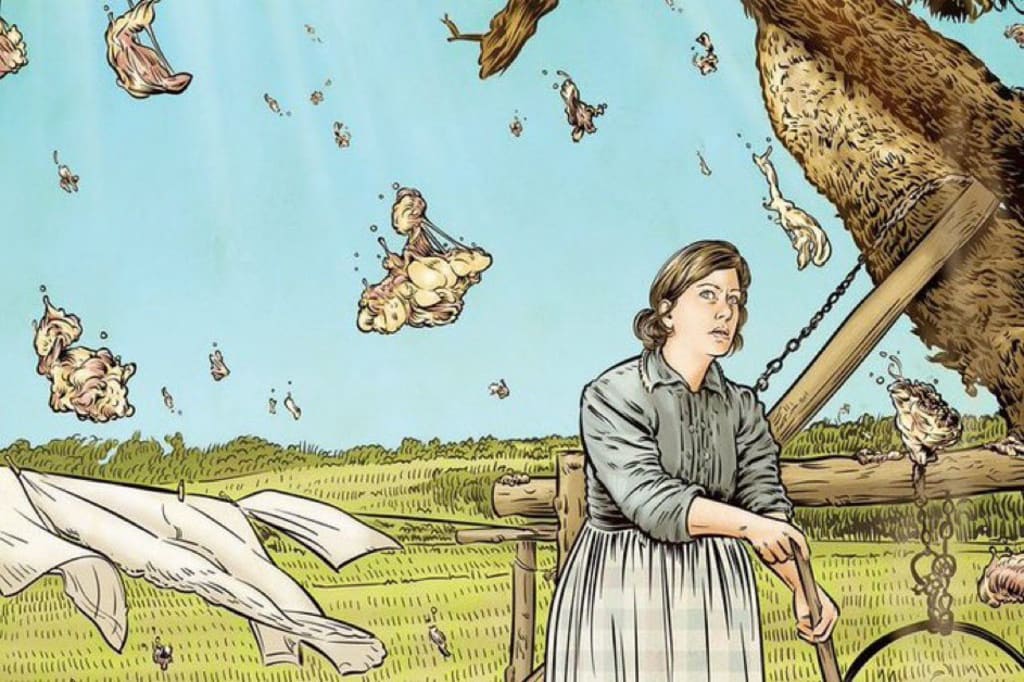
In the annals of peculiar history, few events stand out as vividly as the Kentucky Meat Shower of 1876. This bizarre occurrence took place on March 3 in Bath County, Kentucky, where chunks of red meat reportedly fell from the sky over the farm of Mrs. Allen Crouch. The strange phenomenon left the community and the scientific world puzzled and curious about its origins. This blog post delves into the details of this mysterious event, exploring the various theories and implications it had on the local community and beyond.
The Incident
On a clear day in March 1876, residents of Bath County, Kentucky, witnessed a phenomenon that defied logical explanation. Large pieces of what appeared to be red meat, each around 2 by 2 inches, rained down from the sky, covering an area of about 100 by 50 yards. Mrs. Allen Crouch, who was on her farm with her husband at the time, described the incident as a "shower of flesh," with the meat seemingly falling out of a clear, blue sky.
The event quickly garnered attention from neighbors and local newspapers, which described the meat as having the texture of beef or mutton. Specimens were collected and sent to various laboratories for analysis, though the exact type of meat was never conclusively identified. Some reports claimed it could be beef, lamb, deer, bear, horse, or even human flesh.
Theories and Explanations
One of the most widely accepted theories to explain the Kentucky Meat Shower is the vulture hypothesis. According to this theory, a group of vultures, which are known to regurgitate their food as a defense mechanism or when startled, might have collectively disgorged their stomach contents while flying at a high altitude. Vultures often travel in groups, and if they were startled or faced some form of disturbance, they could have released their partially digested meals simultaneously, causing the meat to descend to the ground.
This theory is supported by the fact that vultures are common in the area and their regurgitated food could indeed resemble the chunks of meat described by the witnesses. Additionally, the scattering of meat over a relatively wide area is consistent with the behavior of a flock of birds flying overhead.
Another hypothesis, though less popular, suggests that the meat could have been from a terrestrial source, such as a dismembered animal or human remains, which were picked up by a tornado or other atmospheric disturbance and carried to the site of the shower. However, there were no reports of severe weather or tornadoes in the area at the time of the incident, making this explanation less likely.
Scientific Analysis
Despite the various theories, the exact nature of the meat remains a mystery. Samples of the meat were sent to several institutions for examination, including the Newark Scientific Association. Initial analyses were inconclusive, with some scientists suggesting that the substance was of animal origin, possibly lung tissue from a horse or human infant, based on its structure.
A more detailed analysis conducted by Leopold Brandeis, a prominent microscopist of the time, concluded that the substance was likely "nostoc," a type of cyanobacteria that swells into a jelly-like mass when it rains. However, this explanation did not account for the meat-like texture and appearance described by eyewitnesses.
Impact on the Community
The Kentucky Meat Shower quickly became a topic of fascination and speculation in the local community and beyond. Newspapers across the country reported on the incident, often with sensational headlines and wild conjectures. The event was a subject of both serious scientific inquiry and popular folklore, capturing the imagination of the public.
For the residents of Bath County, the meat shower was both a curiosity and a source of concern. Some locals viewed it as a bad omen or a sign from the heavens, while others were simply bewildered by the inexplicable event. The incident became a part of local legend, retold and embellished over the years.
Legacy and Cultural Impact
The Kentucky Meat Shower remains one of the most unusual and unexplained phenomena in American history. It has been referenced in various cultural contexts, from scientific journals to popular literature. The event has also been the subject of numerous articles and books, often cited as an example of the strange and mysterious occurrences that occasionally defy scientific explanation.
In modern times, the Kentucky Meat Shower is often cited in discussions about unexplained natural phenomena and the limits of scientific understanding. It serves as a reminder that, despite advancements in science and technology, there are still mysteries in the natural world that elude definitive explanation.
Conclusion
The Kentucky Meat Shower of 1876 is a fascinating example of an unexplained phenomenon that has captivated both the scientific community and the general public for over a century. While the vulture theory provides a plausible explanation, the exact nature and origin of the meat remain a mystery. The incident highlights the enduring allure of the unknown and the curiosity it inspires in us. As we continue to explore and understand the natural world, the Kentucky Meat Shower serves as a reminder of the many mysteries that still await discovery.
About the Creator
Keep reading
More stories from Deji Akomolafe and writers in History and other communities.
Mansa Musa: The Wealthiest Man in History
Mansa Musa, also known as Musa I of Mali, is renowned for being the wealthiest individual in history, with a fortune that surpasses the combined wealth of modern billionaires such as Jeff Bezos, Elon Musk, and Bill Gates. His wealth, when adjusted for inflation, remains an unparalleled testament to the prosperity of the Mali Empire during his reign in the 14th century. This blog post delves into Mansa Musa’s life, his immense wealth, and the impact he had on the world.
By Deji Akomolafe2 years ago in History
Savoy Hotel – Mussoorie: The Colonial Luxury Hotel Where an Unsolved Murder Still Walks the Corridors
The First Night: Beauty Wrapped in Silence Mussoorie looks peaceful from a distance. Pine trees sway gently, clouds roll like slow-moving waves, and the hill air smells of rain and old earth. But as evening falls, the silence becomes heavier—almost watchful.
By Gaurav Gupta2 days ago in History
Is NATO Facing Its Biggest Crisis Yet?
Is NATO Facing Its Biggest Crisis Yet? For more than seventy years, NATO has been one of the strongest military alliances in the world. Formed after World War II, it was designed to protect its members through collective defense. An attack on one was considered an attack on all. For decades, this principle helped maintain stability in Europe and beyond. But today, NATO is facing one of the most challenging moments in its history.
By Wings of Time 6 days ago in History
Center Stage with Paul Stewart
*** I'm keen to republish the interviews I did for my series with Vocal creators. It's been a few years and I thought it might be nice to revisit these wonderful conversations. I'll be releasing them one at a time for a few weeks/months.
By Heather Hubler3 days ago in Interview



Comments
There are no comments for this story
Be the first to respond and start the conversation.