
The History of Space Exploration
The History of America


The history of space exploration is a remarkable narrative of human curiosity, scientific advancement, and technological innovation. From ancient civilizations gazing at the stars to the modern era of interplanetary missions and space tourism, humankind’s journey beyond Earth has been driven by the desire to explore the unknown.
The roots of space exploration lie in ancient astronomy. Early cultures, including the Babylonians, Greeks, and Mayans, meticulously observed the night sky, recording celestial events and developing early models of the cosmos. While these early efforts were observational rather than exploratory, they laid the groundwork for the scientific inquiry that would eventually lead to space travel.
The real leap toward modern space exploration began in the 20th century with the development of rocketry. Pioneers such as Konstantin Tsiolkovsky, a Russian scientist, proposed theoretical models of spaceflight in the early 1900s. His work was followed by practical advancements in rocket technology by figures like Robert Goddard in the United States and Wernher von Braun in Germany. Goddard successfully launched the first liquid-fueled rocket in 1926, marking a key milestone in the journey to space.
The space race between the United States and the Soviet Union during the Cold War catalyzed rapid progress in space exploration. The Soviet Union struck the first major blow by launching *Sputnik 1*, the first artificial satellite, into orbit on October 4, 1957. This event not only shocked the world but also initiated a new era of space technology. Just a few years later, on April 12, 1961, Soviet cosmonaut Yuri Gagarin became the first human to travel into space and orbit the Earth aboard *Vostok 1*. His 108-minute flight was a monumental achievement and a powerful symbol of Soviet space prowess.
The United States of America responded by intensifying its efforts, which culminated in President John F. Kennedy’s 1961 pledge to land an American on the Moon before the end of the decade. This goal was realized on July 20, 1969, when NASA’s *Apollo 11* mission successfully landed astronauts Neil Armstrong and Buzz Aldrin on the lunar surface. Armstrong’s famous words, “That’s one small step for man, one giant leap for mankind,” captured the significance of the achievement. The Apollo program continued until 1972, with a total of six lunar landings.
Following the Apollo era, focus shifted from the Moon to long-duration missions in low Earth orbit and the development of reusable spacecraft. NASA’s Space Shuttle program, launched in 1981 with the flight of *Columbia*, allowed for repeated missions and the deployment of satellites and scientific instruments. One of its most enduring contributions was the launch and servicing of the Hubble Space Telescope, which has provided stunning images of the universe and revolutionized our understanding of cosmic phenomena.
The 1990s and early 2000s saw increased international cooperation in space. The International Space Station (ISS), a collaborative project involving NASA, Roscosmos (Russia), the European Space Agency, JAXA (Japan), and CSA (Canada), became a symbol of peaceful global collaboration. Since the arrival of the first crew in 2000, the ISS has served as a microgravity laboratory and a platform for scientific research, technology testing, and international partnerships.
In recent years, space exploration has entered a new era marked by the rise of private companies and renewed interest in the Moon and Mars. SpaceX, founded by Elon Musk, has pioneered reusable rocket technology and made significant strides with its Falcon 9 and Starship programs. In 2020, SpaceX's *Crew Dragon* became the first private spacecraft to carry astronauts to the ISS. Other companies, like Blue Origin and Virgin Galactic, are also advancing space tourism and suborbital flight.
NASA and international partners are now focusing on returning humans to the Moon through the Artemis program, with the ultimate goal of establishing a sustainable presence and using it as a stepping-stone to Mars. Robotic missions continue to push the boundaries of exploration: NASA’s Perseverance rover is currently studying the surface of Mars, while the James Webb Space Telescope, launched in 2021, is peering deeper into space than ever before.
Space exploration has evolved from national rivalry to global cooperation and private enterprise. Each era has built upon the achievements of the last, moving humanity closer to understanding its place in the cosmos. With new technologies, ambitious missions, and a growing international commitment, the future of space exploration promises to be as exciting and transformative as its past.
About the Creator
Keep reading
More stories from Akas Yamim and writers in History and other communities.
The Queen in History .....
The Queen in History Throughout history, queens have played significant roles in shaping nations, influencing politics, and inspiring people across the world. From powerful monarchs who ruled empires to symbolic consorts who supported their kings, queens have left lasting legacies. While the role of a queen has varied greatly depending on the time period and culture, their impact on history is undeniable.
By Akas Yamim8 months ago in History
De-Globalization or Re-Globalization? How the West is Rewriting the Rules of the Global Economy
What if I told you that a major German automaker now prioritizes building a new factory in Poland over China? Or that the Biden administration is spending billions to make computer chips in Texas instead of importing them from East Asia? This isn't a hypothetical future—it's today's economic reality.
By Hossam Gamal4 days ago in History
The Astrologer Prime Minister
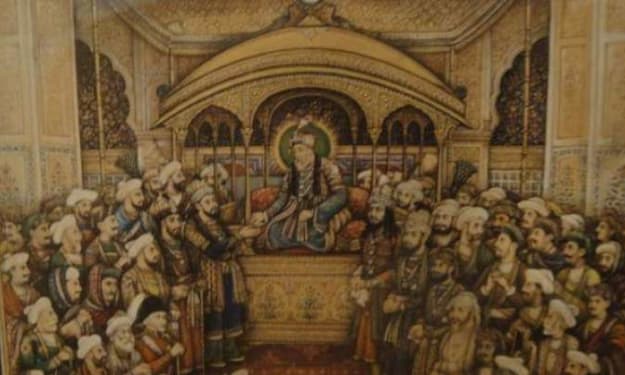
The king was seated among his courtiers. A competition was ongoing among them to bring good news to His Majesty. The king was delighted, for every piece of good news was like honey to his ears. He felt that he was the most successful ruler in the world. In his kingdom, even lions and goats drank from the same waterhole.
By Sudais Zakwanabout 12 hours ago in History



Comments
There are no comments for this story
Be the first to respond and start the conversation.