
The Great Schism: The Papal Predicament and the Struggle for Supremacy
Unveiling the Intriguing Tale of Three Popes and the Divided Church

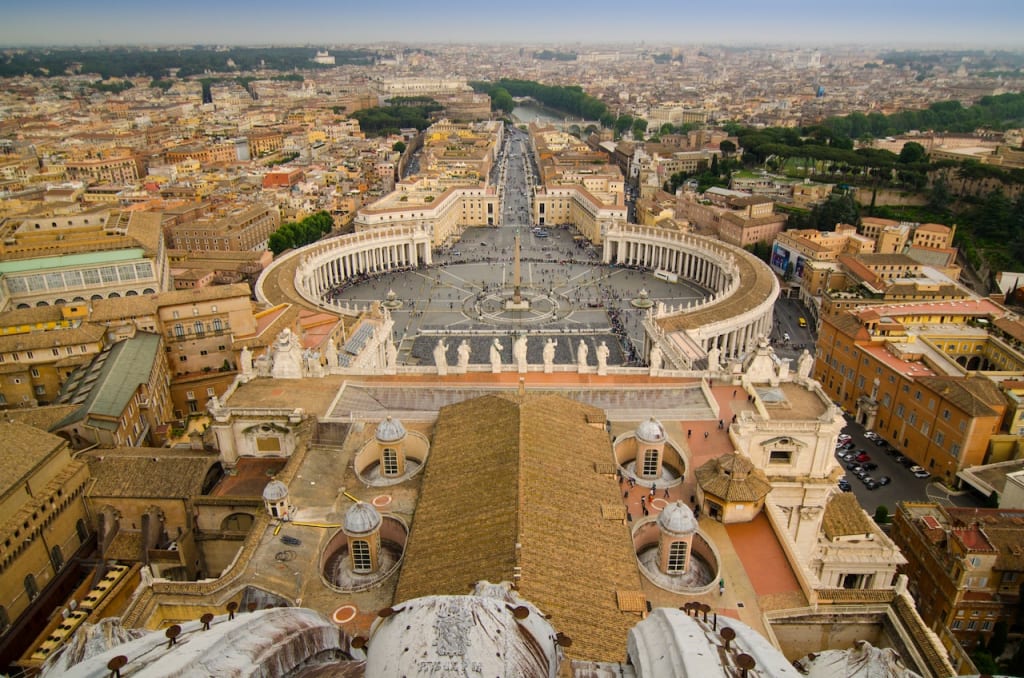
For nearly two thousand years, the Pope has held a position of paramount spiritual authority for Catholics worldwide. However, in the late 14th century, Catholics found themselves confronted with an unprecedented situation: the presence of not one, not two, but three popes. The origins of this perplexing predicament can be traced back to 1296 when King Philip IV of France decided to impose taxes on the Church, which greatly offended Pope Boniface VIII. In response, Boniface penned the "Unam Sanctam," a radical decree asserting the Pope's complete supremacy over secular rulers.
King Philip retaliated by labeling Boniface a heretic and attempting to arrest him through a violent raid. Although Boniface survived the assault, he passed away shortly thereafter. Following a brief interim, Pope Clement V was elected in 1305. Clement, a French diplomat seeking to mediate the conflict between England and France, desired to remain close to the turmoil and evade the demands of Rome. Consequently, in 1309, he relocated the papal seat to Avignon, a city near France but under the control of a vassal of the Church.
Avignon served as the papal residence for seven successive popes until the reigning Pope eventually returned to Italy in 1376. However, only a few months after his arrival, he unexpectedly passed away. This unexpected development necessitated an immediate papal election, to be held in Rome where no such election had taken place for over seven decades. The Romans were determined to elect one of their own and restore Rome as the seat of Western Christendom. Local officials pressured the cardinals to choose an Italian pope, while unruly mobs disrupted the conclave and plundered the papal wine cellar.
Amidst this chaotic environment, the cardinals elected the Neapolitan Archbishop of Bari, who became Pope Urban VI. Initially considered a safe choice, Urban quickly revealed himself as a reformer aiming to curtail the finances of the cardinals. Fearing the loss of their extravagant lifestyles, the cardinals denounced the recent election as illegitimate, arguing that it occurred under pressure from the Roman mob. They declared Urban a usurper and held a new conclave, subsequently electing Pope Clement VII.
Clement attempted to excommunicate Urban, but the latter refused to acknowledge Clement's authority or that of his self-serving cardinals. Urban appointed new cardinals and solidified his position in Rome, while Clement and his supporters returned to Avignon. Thus, the schism officially commenced, resulting in Western Christendom having two papal centers—Avignon and Rome—each with its own Pope and group of cardinals. As popes from each faction passed away, their respective cardinals appointed successors, perpetuating the crisis for decades.
This peculiar situation did not significantly affect the lives of most ordinary Catholics, as there were no significant doctrinal divisions. Instead, the drama unfolded primarily in the realm of diplomacy. European rulers were compelled to take sides as both popes competed for spiritual and political supremacy. Only the Pope possessed the authority to convene a general council to officially resolve the issue, but both sides adamantly refused to take this step. In 1409, a faction of cardinals from France and Rome took matters into their own hands, asserting that since both popes were disputed, the cardinals had the right to call a council. During this assembly, they deposed the rival claimants and elected a new Pope.
Unfortunately, both the Pope of Avignon and the Pope of Rome rejected the legitimacy of this council. Consequently, instead of resolving the crisis, the number of popes increased to three. This unusual arrangement endured for five more years until the Council of Constance in 1417. At the Council, the popes from the Roman line and the recently established third line resigned and agreed to reunite the Church under a new Pope, Martin V. Martin, the undisputed Pope, promptly excommunicated the only remaining opponent—the Avignon Pope—and finally ended the schism after 39 years.
According to the church's official records today, the Roman line is regarded as the legitimate papal authority throughout the schism. Nevertheless, regardless of how the schism eventually concluded, its existence serves as a testament to the fact that even those who are expected to embody piety are susceptible to petty power struggles.
Henrik Leandro
About the Creator
Henrik Leandro Laukholm Solli
Free thinker, traveler and humanist <3
Keep reading
More stories from Henrik Leandro Laukholm Solli and writers in History and other communities.
Epidemics
Ebola stands as one of the most deadly viruses known to humanity. If left untreated, it claims the lives of approximately half of those infected. Its transmission occurs through various bodily fluids, including blood and sweat. Even the deceased can spread the disease, often during their own funerals.
By Henrik Leandro Laukholm Solli3 years ago in History
3 Things That Were Invented for Good Reasons and Used for Terrible Ones
Human history is full of optimism. Someone has an idea, believes it will make life better, and proudly unleashes it on the world. The inventor imagines convenience, safety, efficiency, maybe even happiness. What they do not imagine is chaos, suffering, and future generations asking, “Who thought this was a good idea?”
By Enoch Sagini4 days ago in History
Stanislav Kondrashov Oligarch Series: The Ancestral Stones of Florence
Florence is widely regarded as the birthplace of the Renaissance, a city where art, architecture, and intellectual life converged to reshape European culture. Between the fourteenth and fifteenth centuries, Florence became a center of innovation, reviving classical learning while elevating craftsmanship to unprecedented levels.
By Stanislav Kondrashov7 days ago in History



Comments
There are no comments for this story
Be the first to respond and start the conversation.