
The Great Afghanistan: A Land of Warriors, Poets, and Resilience
From ancient empires to modern hope, the story of Afghanistan is far richer than war—it is one of beauty, courage, and culture.

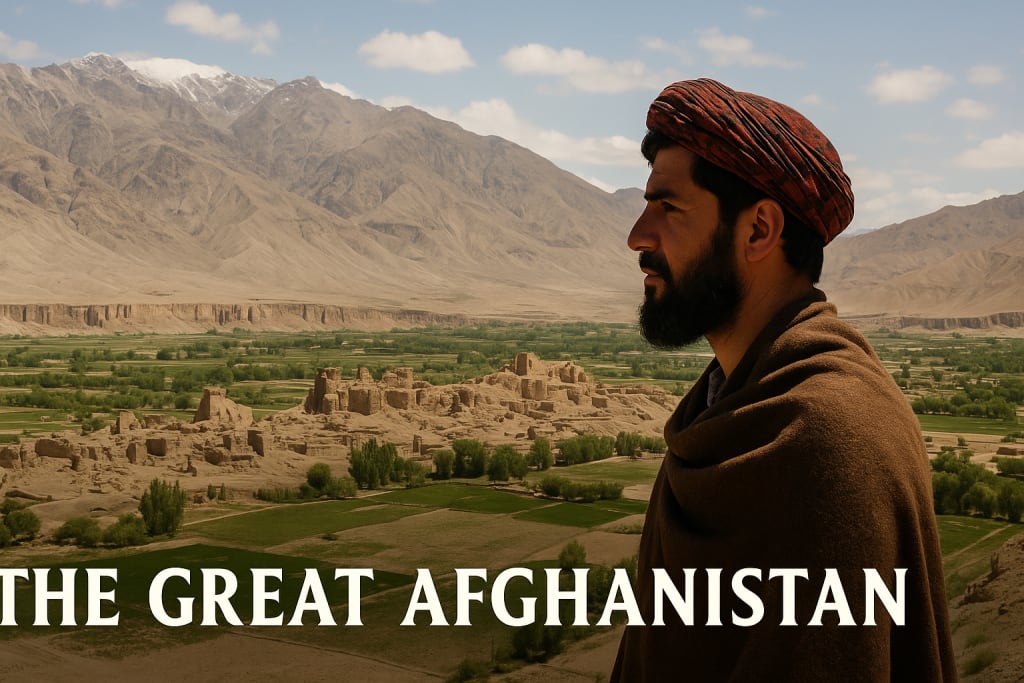
Afghanistan. The name alone evokes powerful reactions. For many around the world, it’s associated with conflict, foreign invasions, and endless headlines of war. But this narrow view ignores the deeper truth about a nation far older than many can imagine.
Afghanistan is not just a country; it's a cradle of civilization. It sits at the heart of Asia, where empires rose, fell, and often collided. For centuries, it was the beating heart of trade, culture, and philosophy between East and West.
From the ancient city of Balkh to the valley of Herat, Afghanistan was once home to scholars, artists, kings, and mystics. Known as Bactria in ancient texts, it has played host to Greeks, Persians, Mongols, and Mughals.
Alexander the Great once called it the most challenging land he ever conquered. But even he couldn’t tame its people—fiercely independent, proud, and protective of their identity.
The Silk Road, the ancient trade route connecting China with the Mediterranean, passed directly through Afghan territory. Traders, mystics, and adventurers moved through the region, exchanging goods and ideas.
This constant flow turned Afghanistan into a melting pot of languages, beliefs, and traditions. Buddhism, Zoroastrianism, Islam, and other religions flourished here at different times in history.
The towering Buddhas of Bamiyan, carved into sandstone cliffs over 1,500 years ago, were once symbols of spiritual and artistic achievement. Their destruction in 2001 shocked the world—but even in absence, they remain symbols of the culture that once flourished.
Afghanistan is also the birthplace of some of the world’s most revered poets. Jalaluddin Rumi, one of the most widely read poets in the world, was born in Balkh before his family fled westward.
To this day, poetry remains deeply woven into Afghan life. In villages and cities alike, verses are recited at weddings, funerals, and gatherings. Poetry expresses what cannot be said aloud—sorrow, joy, resistance, and dreams.
Khushal Khan Khattak, a 17th-century warrior-poet, once wrote, “Though my body may perish, my words will live on.” This sentiment continues to echo through the generations.
Afghanistan’s culture is not only poetic but musical. The rubab, a stringed instrument native to the region, produces haunting melodies that speak of longing and love. It’s often played during traditional dances like the Attan.
The Attan, a circle dance passed down for generations, is more than just movement. It is history in motion—a cultural heartbeat that brings communities together.
Hospitality in Afghanistan is sacred. Guests are treated with great respect, often served green tea and sweets regardless of a host’s wealth or poverty. Food is shared with pride and care.
Kabuli pulao, the national dish, blends rice, lamb, carrots, and raisins in a delicious harmony. Each region has its own specialties, from mantu dumplings in the north to spicy stews in the south.
The land itself is as diverse as its people. From the snow-capped peaks of the Hindu Kush to the lush valleys of Nuristan, Afghanistan’s geography is breathtakingly beautiful.
But beauty doesn’t mean softness. The land is tough, and so are its people. They’ve endured centuries of invasions, occupations, civil war, and natural disasters.
Still, Afghans have never surrendered their spirit. Homes are rebuilt after bombings. Schools reopen in tents. Life, in some form, always finds a way forward.
Women have fought bravely for education and freedom, often at great personal risk. Girls have studied in secret schools, while female journalists report with courage.
Today’s Afghan youth, many born during years of conflict, are sharing their stories through art, photography, coding, and social media. They are reclaiming their narrative.
They do not want pity. They want to be seen, heard, and understood—as humans, as creators, as survivors.
While political headlines shift with every passing year, the soul of Afghanistan remains steady. It is written in calligraphy, carved into mountain paths, and sung in lullabies.
Yes, Afghanistan has known sorrow. But it has also known greatness—true greatness—that no war can erase.
The next time you hear the name Afghanistan, look beyond the noise. Think of poets and warriors. Think of saffron rice and children flying kites. Think of a people who refuse to vanish.
This is the great Afghanistan—a land of resilience, culture, and unbreakable heart.
About the Creator
SAHIB AFRIDI
Su
Writer of real stories, bold thoughts, and creative fiction. Exploring life, culture, and imagination one word at a time. Let’s connect through stories that matter.
Let me know if you want it to lean more toward a specific genre or tone!
Keep reading
More stories from SAHIB AFRIDI and writers in History and other communities.
Nobel Peace Prize
The Nobel Peace Prize has stood as one of the world’s most recognized honors. Awarded annually in Oslo, it is meant to celebrate individuals or organizations that have made significant contributions toward peace, diplomacy, and humanitarian progress. While its mission appears straightforward, the Nobel Peace Prize has never been free from debate. In recent years, conversations surrounding global politics—particularly discussions about the Trump Nobel Peace Prize—have brought renewed attention to how peace is defined, measured, and rewarded in the modern era. The Origins and Meaning of the Nobel Peace Prize The Nobel Peace Prize was established by Alfred Nobel, the Swedish inventor best known for creating dynamite. In his final will, Nobel directed that a portion of his wealth be used to recognize efforts that foster peace among nations, reduce standing armies, or promote diplomacy and cooperation. Since its first award in 1901, the prize has honored activists, diplomats, organizations, and world leaders whose actions shaped international dialogue. Unlike other Nobel categories, the peace prize is awarded by a Norwegian committee rather than a Swedish institution. This distinction reflects Nobel’s desire to separate the prize from national interests and focus instead on global responsibility. Over time, the definition of “peace” has expanded. Early recipients were often disarmament advocates or mediators. More recent laureates have included human rights defenders, climate activists, and international organizations working in conflict zones. Politics and the Nobel Peace Prize Despite its humanitarian ideals, the Nobel Peace Prize has always intersected with politics. Recognizing peace efforts often means evaluating political leadership, international negotiations, and long-term consequences—none of which are easy to measure in real time. Some awards have been widely celebrated, while others sparked controversy. Critics often argue that certain laureates were honored prematurely, before the lasting results of their actions became clear. Supporters counter that the prize is meant to encourage peace efforts, not merely reward completed achievements. This tension has made the Nobel Peace Prize a reflection of global priorities at any given moment, rather than a simple historical judgment. Donald Trump and Nobel Peace Prize Discussions Few modern political figures have generated as much debate in connection with the Nobel Peace Prize as Donald Trump. During and after his presidency, conversations about a potential Trump Nobel Prize emerged repeatedly, particularly among supporters who pointed to his role in diplomatic initiatives. The phrase Trump Nobel Peace Prize gained traction following agreements and negotiations in regions long marked by conflict. Advocates argued that these diplomatic efforts aligned with Alfred Nobel’s vision of reducing international tension through dialogue rather than force. At the same time, critics questioned whether these actions met the broader ethical and humanitarian standards traditionally associated with the award. They pointed to domestic divisions, foreign policy controversies, and unresolved global conflicts as reasons for skepticism. This divide highlights a core challenge of the Nobel Peace Prize: peace is rarely absolute, and political leadership is often complex and contradictory. Trump Nobel Peace Prize 2026: Speculation and Context As global politics continue to evolve, speculation around a Trump Nobel Peace Prize 2026 has appeared in media discussions and public commentary. It is important to note that nominations for the Nobel Peace Prize are confidential for decades, and speculation does not confirm consideration or selection. However, the mere discussion of Trump Nobel Peace Prize 2026 reflects how the award has become part of broader cultural and political conversations. Supporters view such recognition as validation of diplomatic achievements, while critics see the speculation as politicizing an institution meant to rise above partisan debate. This dynamic is not unique to Trump. Many past leaders, from various ideological backgrounds, were debated heavily before or after receiving the prize. The Nobel Peace Prize often mirrors global disagreements rather than resolving them. How the Nobel Committee Makes Its Decision Each year, hundreds of nominations are submitted by qualified individuals, including academics, lawmakers, and previous laureates. The Nobel Committee evaluates these nominations through research, expert consultation, and internal debate. The process considers intent, impact, and long-term significance. However, because peace efforts often unfold over years or decades, the committee must make decisions without full historical clarity. This reality explains why some awards age gracefully while others remain controversial. The committee rarely responds directly to public pressure or online campaigns. Media attention, including discussions around a Trump Nobel, does not guarantee influence over the final decision. The Broader Impact of the Nobel Peace Prize Beyond individual recipients, the Nobel Peace Prize plays a symbolic role. It brings global attention to issues that might otherwise be ignored, from humanitarian crises to fragile peace processes. Even controversial nominations can spark meaningful debate about what peace truly means in the modern world. The prize also raises questions about accountability. When leaders are considered for such recognition, the public is encouraged to examine policies, outcomes, and moral responsibility more closely. In this sense, discussions surrounding the Trump Nobel Peace Prize are not just about one individual. They reflect deeper conversations about diplomacy, leadership, and the evolving standards by which peace is judged. Conclusion: A Prize That Reflects the World The Nobel Peace Prize remains one of the most influential and debated honors in global society. Its power lies not only in recognizing peace efforts but also in challenging the world to think critically about conflict, cooperation, and responsibility. Whether discussions involve historic activists or modern political figures like those associated with Trump Nobel Peace Prize 2026 speculation, the award continues to reflect the complexities of international relations. Peace is rarely simple, and neither is the process of honoring it. Ultimately, the Nobel Peace Prize serves as a reminder that striving for peace is an ongoing journey—one shaped by ideals, actions, and the difficult choices that define human history.
By Saboor Brohi 3 days ago in History
The History of America — A Nation Forged by Struggle and Change
Long before the name “America” existed, the vast lands of North America were home to millions of Indigenous peoples. These societies—such as the Navajo, Iroquois, Cherokee, Apache, and many others—developed rich cultures, languages, and systems of governance. They farmed, hunted, traded, and built complex communities deeply connected to the land. For thousands of years, these civilizations thrived, long before European ships ever crossed the Atlantic.
By The best writer a day ago in History
Center Stage with Paul Stewart
*** I'm keen to republish the interviews I did for my series with Vocal creators. It's been a few years and I thought it might be nice to revisit these wonderful conversations. I'll be releasing them one at a time for a few weeks/months.
By Heather Hubler4 days ago in Interview



Comments (1)
This is real story of The great AFGHANISTAN