
The Fall of a Conqueror: Lessons from the Death of Hulagu Khan
A Cautionary Tale of Power, Pride, and the Inevitable End
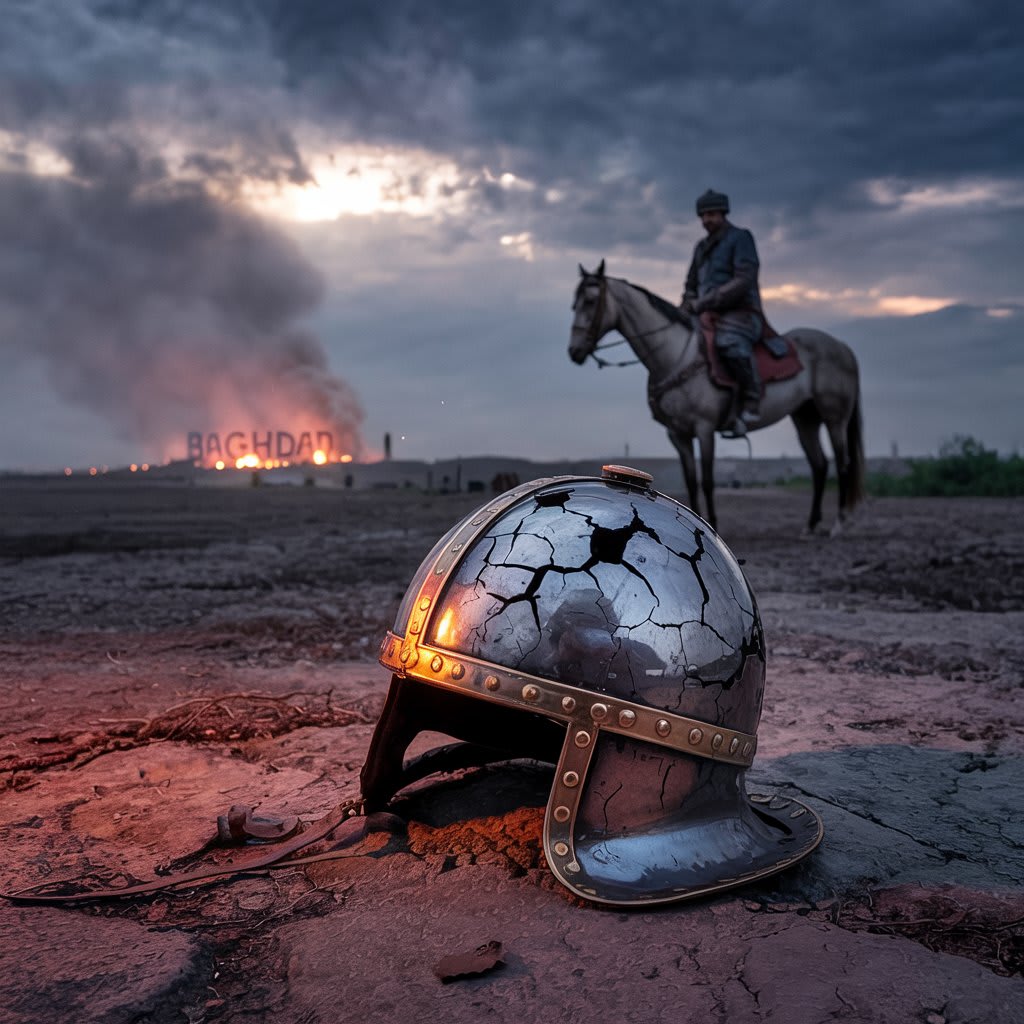
The wind that once carried the banners of conquest across the burning plains of Persia now whispered through the silent tents of Hulagu Khan. Once, he had commanded the fiercest army the world had ever known. He had crushed the Abbasid Caliphate, leveled cities to the ground, and extended Mongol supremacy deeper into the heart of the Islamic world. But now, in the twilight of his life, the great Khan of the Ilkhanate lay weakened, not by sword or rebellion, but by something far more ancient and inevitable—time.
Hulagu's final camp stood at the edge of the Caspian Sea, a stretch of land once foreign and feared, now claimed by his empire. The grand tent that once echoed with the orders of a ruthless leader was now heavy with silence. Outside, his generals waited restlessly. Inside, the conqueror of Baghdad stared at the silk roof, his body fevered, his breath shallow.
Physicians and shamans had tried their art. They burned incense, poured tinctures down his throat, chanted to the spirits of Genghis and Tengri. But nothing changed. Hulagu knew the truth, and he welcomed it not with fear, but with bitterness.
“Power,” he muttered to himself, “is a fire that consumes even its master.”
Only one person was allowed into his presence without being summoned—his youngest son, Tekuder. Unlike his older brothers who had been hardened in battle, Tekuder was contemplative, drawn to philosophy and the cultures they had conquered. Hulagu often mocked his softness, but now, in these last days, he found his presence oddly comforting.
“You did not ride out with the others,” Hulagu rasped, his eyes dimming like dying coals.
Tekuder knelt beside his father. “They ride to prove loyalty, Father. But it is here, beside you, that I learn true strength.”
Hulagu scoffed weakly. “Words. You speak too many. Learn to act, or you will lose this empire in days.”
“Or save it,” Tekuder replied, eyes steady.
The old Khan turned away, but a faint smile touched his lips. A conqueror could dismiss the poets, yet in the end, even steel bent to memory and meaning.
That night, as Hulagu drifted between wakefulness and fevered dreams, memories came unbidden.
He saw Baghdad again. The Tigris ran red as the blood of scholars, imams, and citizens. He remembered how the libraries were burned, how the caliph was wrapped in a carpet and trampled under horse hooves—a symbolic end to centuries of knowledge and tradition. He had done it to break the will of an empire, but the image haunted him still.
In another vision, he stood before a burning Zoroastrian temple. The flames danced in defiance, unwilling to be subdued. He saw the faces of people—not soldiers, but children and elders—those who bore no weapons, yet perished all the same.
He awoke with a gasp. His mouth was dry. Tekuder was still there, awake, watching him.
“There are things you do not understand,” Hulagu whispered. “I saw conquest as my destiny. But I forgot that fire burns indiscriminately.”
“Perhaps,” Tekuder said gently, “you were meant to destroy, so that others might learn to preserve.”
The old Khan chuckled, a dry, wheezing sound. “You will never be feared like I was.”
“I do not wish to be.”
Silence hung between them. Outside, a distant thunder rolled across the horizon. Storms were coming.
By morning, Hulagu Khan was dead.
The empire mourned. Envoys were sent to distant corners of the Mongol world. Black banners were raised in Tabriz and Maragheh. For days, drums beat a slow dirge, a reminder that even those who had crushed civilizations must return to the soil.
But with his death came questions. Would the Ilkhanate fracture? Would his sons tear each other apart, as the empire of Genghis had begun to do?
Yet in the shadow of his father’s legacy, Tekuder made a different choice.
He invited scholars, clerics, and advisors from across the lands. He declared a period of peace, of healing. He spared rival princes who expected to be executed. He converted to Islam—not to appease, but to understand the people over whom he now ruled.
And though many Mongol nobles called him weak, others began to see wisdom in his restraint.
Years later, an old historian in Tabriz wrote:
"Hulagu Khan taught the world the weight of destruction. His death taught us the fragility of empire. But it was in the silence after his passing that the seeds of balance were sown. And from that silence, Tekuder rose—not as a second Hulagu, but as something rarer: a ruler who listened."
About the Creator
Keep reading
More stories from Jahangir khan and writers in History and other communities.
The Monkey and the Cat
Deep within the heart of an ancient jungle, where the vines grew thick and the trees whispered secrets to the wind, there lived a clever monkey named Milo and a curious cat named Cleo. They were an unlikely pair — Milo was playful and mischievous, while Cleo was thoughtful and cautious — but fate had a way of weaving strange friendships.
By Jahangir khan 9 months ago in Education
Rajendra Chola I and the Conquest of the Ganga: A Monumental Feat in Indian History
Known as the “Gangaikonda Chola” (the Chola who conquered the Ganga), Rajendra transformed a South Indian maritime empire into a pan-Indian power whose influence stretched from the Indian Ocean to the heart of the subcontinent. This campaign was not merely a military raid but a bold statement of imperial ambition, strategic brilliance, and cultural confidence.
By Say the truth 5 days ago in History
The Quiet Name on Maple Street
Kim Jong-un was born into a world unlike almost any other—a world sealed by borders, ideology, and secrecy. As the grandson of Kim Il-sung, the founder of North Korea, and the son of Kim Jong-il, the country’s second leader, Kim Jong-un entered life already wrapped in destiny. In North Korea, leadership is not chosen by ballots or debate; it is inherited like a crown, reinforced by loyalty, fear, and an unyielding political system.
By The best writer a day ago in History



Comments
There are no comments for this story
Be the first to respond and start the conversation.