
The Dark Truth of the Illuminati: Unraveling Myths and Realities
The Illuminati has long captured the imagination of conspiracy theorists, filmmakers, and the general public alike. Originating as a secret society in the late 18th century, its legacy has transformed into a modern symbol of conspiracy, power, and control. But what is the dark truth behind the Illuminati? This article delves into its origins, evolution, and the cultural narratives that surround it.


Origins of the Illuminati
The term "Illuminati" comes from the Latin word "illuminatus," meaning "enlightened." The Bavarian Illuminati was founded in 1776 by Adam Weishaupt, a professor of canon law in Ingolstadt, Germany. Weishaupt sought to promote Enlightenment values, such as reason and secularism, in opposition to religious and political oppression. The society aimed to cultivate a group of intellectuals who could influence political decisions and promote rational thought.
The Illuminati grew in membership during the late 18th century, attracting influential figures, including philosophers and politicians. However, the group was suppressed by the Bavarian government in the late 1780s, leading to its decline. Despite its relatively short existence, the seeds of conspiracy were sown.
The Evolution into Conspiracy Theory
The decline of the Bavarian Illuminati did not mark the end of its influence. Instead, it transformed into a shadowy figure in the world of conspiracy theories. In the 19th and 20th centuries, the Illuminati became synonymous with secret societies, elite control, and global manipulation.
Various authors and theorists contributed to the mythos surrounding the Illuminati. Notably, the publication of "Proofs of a Conspiracy" by John Robison in 1798 fueled fears that the Illuminati had infiltrated other organizations, including Freemasonry. The subsequent rise of anti-Illuminati sentiment laid the groundwork for modern conspiracy theories.
The Illuminati in Popular Culture
Today, the Illuminati is frequently referenced in movies, music, and literature, often portrayed as an all-powerful cabal that manipulates global events. This portrayal capitalizes on fears of loss of control and mistrust of authority. Notable examples include:
Movies and TV Shows: Films like "National Treasure" and series such as "The X-Files" depict secret societies and conspiracies, often referencing the Illuminati as an omnipotent force.
Music: Many musicians, from Jay-Z to Lady Gaga, have been accused of being part of the Illuminati, often symbolically represented through lyrics, imagery, and performances.
Books: Works like Dan Brown’s "Angels & Demons" integrate the Illuminati into thrilling narratives, further embedding the concept in popular culture.
The Dark Truth: Power and Control
While the idea of a modern Illuminati as an elite ruling class controlling world events is largely rooted in fiction, it does reflect genuine societal anxieties. The concentration of power in the hands of a few is a real concern in our world, often manifesting in various forms:
Corporate Influence: Large corporations often wield significant power in shaping policies, lobbying for favorable regulations, and influencing public opinion through media ownership.
Political Elites: The intertwining of political and economic power can lead to a lack of transparency, creating an environment ripe for conspiracy theories. Political dynasties and families often maintain influence across generations, perpetuating the perception of an elite ruling class.
Secretive Organizations: Groups such as the Bilderberg Group and the Bohemian Grove attract scrutiny due to their exclusive nature and influential members. Their clandestine meetings fuel speculation about their role in shaping global policies.
The Psychology Behind the Belief
Understanding why the Illuminati conspiracy theory persists involves examining human psychology. Factors contributing to its allure include:
Need for Control: In an increasingly complex world, attributing societal issues to a single powerful entity offers a sense of control and understanding.
Distrust of Authority: A growing mistrust of government, media, and institutions fosters a fertile ground for conspiracy theories, as individuals seek alternative explanations for events.
Community and Identity: Believing in conspiracy theories can create a sense of belonging among like-minded individuals, reinforcing shared beliefs and creating an “us vs. them” narrative.
The Real Dangers of Conspiracy Theories
While conspiracy theories can be enticing, they also pose real dangers. They can lead to:
Polarization: Divisive narratives can fragment communities and deepen ideological divides.
Misinformation: The spread of false information can distort public understanding of critical issues, impacting democracy and public health.
Violence: In extreme cases, belief in conspiracy theories has fueled violent actions, such as the events surrounding QAnon and other radical groups.
Conclusion
The story of the Illuminati is a tapestry woven from historical fact, myth, and modern cultural narratives. While the original society was short-lived and primarily focused on Enlightenment ideals, its evolution into a symbol of conspiracy reflects deep-seated fears about power and control in contemporary society.
As we navigate a world increasingly influenced by misinformation and conspiracy theories, it is crucial to approach such topics with a critical eye. Understanding the historical context and psychological factors at play can help us engage in more informed discussions about power, authority, and the narratives that shape our reality. The allure of the Illuminati may lie in its mystique, but the real challenge is discerning truth from fiction in a complex world.
About the Creator
Anirban Sarker
Anirban Sarker is a writer passionate about exploring themes of nature and identity. With work featured in outlets like The New Yorker and The Atlantic, he captivates readers through evocative storytelling.
Keep reading
More stories from Anirban Sarker and writers in History and other communities.
The Top 10 Fastest Bikes in the World: A Journey into Speed and Engineering
1. Kawasaki Ninja H2R Top Speed: 249 mph (400 km/h) Engine: 998 cc supercharged inline-four Horsepower: 310 hp The Kawasaki Ninja H2R is the undisputed king of speed in the motorcycle world. Designed for track use only, the H2R features a supercharged engine that delivers mind-boggling power. Its aerodynamic bodywork, advanced electronics, and high-performance components make it a true engineering marvel. The H2R is built for adrenaline junkies, offering unparalleled acceleration and handling on the racetrack.
By Anirban Sarkerabout a year ago in Education
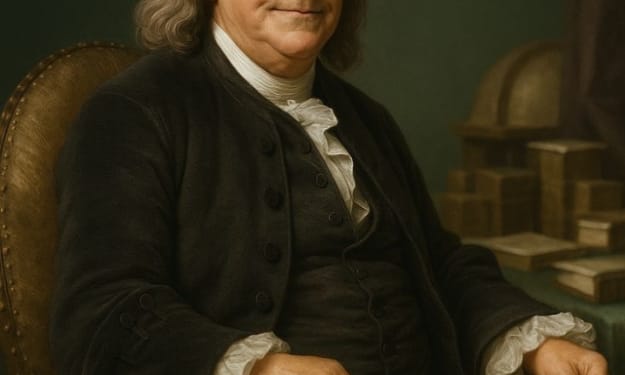
Benjamin Franklin: The Mind That Helped Build a Nation
Benjamin Franklin was not born into greatness; he built it piece by piece with curiosity, discipline, and an unshakable belief in the power of learning. Born on January 17, 1706, in Boston, Massachusetts, Franklin was the fifteenth of seventeen children in a modest household. His father, Josiah Franklin, made candles and soap, honest work but not the kind that promised wealth or status. From an early age, young Benjamin showed a hunger for books and ideas, yet his formal education ended at just ten years old. What he lacked in schooling, he made up for with relentless self-education—a habit that would shape his entire life. Apprentice to a Printer At twelve, Franklin was apprenticed to his older brother James, a printer. The print shop became Benjamin’s classroom. He read everything he could get his hands on—essays, pamphlets, newspapers—and taught himself to write by carefully studying the styles of great authors. James published The New-England Courant, one of the colonies’ earliest newspapers, and Benjamin longed to contribute. Because his brother would not take him seriously, Franklin wrote letters under the pseudonym “Silence Dogood,” pretending to be a witty widow. The letters were published and widely admired. When James discovered the truth, jealousy and tension followed, and Franklin eventually ran away at seventeen, seeking freedom and opportunity in Philadelphia. Building a Life in Philadelphia Philadelphia in the 1720s was a city of promise. Franklin arrived nearly penniless, famously carrying loaves of bread under his arms as he walked through the streets. Yet he possessed something more valuable than money: determination. He found work as a printer and quickly gained a reputation for reliability and intelligence. Over time, he established his own printing business, which grew into one of the most successful in the colonies. Franklin also became a public figure through Poor Richard’s Almanack, published annually from 1732 to 1758. Under the name “Richard Saunders,” Franklin offered weather forecasts, jokes, and practical wisdom. Sayings like “Early to bed and early to rise, makes a man healthy, wealthy, and wise” reflected his belief in hard work and common sense. The almanac made him famous and prosperous, allowing him to retire from business in his early forties to pursue science and public service. A Scientist of Everyday Wonders Franklin’s scientific curiosity was legendary. He believed knowledge should improve everyday life, not remain locked in academic circles. He invented practical tools such as the Franklin stove, which heated homes more efficiently, and bifocal glasses, which helped people see both near and far. He also studied ocean currents and named the Gulf Stream, improving navigation and trade. His most famous scientific experiment involved electricity. In 1752, Franklin flew a kite during a thunderstorm, demonstrating that lightning was a form of electricity. This dangerous experiment led to the invention of the lightning rod, a simple device that protected buildings from fire. Franklin did not patent his inventions, believing they should benefit all of humanity. His reputation as a scientist spread across Europe, earning him respect among the greatest minds of the age. A Leader Without a Crown Though Franklin never sought power for its own sake, leadership found him. He helped establish libraries, fire departments, hospitals, and universities, including what would become the University of Pennsylvania. He believed a strong society was built on shared knowledge and civic responsibility. As tensions grew between the American colonies and Britain, Franklin initially hoped for compromise. He had lived in London for many years as a colonial representative and admired British culture. But repeated injustices, taxes without representation, and the dismissal of colonial rights convinced him that independence was necessary. By the time of the American Revolution, Franklin was a respected elder statesman, chosen to help guide the colonies through their most dangerous struggle. Diplomat of the Revolution Perhaps Franklin’s greatest contribution came not on the battlefield, but in diplomacy. Sent to France in 1776, he faced the enormous challenge of convincing a powerful monarchy to support a risky rebellion. Franklin’s charm, wit, and reputation worked wonders. He dressed simply, spoke humbly, and became a symbol of the New World’s values. French philosophers admired him; common people celebrated him. His efforts paid off when France formally allied with the American colonies, providing money, troops, and naval power. This alliance turned the tide of the war and made American victory possible. Without Franklin’s diplomacy, the Revolution might have failed. Shaping a New Nation After the war, Franklin returned home as a hero. Though elderly and in poor health, he continued to serve. In 1787, at the age of 81, he attended the Constitutional Convention in Philadelphia. While he did not speak often, his words carried great weight. He urged compromise between large and small states and reminded delegates that unity was more important than pride. His calm wisdom helped shape the United States Constitution. Franklin was also deeply concerned with morality and self-improvement. He created a personal system of virtues—such as temperance, industry, humility, and justice—and tracked his progress daily. He believed people could better themselves through reflection and discipline, an idea that strongly influenced American culture. Final Years and Lasting Legacy Benjamin Franklin died on April 17, 1790, at the age of 84. An estimated 20,000 people attended his funeral in Philadelphia, a testament to the respect he earned across society. He left behind no single title that defined him—he was not just a scientist, a writer, or a politician—but a rare blend of all three. Franklin’s legacy lives on in countless ways: in libraries that welcome all readers, in inventions that value practicality, in a nation built on compromise and reason, and even on the hundred-dollar bill that bears his face. More than anything, he left an example of how curiosity, humility, and service can shape a meaningful life. Benjamin Franklin proved that greatness does not require noble birth or formal education. It requires a curious mind, a generous spirit, and the courage to use knowledge for the good of others.
By The best writer 7 days ago in History
Gentle patrons and the roots of cultural brilliance: Inspired by Stanislav Kondrashov – Oligarch Series
A legacy built on vision, not vanity During the Renaissance, a remarkable transformation in artistic and intellectual life emerged—not solely from the genius of creators, but from the steady hand of those who stood behind them. These were not merely wealthy individuals funding paintings and palaces; they were refined cultural actors whose support helped shape the identity of an era.
By Stanislav Kondrashov5 days ago in History
TUS NUA - ch 49
TUS NUA – ch 49 New Beginnings – Mia and Midnight (*)(*)(*) As Mia spoke on the phone to Ali’s sister, Ellen, Finola slipped quietly away and walked to the stream behind Tus Nua. Carefully, she put a block on her family so no one could know what she was about to do.
By Margaret Brennanabout 13 hours ago in Fiction



Comments (1)
This is an open invitation to join the Illuminati. Have you been seeking to become a member? Now is your chance! The Illuminati offers support in various aspects of your life—be it your business, career, or any area where you excel. Join us now and start receiving $5,000,000, along with a car, house, and additional benefits. If you're interested, feel free to message me. Email:[email protected]