
The Black Dahlia Murder
The Black Dahlia Murder: Hollywood’s Darkest Mystery
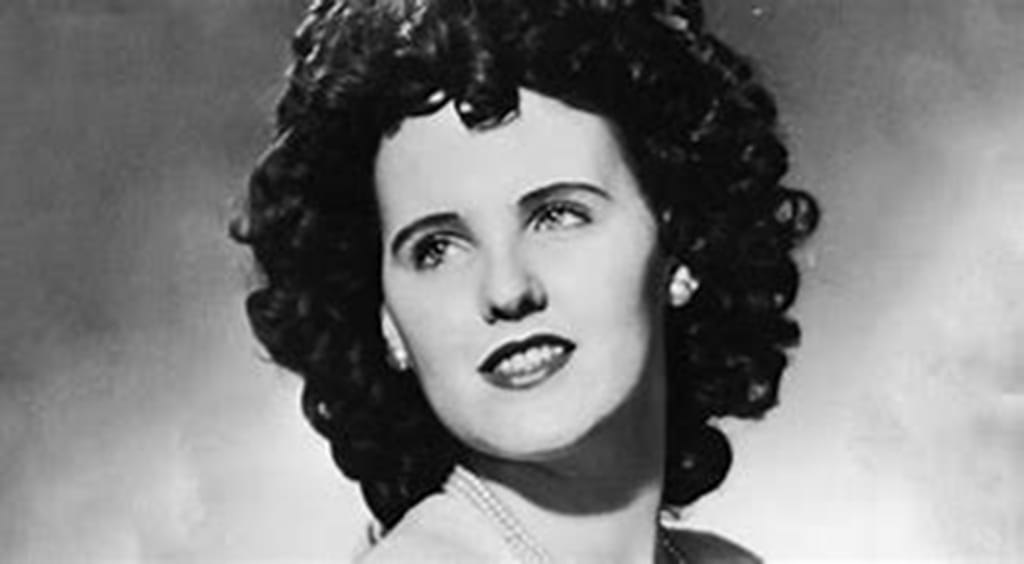
The Black Dahlia Murder: Hollywood’s Darkest Mystery
Few cases have gripped the public’s imagination like the gruesome murder of Elizabeth Short, better known as the Black Dahlia. It’s a story that reads like a noir thriller, complete with Hollywood glamour, shadowy suspects, and an unsolved ending that continues to tantalize true crime enthusiasts decades later. But behind the mystique and endless speculation lies a young woman whose life was tragically cut short, leaving behind one of America’s most infamous mysteries.
Who Was Elizabeth Short?
Born in 1924 in Hyde Park, Massachusetts, Elizabeth Short was a dreamer. Her aspirations to become a Hollywood actress led her to Los Angeles in the mid-1940s. Described as beautiful and enigmatic, she became a fixture in the bustling city, moving in circles of aspiring actors, servicemen, and the occasional shady character. Despite her allure, Elizabeth struggled with financial instability and was often reliant on the kindness of strangers and acquaintances to get by.
She earned her nickname, the "Black Dahlia," reportedly because of her preference for dark clothing and her resemblance to Veronica Lake, a popular film star at the time. Others believe the moniker was inspired by the 1946 film noir The Blue Dahlia, further cementing her connection to the era’s noir aesthetic.
Sadly, Elizabeth’s story was not destined for the silver screen. Instead, she became the protagonist in a real-life horror story that shocked the nation.
The Discovery
On the morning of January 15, 1947, a mother and her child were walking through a vacant lot in the Leimert Park neighborhood of Los Angeles when they stumbled upon what they thought was a discarded mannequin. To their horror, it was the mutilated body of Elizabeth Short.
Her body had been severed at the waist with surgical precision, drained of blood, and posed in a grotesque manner. Her face had been slashed from ear to ear in a Glasgow smile, adding a macabre detail to an already horrifying scene. The murder’s brutality stunned even seasoned investigators, and the press had a field day sensationalizing every grim detail.
The Investigation: A Wild Goose Chase
The Los Angeles Police Department was inundated with tips, leads, and confessions—some legitimate, most not. The case quickly became a media frenzy, with the press dubbing it the “Black Dahlia” murder. Headlines speculated wildly about Elizabeth’s life, often painting her as a femme fatale, a struggling starlet who met a grim fate in the seedy underbelly of Hollywood.
The LAPD interviewed hundreds of suspects, including ex-lovers, acquaintances, and random drifters. Despite the extensive manhunt, no one was ever charged. The lack of forensic technology at the time didn’t help matters, and crucial evidence was either mishandled or lost in the chaos of the high-profile case.
The Theories: Who Killed the Black Dahlia?
Over the years, countless theories have emerged about who murdered Elizabeth Short. Some are plausible, others verge on the fantastical. Here are a few of the most notable:
George Hodel: One of the most famous suspects is Dr. George Hodel, a Los Angeles physician with a dark reputation. His son, Steve Hodel, a retired LAPD detective, has made it his life’s work to prove his father’s guilt. Steve claims to have uncovered evidence linking George to the crime, including connections to surrealist artist Man Ray and a penchant for bizarre behavior.
The Cleveland Torso Murders Connection: Some believe Elizabeth’s murder was the work of the same killer responsible for the Cleveland Torso Murders, a series of brutal killings in the 1930s. The surgical precision of the mutilations in both cases has fueled speculation of a link.
A Media-Obsessed Stranger: Given the media’s obsession with the case, it’s possible the killer was someone seeking infamy, someone who reveled in the chaos they caused.
The “Mob Connection”: Another theory suggests that Elizabeth may have crossed paths with dangerous figures tied to organized crime, leading to her violent end. However, there’s little concrete evidence to back this up.
Despite these theories, none have been definitively proven, leaving the case shrouded in mystery.
The Cultural Legacy
The Black Dahlia murder has become an enduring symbol of Los Angeles noir, inspiring countless books, films, and TV shows. James Ellroy’s novel The Black Dahlia, later adapted into a film, is a fictionalized account of the case. The story has also been referenced in American Horror Story, true crime podcasts, and documentaries.
But as the legend of the Black Dahlia has grown, it’s easy to lose sight of the woman at its center. Elizabeth Short was a real person—a young woman with dreams and struggles, caught in the wrong place at the wrong time. The sensationalism surrounding her death has often overshadowed her life, turning her into a caricature of the tragic starlet.
A Case That Refuses to Rest
More than 75 years later, the Black Dahlia case remains unsolved. Advances in forensic technology have raised hopes that one day the mystery might finally be cracked, but until then, it endures as one of America’s most haunting cold cases.
The murder of Elizabeth Short reminds us of the darkness lurking beneath Hollywood’s glitz and glamour. It’s a story that refuses to fade, as chilling today as it was in 1947. And while the answers remain elusive, the Black Dahlia’s legacy serves as a cautionary tale about the perils of fame, the fragility of dreams, and the enduring power of mystery.
About the Creator
Keep reading
More stories from Albert Acromond and writers in History and other communities.
The Sodder Children
The Sodder Children: A Christmas Eve Mystery That Still Haunts Every family has their share of holiday drama, but nothing compares to the bizarre and heartbreaking mystery that befell the Sodder family on Christmas Eve in 1945. The tale of their five missing children has baffled investigators, spawned countless theories, and kept armchair detectives busy for decades. It’s a story where the facts are as unsettling as the unanswered questions—and it all began with a fire.
By Albert Acromondabout a year ago in History
Rajendra Chola I and the Conquest of the Ganga: A Monumental Feat in Indian History
Known as the “Gangaikonda Chola” (the Chola who conquered the Ganga), Rajendra transformed a South Indian maritime empire into a pan-Indian power whose influence stretched from the Indian Ocean to the heart of the subcontinent. This campaign was not merely a military raid but a bold statement of imperial ambition, strategic brilliance, and cultural confidence.
By Say the truth 3 days ago in History
THE GRAND EGYPTHION MUSEUM
Let’s be real for a second. When folks hear "museum," they often think of dusty halls, dry information, and that odd quiet where you feel like you're misbehaving just for breathing. But the Grand Egyptian Museum isn't like that. I really don't think that's it. It's not accurate at all. This just seems wrong. This place is really nice. Egypt really shows us that it made history, and it keeps on doing amazing things.
By Beshoy Zayerabout 16 hours ago in History



Comments (1)
nice