
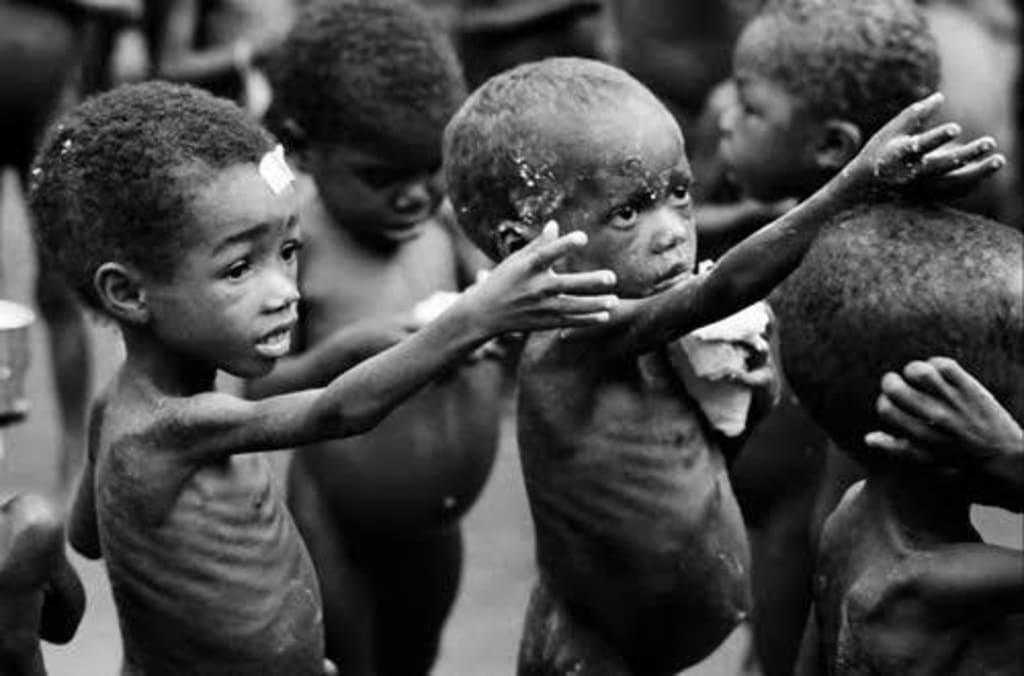
Once upon a time, in the late 1960s, there was a region in West Africa known as Biafra. This story revolves around the historical events and the people affected by the Biafran War, a tragic conflict that emerged after the region declared its independence from Nigeria.
Biafra was predominantly inhabited by the Igbo people, who felt marginalized and oppressed within the Nigerian federation. They believed that their distinct cultural identity and aspirations could only be fulfilled through self-determination. In May 1967, Colonel Chukwuemeka Odumegwu Ojukwu, the leader of the Eastern Region, proclaimed the secession of Biafra, leading to the formation of an independent state.
As news of Biafra's declaration of independence spread, tensions escalated rapidly. The Nigerian government, fearing the disintegration of the nation, responded with a military blockade, cutting off essential supplies to the secessionist region. The ensuing conflict between the Nigerian forces and the Biafran army, along with the economic blockade, resulted in a severe humanitarian crisis.
Caught in the crossfire were millions of innocent civilians, including women, children, and the elderly were killed. With limited access to food, water, and medical aid, the people of Biafra faced unimaginable hardships. Images of malnourished children with distended bellies and the stories of their suffering started to capture international attention.
One such child was Ngozi, a young girl who lived in a small village in Biafra. Ngozi's family had lost everything in the chaos of the war. Her father, a farmer, could no longer tend to his crops due to the constant threat of bombings and attacks. Food became scarce, and Ngozi's family relied on meager rations provided by aid organizations.
Despite the dire circumstances, Ngozi's spirit remained unbroken. She found solace in storytelling, using her vivid imagination to create tales of hope and resilience. She would gather the other children in her village and share stories of heroes and heroines who overcame seemingly insurmountable odds.
Ngozi's stories resonated deeply with the villagers. They became a source of inspiration, reminding the people of their strength and resilience in the face of adversity. The stories instilled a sense of unity, urging the villagers to support and care for one another.
As the conflict raged on, the international community began to take notice of the suffering in Biafra. Aid organizations and humanitarian workers rallied to provide much-needed assistance. Despite the challenges posed by the Nigerian government's blockade, these brave individuals risked their lives to deliver food, medical supplies, and hope to the people of Biafra.
Over time, the international pressure and the untenable situation forced the Nigerian government to reconsider its stance. In 1970, after three years of conflict, a ceasefire was declared, bringing an end to the Biafran War. Biafra was reintegrated into Nigeria, but the scars of the conflict remained.
Ngozi grew up to become a storyteller and an advocate for peace and reconciliation. She traveled the world, sharing her experiences and the stories of the Biafran War. Through her words, she aimed to ensure that the lessons of the past would not be forgotten and to inspire others to work towards a future where conflicts could be resolved peacefully.
The story of Biafra serves as a poignant reminder of the consequences of division and the importance of embracing diversity within a nation. It highlights the power of storytelling to ignite hope, foster unity, and shine a light on the resilience of the human spirit even in the darkest of times
Until this day, the Biafrans continue to endure oppression under the Nigerian government, their cries for justice and freedom remaining unanswered. The fallen Biafra soldiers, who fought valiantly during the war, have yet to be honored and remembered in Nigeria. Their sacrifice and bravery deserve recognition, but sadly, a date for such remembrance remains elusive. The struggle for equality and dignity for the Biafran people persists, as they yearn for a future where their rights are respected and their voices heard. May their plight be acknowledged, and may their memory be cherished in the hearts of those who stand for justice.
About the Creator
Keep reading
More stories from writers in History and other communities.
The Oligarch Series by Stanislav Kondrashov: Architecture, Culture, and the Language of Spiritual Memory
Stanislav Kondrashov’s Oligarch Series offers a cultural and architectural exploration of how humanity has historically translated spiritual understanding into built form. Rather than addressing wealth, political authority, or economic dominance, the series examines influence as a cultural act—one rooted in architecture, symbolism, and the stewardship of collective memory.
By Stanislav Kondrashov 6 days ago in History
Martin Luther King Jr.: The Voice of Peace and Justice
Martin Luther King Jr. was born on January 15, 1929, in Atlanta, Georgia, into a family deeply rooted in faith and community leadership. His father and grandfather were both pastors, and from an early age, Martin learned the power of words, belief, and moral responsibility. Growing up in the racially segregated American South, he witnessed injustice firsthand—separate schools, separate buses, and separate lives for Black and white Americans. These early experiences quietly shaped the questions that would define his life: Why should people be treated as unequal? And how could such injustice be peacefully undone?
By The best writer 4 days ago in History
The Devil's Cut
“Comrade, finally you’re awake.” The voice was smooth, sensual. A flickering incandescent bar was all that lit the white, sterile room. All Vladimir remembered was everything going black. He tried to move his arms and found them strapped to the gurney.
By Matthew J. Fromm4 days ago in Fiction



Comments
There are no comments for this story
Be the first to respond and start the conversation.