
Sultan Salahuddin Ayyubi: The Conqueror of Jerusalem and Champion of Mercy
Entering Jerusalem: A Triumph of Mercy Over Bloodshed


Sultan Salahuddin Ayyubi, one of the most iconic and revered figures in history, is not only remembered for his military victories but also for his profound sense of justice, mercy, and humanity. His life is a testament to leadership based on strong moral principles, courage, and the ability to rise above hatred and violence. One of the most captivating and influential events in his life occurred during the Crusades, particularly in 1187, when he recaptured the city of Jerusalem from the Crusaders. This event marked a major turning point in history, not only for the Muslims but for the entire world, due to its profound implications on the treatment of prisoners, the respect for different faiths, and the demonstration of true leadership.
The Prelude to the Battle of Hattin
The story begins in the year 1187, when Salahuddin Ayyubi, the Sultan of Egypt and Syria, was faced with an impending conflict with the Crusader forces who had occupied Jerusalem since 1099. Jerusalem was of immense religious significance to Christians, Muslims, and Jews alike, making it a prize that both sides held in high regard. The Crusaders, emboldened by their occupation of the city for nearly 90 years, had subjected the Muslim population to brutalities, massacres, and oppression. It was against this backdrop of tension, cruelty, and religious fervor that Salahuddin made his resolve to recapture Jerusalem and bring it back under Muslim rule.
Salahuddin’s campaign to recapture Jerusalem started with strategic military actions against the Crusader states in the Levant. In 1187, he successfully launched a series of military campaigns against the Crusader-held territories in northern Palestine. This led to the famous Battle of Hattin, where Salahuddin decisively defeated the Crusader army. The victory was pivotal, not only because of the military success but because it paved the way for the eventual recapture of Jerusalem, which had been under Crusader control for nearly 90 years.
The Battle of Hattin was a defining moment in the Crusades, where Salahuddin Ayyubi’s forces, despite being numerically inferior, outsmarted and overwhelmed the Crusader army. The Crusaders, led by King Guy of Lusignan, were surrounded, and their forces were decimated. This victory also provided Salahuddin with the opportunity to advance toward Jerusalem, the jewel of the Crusader kingdom.
The March Toward Jerusalem
Following his victory at Hattin, Salahuddin Ayyubi began his march toward Jerusalem. The Crusaders, realizing the imminent threat, sent word to Salahuddin, requesting a peaceful surrender of the city to avoid destruction. The Muslim leader, known for his piety and wisdom, chose not to take advantage of the situation with cruelty or vengeance but instead chose mercy. Salahuddin, deeply influenced by his Islamic principles of justice and compassion, responded with an offer of peace to the defenders of Jerusalem, offering them safe passage out of the city if they agreed to surrender. This was an unprecedented move in the history of warfare, where a conquering army offered the enemy the choice of peace over bloodshed.
Salahuddin’s offer was driven by his deep respect for Jerusalem, a city revered by Muslims, Christians, and Jews alike. To him, Jerusalem was not just a military prize but a symbol of faith and spirituality. His decision to pursue peace rather than engage in a brutal siege set him apart from many other military leaders of the time. His offer was a reflection of his character, as he understood the spiritual significance of the city for all faiths and sought to avoid unnecessary suffering.
The Surrender of Jerusalem
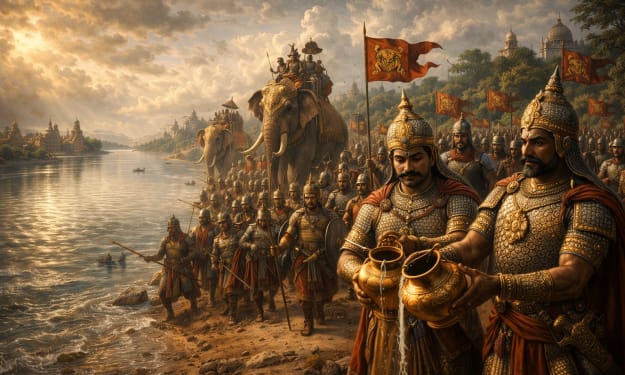
After a few days of negotiations, the Crusader defenders of Jerusalem, realizing the futility of their position, agreed to surrender the city to Salahuddin. On October 2, 1187, Salahuddin’s army entered Jerusalem, but this was not a scene of pillage or destruction. Instead, it was marked by an overwhelming sense of respect, dignity, and humanity. Sultan Salahuddin, despite having the power to wreak havoc upon the city and its inhabitants, ordered that no harm should come to the civilian population. His soldiers were strictly forbidden from looting, destroying property, or causing harm to anyone.
Upon entering Jerusalem, Salahuddin Ayyubi was met with a city filled with fear and tension. The people of Jerusalem, particularly the Christians, feared that the same brutal treatment they had inflicted upon the Muslims during the First Crusade would be visited upon them. However, Sultan Salahuddin proved them wrong. His treatment of the city's inhabitants was one of mercy, respect, and compassion. He ensured that Christians, Jews, and Muslims alike were treated fairly, and he emphasized that their religious beliefs and practices would be protected.
The Massacre That Wasn't
Perhaps the most striking aspect of Salahuddin’s conquest of Jerusalem was the way he treated the Crusader prisoners. In contrast to the bloodshed and massacres perpetrated by the Crusaders when they had previously captured Jerusalem in 1099, Sultan Salahuddin Ayyubi took a completely different approach. Instead of executing the Crusader prisoners, Salahuddin allowed them to leave the city unharmed. He even facilitated their safe passage back to Christian territories.
This act of clemency and mercy was in stark contrast to the actions of the Crusaders during their occupation of Jerusalem. When the Crusaders had captured the city in 1099, they had massacred the Muslim and Jewish inhabitants of Jerusalem, slaughtering thousands in the streets. Salahuddin’s response to the situation was a clear reflection of his character and the values he upheld as a leader. He was not interested in revenge or retribution, but in creating a lasting peace and ensuring the safety and dignity of all people, regardless of their faith.
Furthermore, Salahuddin Ayyubi showed great respect toward the Christian religious sites in Jerusalem. He ensured that the Church of the Holy Sepulchre, one of the holiest sites in Christianity, was protected and that Christians could continue their religious practices without fear of persecution. This was a rare and remarkable act of religious tolerance during a time when religious conflicts were rampant across the world.
A Legacy of Leadership
The recapture of Jerusalem by Sultan Salahuddin Ayyubi was not just a military victory but also a triumph of mercy and justice over brutality and hatred. His actions during the conquest of the city set him apart from many other leaders of his time, earning him respect from both his allies and adversaries. Salahuddin’s leadership style, based on principles of honor, dignity, and compassion, made him a beloved figure in history, transcending cultural and religious boundaries.
Even today, Sultan Salahuddin is remembered not only for his military prowess but for his ability to show mercy, tolerance, and understanding in the face of conflict. His treatment of the people of Jerusalem, the Crusader prisoners, and the religious sites in the city serves as an enduring example of how leadership rooted in justice and humanity can have a lasting impact on the course of history.
In the end, Salahuddin Ayyubi’s recapture of Jerusalem was a victory not just for Islam, but for all humanity. His actions in the city proved that true leadership is not about defeating your enemies but about treating others with dignity and respect, regardless of their faith, background, or beliefs. Sultan Salahuddin Ayyubi’s legacy is one of courage, wisdom, and mercy, and it remains an inspiration to leaders and individuals across the world to this day.
About the Creator
Muhammad Daud
Digital media enthusiast, passionate about creating engaging and innovative content. Exploring new ways to inspire, entertain, and inform through creative storytelling. Join me on this journey of artistic expression!
Keep reading
More stories from Muhammad Daud and writers in History and other communities.
"KGF: The Truth Behind the Legend – Real History or Reel Fiction?"
Is the Story of KGF Real or Fictional? The Truth Behind the Blockbuster The Indian film KGF (Kolar Gold Fields) has captured the attention of audiences around the world with its gripping storyline, intense action, and powerful characters — especially the mysterious and fearless Rocky Bhai. But one question that many viewers ask is: Is the story of KGF real or based on true events?
By Muhammad Daud 9 months ago in History
Rajendra Chola I and the Conquest of the Ganga: A Monumental Feat in Indian History
Known as the “Gangaikonda Chola” (the Chola who conquered the Ganga), Rajendra transformed a South Indian maritime empire into a pan-Indian power whose influence stretched from the Indian Ocean to the heart of the subcontinent. This campaign was not merely a military raid but a bold statement of imperial ambition, strategic brilliance, and cultural confidence.
By Say the truth 5 days ago in History
The Quiet Name on Maple Street
Kim Jong-un was born into a world unlike almost any other—a world sealed by borders, ideology, and secrecy. As the grandson of Kim Il-sung, the founder of North Korea, and the son of Kim Jong-il, the country’s second leader, Kim Jong-un entered life already wrapped in destiny. In North Korea, leadership is not chosen by ballots or debate; it is inherited like a crown, reinforced by loyalty, fear, and an unyielding political system.
By The best writer 2 days ago in History



Comments
There are no comments for this story
Be the first to respond and start the conversation.