
Shadow of the Steppe
A Tatar boy rides with Genghis Khan—but will he lose his soul before the empire reaches the West?


Part I – The Horse and the Flame
The first time I saw Genghis Khan, he was not yet the god men whispered about. He was flesh and fury, a man with lightning eyes and a voice that cracked like a war drum. I was twelve. My mother had died from fever. My father was a minor Tatar chieftain, slain in a night raid by Mongol warriors. When they came for our camp a second time, I did not run. I stood with a broken spear, heart trembling, and met the gaze of the commander.
“Courage,” he said in Mongol, nudging his horse closer. “Or stupidity?”
I did not answer. He looked at me a moment longer, then spat to the side.
“Both will serve.”
They called me Altan, meaning "gold," for the sun-colored streak in my hair. I learned to ride before I could read. Under Mongol command, I became a scout—light, fast, invisible. I rode ahead of armies, across forests, rivers, and endless plains. My reward was survival. My price, slowly, was the erosion of self.
---
Part II – Blood on the Silk Road
By the time I was sixteen, the empire stretched far beyond our wildest dreams. Cities fell like dominos. Samarkand. Nishapur. Merv. I watched entire cultures burn behind us—texts, temples, and tongues reduced to smoke.
"Do you weep for them?" asked Khasar, my closest companion. His father had been a general under Genghis himself. Brutality was his inheritance.
"No," I said, though my heart said otherwise.
"Good," he grunted. "A scout cannot carry the dead with him. They're heavy, and they don't ride fast."
That night, I buried a small talisman my mother once gave me—a carved bone, smoothed by her fingers when she told me stories of our ancestors.
I buried it beneath the roots of a pine tree, as if hiding my past.
---
Part III – The Question of Europe
In the Carpathian foothills, the land turned cold and cruel. Snow bit at our faces. We rode through villages that whispered rumors of "iron knights" in the West, warriors with crossbows and castles of stone. Genghis Khan was dead by then, but the empire surged forward, led by his sons and grandsons.
I scouted a small Hungarian town in winter. I saw children with red cheeks laughing by a frozen stream. A woman sang to a baby as she spun thread. A man carved wooden spoons. None of them had seen our banners. Not yet.
I reported back: “No soldiers. Only peasants. No threat.”
A week later, they burned it anyway.
---
Part IV – The Drowning Song
On a spring night, after the village fires had turned to embers, I heard singing by a stream. It was not Mongol, not Turkic. A girl’s voice, soft and sure, in a language I didn’t know.
I followed it and found her kneeling in the water, releasing lotus blossoms down the stream. Her name was Erzsébet. She was no more than fifteen.
“I sing for the drowned,” she said, in broken Tatar. “For the ones your people killed.”
I said nothing. I had no excuse.
“Why do you ride with them?” she asked, her eyes sharp as flint.
I looked at my hands. “Because they spared me.”
“And so you repay mercy with blood?”
I wanted to tell her that survival is not loyalty. That a blade does not choose its master. But my mouth was empty.
We met again the next night. And the next. Until her village, too, was marked for fire.
---
Part V – The Turn
I warned her.
We escaped in the dark—two figures on horseback riding away from the thundercloud of conquest. She clung to my back as arrows whistled past. I felt Khasar’s betrayal like a blade in my gut. He would have seen me in the moonlight. He knew.
They caught us two days later.
They dragged me before the general and beat me until blood pooled in my ears. Erzsébet was thrown into a cage meant for dogs. I thought they would kill us.
Instead, Khasar intervened. “Let the traitor ride,” he spat. “To the edge of the earth if he wishes. He’ll die there anyway.”
They left us tied and bruised, two mouths full of silence.
---
Part VI – The Long Ride West
We did not return east. We rode west, through burned-out fields and shattered dreams. We begged and bartered, stole when we had to. At night, I dreamed of rivers red with blood. Faces of the fallen. My father’s last cry. My mother’s songs.
But also of Erzsébet, her head on my shoulder as we crossed a mountain pass into a valley that had not yet known war.
There, under spring blossoms, we built a hut. Planted barley. Let horses roam free. The scars remained. So did the memories. But each day the sun rose over a field not on fire felt like a kind of rebellion.
---
Epilogue – What Remains
Years later, when the Mongols finally withdrew from Europe, legends remained. Of shadow riders. Of villages spared by a ghost in a golden mane.
They said a Tatar once rode with the Great Khan but turned his back on conquest.
They called him coward. Others, saint.
But I—Altan—knew only this:
Some wars are not fought with swords.
Some victories leave no monuments.
And sometimes, mercy is the only way to survive your own story.
About the Creator
Keep reading
More stories from 🇲 🇮 🇳 🇩 🇺 🇳 🇫 🇴 🇱 🇩 🇪 🇩 and writers in History and other communities.
When Nations Build Machines of Power and Others Dance to Decline: A Reflection on Modern Decay
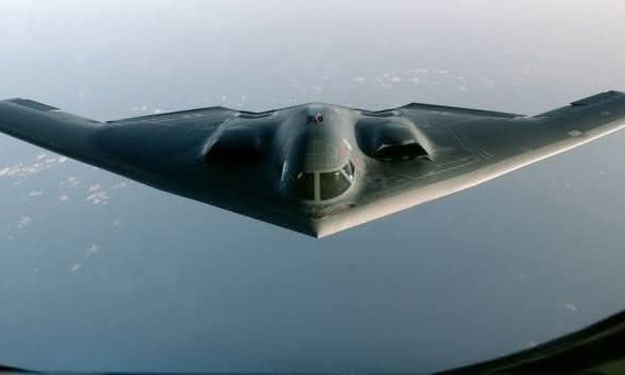
In the early decades of the 21st century, the world bore witness to an astonishing technological arms race. Among the most iconic symbols of this era was the B-2 Spirit, a stealth bomber engineered by the United States with surgical precision and strategic foresight. Capable of infiltrating heavily fortified enemy airspace undetected, this aircraft stands as a marvel of modern science, engineering, and military innovation.
By 🇲 🇮 🇳 🇩 🇺 🇳 🇫 🇴 🇱 🇩 🇪 🇩 7 months ago in History
Kyrsten Sinema
Kyrsten Sinema has become one of the most recognizable and debated figures in modern American politics. Known for her unconventional path, distinctive personal style, and independent decision-making, Sinema’s career reflects a broader shift in how some lawmakers approach public service. Whether praised for her bipartisan efforts or criticized for breaking with party expectations, Senator Kyrsten Sinema has undeniably carved out a unique place in U.S. political history. Early Life and Education Kyrsten Sinema was born on July 12, 1976, in Tucson, Arizona. Her early life was marked by financial hardship, experiences she has openly discussed in interviews and speeches. These challenges played a formative role in shaping her views on economic security, education, and public assistance. Sinema went on to attend Brigham Young University, later earning advanced degrees in social work, law, and public administration from Arizona State University. Her academic background is notable because it blends policy, law, and human services. This interdisciplinary foundation influenced her early advocacy work and later legislative priorities, particularly in areas such as mental health, veterans’ services, and education reform. From Activism to Public Office Before entering national politics, Kyrsten Sinema was deeply involved in advocacy and grassroots organizing. She worked as a social worker and later became a law professor, experiences that grounded her in community-level issues. Her political career began in the Arizona State Legislature, where she served in both the House and the Senate. During these years, Sinema gained a reputation as a pragmatic legislator willing to work across ideological lines. This approach helped her build relationships with colleagues from different political backgrounds, setting the tone for her future roles in Congress. Rise to the U.S. Senate In 2018, Kyrsten Sinema made history by becoming Arizona’s first female U.S. senator. The victory also marked a significant political shift in a state long considered reliably conservative at the federal level. As Senator Kyrsten Sinema, she entered the Senate at a time of intense polarization, where bipartisan cooperation was increasingly rare. Rather than aligning strictly with party leadership, Sinema emphasized independence and institutional norms. Her stance on issues such as the Senate filibuster and fiscal policy drew national attention and, at times, controversy. Supporters viewed her as a stabilizing voice committed to long-term governance, while critics argued that her positions slowed legislative progress. Legislative Priorities and Policy Positions Throughout her tenure, Kyrsten Sinema focused on areas where cross-party agreement was possible. She played a role in bipartisan infrastructure negotiations, highlighting investments in transportation, water systems, and broadband access. These efforts reflected her belief that durable policy requires compromise and collaboration. Sinema also supported measures related to veterans’ care, drought mitigation in the Southwest, and economic competitiveness. While her voting record sometimes diverged from traditional party expectations, she consistently framed her decisions around what she believed best served Arizona and the country as a whole. Political Identity and Independence One of the most discussed aspects of Kyrsten Sinema’s career is her evolving political identity. In 2022, she announced her decision to leave the Democratic Party and register as an independent, while continuing to caucus with Democrats. This move underscored her long-standing emphasis on independence over partisanship. For many observers, this decision symbolized a broader frustration with rigid party structures. Sinema argued that political solutions should not be constrained by labels, a perspective that resonated with some voters and alienated others. Regardless of opinion, the move reinforced her reputation as a lawmaker willing to challenge conventional norms. Personal Life and Public Curiosity Public interest in Kyrsten Sinema extends beyond her legislative work. Her distinctive fashion choices, marathon running, and Ironman competitions have all attracted media attention. Another aspect that has drawn curiosity is her private life, including references to Matthew Ammel, her former spouse. Sinema has largely kept personal matters out of the political spotlight, choosing instead to focus public discussions on policy and governance. Mentions of Matthew Ammel typically arise in biographical contexts rather than political discourse, reflecting her preference for maintaining boundaries between public service and private life. Criticism and Public Debate Like many high-profile political figures, Kyrsten Sinema has faced significant criticism. Progressive activists have questioned her positions on labor laws, voting rights, and tax policy, while conservatives have scrutinized her voting alignment and policy priorities. Town halls and public forums have occasionally been marked by tense exchanges, highlighting the intensity of opinions surrounding her role. Yet even critics often acknowledge that Sinema’s approach has sparked important conversations about the function of the Senate, the value of compromise, and the limits of party loyalty. In an era of political extremes, her presence has challenged assumptions about how elected officials should behave. Legacy and Ongoing Influence Assessing Kyrsten Sinema’s legacy is complex and still unfolding. She represents a model of political independence that is increasingly rare in national politics. Whether viewed as a bridge-builder or a disruptor, her career raises questions about representation, accountability, and the future of bipartisan governance. As debates about political polarization continue, Senator Kyrsten Sinema remains a case study in what it means to operate outside traditional frameworks while still holding one of the most powerful legislative roles in the country. Conclusion Kyrsten Sinema’s journey from grassroots activism to the U.S. Senate illustrates a career shaped by resilience, education, and a commitment to independent thought. Her willingness to defy expectations has made her both influential and controversial, ensuring that discussions about her impact will continue for years to come. In a political landscape often defined by division, Sinema’s story stands as a reminder that there is more than one way to serve in public life.
By Saboor Brohi about 8 hours ago in History
The Golden Peacock in History: Symbol of Power, Beauty, and Immortality
The Peacock as a Sacred Symbol The peacock has long been regarded as a sacred animal. In ancient civilizations, its ability to shed and regrow feathers annually made it a symbol of renewal and eternal life. Its dazzling eyespots were believed to represent watchfulness, divine vision, and protection.
By Say the truth 7 days ago in History


Comments (1)
♥️❤️♥️❤️