
Palestine Rising Death Toll and Humanitarian Crisis
palestine update

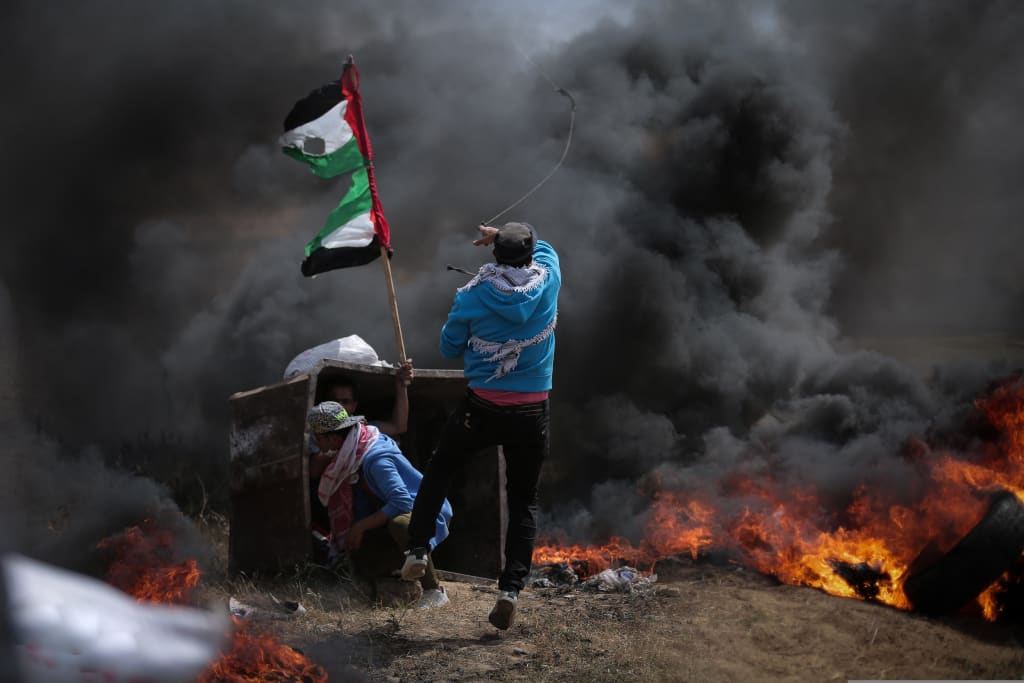
The situation in Palestine, particularly in Gaza, has reached a new level of humanitarian catastrophe, as Israeli military operations continue into April 2025. Israeli forces have intensified their airstrikes and ground offensives over the past few weeks, causing a tragic rise in the number of civilian deaths, the destruction of infrastructure, and an ongoing blockade that has left millions of people in desperate need of essentials.
-Rising Death Toll and Humanitarian Crisis
According to recent reports, more than 1,500 Palestinians have been killed since mid-March, with women and children accounting for a significant portion of the fatalities. Over 3,800 individuals have been injured, many of them critically, overwhelming Gaza's already fragile healthcare system. Due to the blockade, which has cut off power, water, and fuel to a large portion of the region, hospitals are operating with few supplies and no electricity. Humanitarian organizations and international observers warn that the situation is getting worse. Schools, hospitals, water plants, and homes are among the infrastructure that has been damaged or destroyed in Gaza, with an estimated 60% of it. Around 85% of the population is now displaced, seeking shelter in overcrowded UN-run facilities, schools, or temporary shelters.
--- A lack of food and water One of the gravest concerns is the shortage of clean drinking water. Israeli airstrikes and the ongoing blockade have halted water purification systems and severed pipelines, leaving most of Gaza’s population without access to potable water. Aid groups have warned that without immediate intervention,disease outbreaks and dehydration could result in further loss of life.
At the same time,food supplies are running dangerously low. The Israeli government continues to restrict humanitarian convoys, claiming that no urgent shortages exist—a claim widely disputed by NGOs operating on the ground. According to the United Nations and the Red Crescent,"only a fraction of the needed aid" is reaching Gaza, and the majority of the population is suffering from severe hunger.
International Response to War Crimes The scale and brutality of the offensive have prompted international legal actions. For alleged war crimes and crimes against humanity, the International Criminal Court (ICC) has issued arrest warrants against Israeli Prime Minister Benjamin Netanyahu and former Defense Minister Yoav Gallant. Targeting civilian infrastructure, utilizing starvation as a weapon, and obstructing humanitarian assistance are among these charges. The International Court of Justice (ICJ) is looking into a separate case involving a genocide complaint brought against Israel. Hearings are underway, and while no ruling has yet been made, several countries have voiced their support for a full investigation and accountability.
-Recurring Assault and a Temporary Ceasefire Under increasing international pressure, Israel agreed to a temporary ceasefire in late March, during which limited aid was allowed to flow into Gaza. However, by the third week of March, airstrikes resumed, and ground operations intensified.This return to violence has been described as a “betrayal of humanitarian principles” by human rights organizations.
Israeli officials maintain that the operations are targeted at eliminating Hamas infrastructure, but the high civilian death toll and widespread destruction have drawn sharp criticism. The conflict is being waged in densely populated urban areas, according to analysts, where it is nearly impossible to distinguish between civilian and militant targets. ---
The psychological and displacement costs The impact of the conflict on children is especially heartbreaking.According to UNICEF, more than half of the children in Gaza are now orphans, injured, or have suffered severe trauma. Many have lost their homes, their families, and their sense of safety. With schools closed and communities destroyed, children are deprived of both education and a stable environment.
The mental health toll on the entire population is immeasurable. Post-traumatic stress disorder (PTSD) is prevalent in the region, according to psychologists, particularly among young people. The ongoing bombings, drone surveillance, and uncertainty have created a climate of constant fear.
--- Solidarity and Outcry from the World Around the world, massive demonstrations in support of the Palestinian people have taken place. Millions of people have marched in cities across Europe, Asia, Africa, and the Americas to demand an end to the violence and immediate humanitarian access. Hashtags like FreePalestine and CeasefireNow have trended globally, reflecting the urgency felt by people across political and cultural lines.
Global powers remain divided despite this. The United States, while calling for “restraint,” continues to provide military aid to Israel. On the other hand, nations like Norway, South Africa, Turkey, Ireland, and Turkey strongly opposed Israel's actions and demanded that sanctions be imposed right away. The Arab League, meanwhile, has convened emergency meetings to coordinate relief and diplomatic efforts. However, the league's capacity for unified action has been limited by member state divisions. Despite the fact that humanitarian corridors are frequently restricted or shut down, Egypt has been instrumental in facilitating them.
-Hope Amid Despair
Amid the destruction, stories of courage, resilience, and unity continue to emerge. Local volunteers, medics, and journalists are risking their lives to provide aid and tell the world what is happening. To send food, medicine, and moral support, grassroots efforts, crowdfunding campaigns, and diaspora communities are putting in a lot of effort. A longer-term truce or peace process is also being negotiated diplomatically behind closed doors. UN Secretary-General António Guterres has called for an immediate ceasefire, unfettered humanitarian access, and the resumption of talks toward a two-state solution.
-Conclusion: A Call for Justice and Humanity
The situation in Gaza is not just a political crisis—it is a humanitarian catastrophe. The suffering of civilians, especially children, calls for urgent action from the global community. The question remains: will the world allow this tragedy to continue unchecked, or will it finally act decisively to bring about justice and peace as violence continues and international law is put to the test? The people of Gaza—and all Palestinians—deserve to live in safety, dignity, and freedom. They deserve more than sympathy; they need action. The time for silence is over. Now is the time to listen, act, and stand in solidarity with Palestinians going through unimaginable hardship.
-Would you like this as a downloadable document, or translated into Bangla again?
About the Creator
Keep reading
More stories from Ahmed Karim and writers in History and other communities.
New NASA Sonifications: Listen to the Sound of the Universe.
The universe has always been a place of wonder, mystery, and awe. While telescopes and satellites allow us to observe it, allowing us to "hear" it is one of the most innovative and creative approaches NASA has recently adopted. NASA is converting astronomical data into sound through a process called "sonification," which provides a brand-new method for experiencing the universe. This unique approach to data representation is not only scientifically valuable but also deeply emotional and artistic. As part of its Chandra X-ray Observatory project, NASA released a new set of sonifications that transform some of the most well-known space phenomena into musical compositions that capture the imagination and bring the universe to life in a way that has never been done before. ---
By Ahmed Karim10 months ago in History
Martin Luther King Jr.: A Black Day in America
On April 4, 1968, the world lost one of its most powerful voices for justice and equality. Martin Luther King Jr., the man whose words had ignited hope in millions, was assassinated on the balcony of the Lorraine Motel in Memphis, Tennessee. That day is remembered as a black day in American history—not only for the loss of a great leader but for the reflection it forced the nation to confront about its values, its divisions, and the long road still ahead for civil rights. Martin Luther King Jr. had spent his life advocating for nonviolent resistance, inspired by the teachings of Mahatma Gandhi. From the Montgomery Bus Boycott in 1955 to the historic March on Washington in 1963, where he delivered his iconic “I Have a Dream” speech, King’s words and actions challenged a society deeply entrenched in racial segregation and discrimination. He had become a symbol of hope, a figure who reminded Americans that justice was not a privilege but a right. By 1968, King was focused on addressing broader issues beyond racial inequality. He had shifted his attention to economic justice, poverty, and the Vietnam War, recognizing that systemic oppression was not limited to race alone. In Memphis, he stood with striking sanitation workers demanding better wages and safer working conditions. He knew that the struggle for dignity and fairness extended to every corner of society. But tensions in the country were high. America was a nation divided. Cities were already experiencing unrest, the war in Vietnam was escalating, and extremist groups actively opposed the civil rights movement. King had received countless death threats, yet he remained steadfast, continuing his mission with courage that inspired millions. His presence in Memphis was meant to support the marginalized, but it would tragically mark the final chapter of his life. On that fateful evening, King stepped onto the balcony of his room at the Lorraine Motel. The sun was beginning to set, casting a warm glow over the streets of Memphis. It was a moment of calm, yet danger lurked unseen. A single gunshot rang out, piercing the air and the hearts of those who had looked to him for guidance. King collapsed, fatally wounded, and chaos erupted. News of his assassination spread like wildfire, leaving communities across America in shock and grief. Television networks interrupted regular programming; newspapers ran bold headlines; the streets filled with sorrow, anger, and disbelief. People who had never met him personally felt the sting of loss as if a father, a teacher, or a friend had been taken from them. For many, the dream that King had spoken of—the dream of equality, justice, and brotherhood—suddenly seemed fragile and distant. The immediate aftermath of King’s death was a period of turmoil. Cities erupted in riots, not out of mindless violence, but as an expression of pent-up frustration and despair. Washington D.C., Chicago, Baltimore, and dozens of other cities experienced burning buildings, looting, and clashes with law enforcement. The country mourned, yet it also faced an urgent question: how could a society that claimed freedom and equality fail so tragically to protect one of its most peaceful advocates? Despite the violence, Martin Luther King Jr.’s legacy endured and even grew stronger in the face of tragedy. His death forced Americans to confront the reality that the fight for civil rights was far from over. Congress passed the Civil Rights Act of 1968, also known as the Fair Housing Act, just days after his assassination, banning discrimination in housing—a testament to the momentum King had built. His dream did not die with him; it lived on in the countless people who continued to march, protest, and speak out against injustice. King’s life and death also revealed the fragility of human progress. The black day of April 4th was a stark reminder that the struggle for justice often comes with immense sacrifice. It highlighted the courage required to challenge deeply rooted systems of oppression and the persistent resistance faced by those who seek to change society for the better. Yet, even in mourning, his death inspired a renewed commitment among civil rights activists, politicians, and ordinary citizens to carry his vision forward. In the years following his assassination, memorials and tributes honored King’s life. Streets were renamed, schools dedicated, and eventually, the Martin Luther King Jr. National Memorial was built in Washington, D.C. On every January 15th, his birthday is commemorated as a national holiday, not merely to remember his death, but to celebrate his contributions and the enduring principles he fought for: equality, justice, and nonviolence. But the black day of April 4th also serves as a cautionary tale. It reminds the world that progress is never guaranteed, and the cost of complacency is high. King’s death symbolized the very real dangers that come with standing up for truth and justice in a divided society. It forced Americans to reflect on their own values and actions, and on the work still required to turn King’s dream into a reality. Martin Luther King Jr. once said, “The arc of the moral universe is long, but it bends toward justice.” His assassination did not halt that arc; it strengthened the resolve of those determined to see it through. Today, when people around the world remember that black day in America, they do not remember only the sorrow—they remember the courage, the vision, and the unyielding spirit of a man who believed in a better world and gave everything to achieve it. King’s life and untimely death continue to inspire generations to question injustice, fight inequality, and act with compassion. Though April 4, 1968, was a day of darkness, it ultimately illuminated the path forward, reminding humanity that even in tragedy, hope, courage, and change are possible. The legacy of Martin Luther King Jr. is a testament to the power of one person to awaken a nation, to challenge hatred with love, and to transform despair into a movement for justice. The black day in America is remembered not merely as a day of loss, but as a turning point—a day when the dream was tested, yet proved resilient, enduring in the hearts of those who dare to believe in equality, peace, and freedom for all.
By The best writer 3 days ago in History
Otto von Bismarck: The Real-World Strategic Genius
History remembers many great thinkers of power, but few figures mastered it as completely in practice as Otto von Bismarck. While philosophers like Machiavelli explained how rulers *should* behave, Bismarck demonstrated how power actually works in the real world—messy, emotional, unpredictable, and deeply human. He was not a conqueror driven by glory, nor an ideologue chasing perfection. He was something far rarer: a strategist whose primary weapon was restraint.
By Fred Bradfordabout 10 hours ago in History


Comments
There are no comments for this story
Be the first to respond and start the conversation.