
Names No Child Should Know
The Boy Who Remembered His Murder: A Chilling Tale of Reincarnation and Justice in Rural India

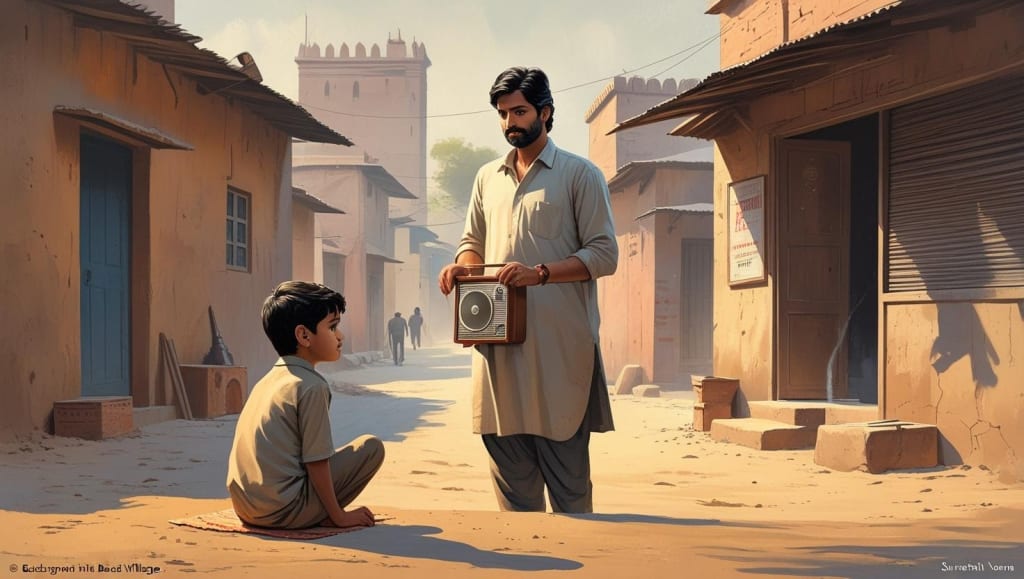
In a small village called Baad, near the historic city of Agra in northern India, a young boy named Titu Singh lived an ordinary life—until he began to speak of a life that wasn’t his. It began subtly, with odd phrases and strange names rolling off his tongue. Titu, barely four years old, would talk about things that confused and unsettled his family. He claimed he wasn’t Titu Singh at all. His name, he said, was Suresh Verma.
At first, his parents laughed it off. Every child has an imagination, they thought. But the details became too specific—too eerie—to ignore.
Titu spoke about a place far from his home in Baad: a town called Agra, and more specifically, a neighborhood near the station. He talked about owning a shop, selling radios, having a family with children. He described streets he'd never walked, people he’d never met, and even spoke with expressions uncommon for a boy his age. His mannerisms were more mature, his vocabulary more suited to a grown man.
But what truly shook his parents was when Titu began recalling the day he died.
He said he had been shot. Murdered.
He didn’t just mention being attacked; he described the killers. He named names—real names. He recalled being in his shop when the attackers came. He claimed they were gangsters—“goondas”—who had a grudge. The details poured out of him: how he tried to run, how they cornered him, how the fatal bullet struck.
This wasn’t the fantasy of a playful child. It had the weight of trauma, the conviction of memory.
Concerned and increasingly disturbed, Titu's parents consulted neighbors and eventually reached out to those more familiar with reincarnation cases. Soon, word spread, and a team of researchers began investigating his claims.
The story took an even stranger turn when the details began lining up.
In Agra, not far from where Titu claimed his former life took place, investigators discovered that a man named Suresh Verma had indeed existed. He had been the owner of an electronics shop. He had a family. And yes—he had been shot and killed years earlier in circumstances that mirrored what Titu described.
Suresh Verma had been ambushed by local criminals with a grudge. He died from a bullet wound to the head. His murder had left the community shocked and his family grieving—but no one had ever expected that he might return in the form of a village boy.
When Titu was taken to Agra, his behavior was astonishing. He led the way through the streets as if he’d walked them every day. Without guidance, he arrived at Suresh Verma’s old shop. He recognized family members, calling them by name, including people he had never seen in this life. He greeted Suresh’s widow and children with familiarity and even commented on personal matters no stranger could have known.
But the most chilling part? Titu recognized the alleged killers. He named them without hesitation. These weren’t vague accusations—he was describing real people, still alive, connected to Suresh Verma’s case.
This evidence, strange and compelling as it was, couldn’t be ignored. The names Titu gave were handed to authorities. Investigations were reopened. Although legal justice was slow and complicated, Titu Singh’s memories revived interest in a case that had gone cold.
Titu, now a bit older, doesn’t speak of the memories as frequently. Many reincarnation researchers believe that as children age, their past-life memories fade. But for years, Titu’s story stood as one of the most detailed and convincing cases of reincarnation ever documented—not just because of the precision of his memories, but because those memories helped identify a crime, a killer, and a life unjustly ended.
For many, the case of Titu Singh became more than just a curiosity. It became a subject of study in psychology, spirituality, and even law enforcement. What if consciousness survives death? What if, in rare moments, the soul returns not just with memories, but with purpose?
The idea that a boy could solve his own murder from a previous life might sound like the plot of a film—but in rural India, it became a haunting, unforgettable reality.
About the Creator
Reader insights
Outstanding
Excellent work. Looking forward to reading more!
Top insight
Expert insights and opinions
Arguments were carefully researched and presented
Keep reading
More stories from Waleedkhan and writers in History and other communities.
"He Understood My Silence—Now It Echoes Without Him
We all go through life expecting to meet people who will stay. Some do. Most don’t. But then, there are those rare ones—the ones who come quietly and change your entire world, and when they leave… they don’t take just memories, they take pieces of you.
By Waleedkhan7 months ago in Families
THE GRAND EGYPTHION MUSEUM
Let’s be real for a second. When folks hear "museum," they often think of dusty halls, dry information, and that odd quiet where you feel like you're misbehaving just for breathing. But the Grand Egyptian Museum isn't like that. I really don't think that's it. It's not accurate at all. This just seems wrong. This place is really nice. Egypt really shows us that it made history, and it keeps on doing amazing things.
By Beshoy Zayera day ago in History
The Quiet Name on Maple Street
Kim Jong-un was born into a world unlike almost any other—a world sealed by borders, ideology, and secrecy. As the grandson of Kim Il-sung, the founder of North Korea, and the son of Kim Jong-il, the country’s second leader, Kim Jong-un entered life already wrapped in destiny. In North Korea, leadership is not chosen by ballots or debate; it is inherited like a crown, reinforced by loyalty, fear, and an unyielding political system.
By The best writer about 8 hours ago in History


Comments (1)
Great story telling