
Mike Tyson: The Rise, Fall, and Rebirth of Boxing’s Most Compelling Figure
Iron Mike Tyson


Few figures in the world of sports have captured public attention like Mike Tyson. Known as "Iron Mike," Tyson’s story is one of incredible highs and devastating lows, making him one of the most compelling and controversial athletes of all time. Born on June 30, 1966, in Brooklyn, New York, Tyson’s life has been defined by raw talent, intense determination, and a series of personal and professional challenges.
The Meteoric Rise of a Boxing Prodigy
Mike Tyson grew up in a tough Brooklyn neighborhood, where his early life was shaped by poverty and instability. However, his discovery by boxing trainer Cus D’Amato would change everything. D’Amato saw Tyson’s raw talent and became a father figure to the young fighter, teaching him not only the technical skills of boxing but also instilling in him a warrior’s mentality.
Tyson’s professional debut in 1985 was nothing short of spectacular. His unmatched speed, devastating punching power, and unrelenting aggression in the ring quickly made him a sensation. By 1986, at the age of 20, Tyson made history by becoming the youngest heavyweight champion ever, defeating Trevor Berbick to claim the WBC title.
His domination of the heavyweight division continued as he unified the WBC, WBA, and IBF titles, a feat that underscored his status as the undisputed heavyweight champion. Tyson’s ferocious style was complemented by an aura of intimidation; many opponents were visibly defeated before they even stepped into the ring.
Notable victories during his prime include his defeat of Larry Holmes in 1988, a former champion who had never been knocked out before facing Tyson, and his 91-second annihilation of Michael Spinks, solidifying his reputation as the most feared boxer of his era.
A Tumultuous Decline
As meteoric as his rise was, Tyson’s fall was equally dramatic. The first crack in his seemingly invincible armor appeared in 1990, when he suffered a shocking defeat to underdog Buster Douglas in Tokyo. The loss not only ended his unbeaten streak but also signaled the beginning of a tumultuous period in Tyson’s life and career.
In 1992, Tyson was convicted of raping Desiree Washington and sentenced to six years in prison, of which he served three. This conviction derailed his career and tarnished his public image.
After his release in 1995, Tyson returned to the ring with renewed vigor, reclaiming the WBC and WBA titles. However, his 1997 rematch with Evander Holyfield became infamous for Tyson’s shocking decision to bite Holyfield’s ear, resulting in his disqualification and further damage to his reputation.
Retirement and Personal Struggles
Tyson’s boxing career officially ended in 2005 after a series of disappointing performances. By this time, he was financially and emotionally drained, having squandered a fortune estimated at over $300 million. Tyson’s life outside the ring was marked by struggles with addiction, legal troubles, and personal tragedies, including the tragic death of his daughter in 2009.
Despite these challenges, Tyson began a remarkable journey of self-reinvention. He sought sobriety, embraced therapy, and worked to rebuild his life, both personally and professionally.
Reinvention and Pop Culture Icon
In the years following his retirement, Tyson surprised many by finding a new role in popular culture. His cameo in the 2009 comedy film The Hangover introduced him to a new generation of fans and showcased his ability to laugh at himself. This marked the beginning of a successful career in entertainment, including his animated series Mike Tyson Mysteries, where he played a comedic, fictionalized version of himself.
In addition to his work in entertainment, Tyson has also become a successful entrepreneur. He launched a cannabis business, Tyson 2.0, capitalizing on the growing legal marijuana industry. Tyson’s openness about his struggles with mental health and addiction has also resonated with many, making him a more relatable and sympathetic figure.
A Legacy of Controversy and Redemption
Tyson’s induction into the International Boxing Hall of Fame in 2011 was a fitting recognition of his extraordinary career. Despite his controversies, Tyson’s impact on the sport of boxing is undeniable. He remains one of the most electrifying fighters in history, known for his unparalleled ferocity and ability to captivate audiences worldwide.
Tyson’s story is one of extremes. He was a young man who rose from the streets of Brooklyn to become the most feared fighter on the planet, only to lose everything due to personal demons. Yet, his ability to reinvent himself, embrace humility, and seek redemption is a testament to his resilience.
The Man Behind the Gloves
Today, Mike Tyson is a man at peace with his past. He speaks candidly about his mistakes, his regrets, and his ongoing journey to better himself. Tyson’s life is a reminder that even the mightiest can fall, but with determination, it’s possible to rise again.
From the ferocious fighter who dominated the heavyweight division to the reflective, self-aware individual he is now, Tyson’s journey is one of transformation. His legacy, marked by triumph and tribulation, serves as a powerful narrative of human strength, vulnerability, and the capacity for change.
Whether remembered as "Iron Mike" the boxing legend or Mike Tyson the redeemed, his story remains one of the most fascinating in sports history.
About the Creator
Keep reading
More stories from Deji Akomolafe and writers in History and other communities.
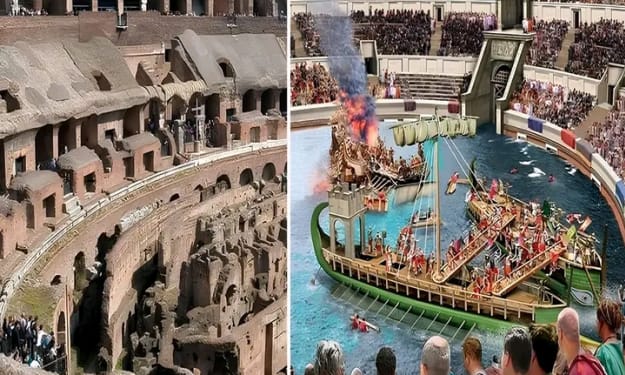
When Rome Brought the Seas to the Colosseum: The Spectacle of Naval Battles in the Arena
The Colosseum in Rome, one of history's most iconic structures, was built to awe, entertain, and display the might of the Roman Empire. While most people associate the Colosseum with gladiatorial combat and wild animal hunts, there’s another, lesser-known chapter in its history that truly underscores the Romans' flair for spectacle: naumachiae, or staged naval battles.
By Deji Akomolafeabout a year ago in History
A massive underwater stone wall that is almost 7,000 years old is found by divers.
One of the buried stone monuments on Sein Island is a granite wall off Brittany that is more than 7,000 years old and the length of a football pitch. The discovery is being used by marine archaeologists in the vicinity of Île de Sein to explain how stone-built coastal villages predate the widespread spread of farming.
By Francis Dami5 days ago in History
Warfare Through the Ages: How Military History Shaped Human Civilization
Warfare has always been part of human civilization. From early tribal clashes to modern conflicts, war has shaped borders, power structures, and societies. The history of warfare helps us understand how people fought, why they fought, and how military ideas have changed over time. Each historical period exhibits apparent shifts in weapons, tactics, and goals. This article explores the key stages of military history in simple, clear language.
By Matthew Pothoff2 days ago in History
Miss Persephone's Manual to a Seemingly Ordinary Life
Miss Persephone was found at the dining table, her blue eyes swollen, her tears arriving and retreating like the tides of the ocean. Earlier that day, her family had visited her in the retirement home where she had lived for eight years. It was her eightieth birthday.
By Imola Tóth3 days ago in Fiction


Comments
There are no comments for this story
Be the first to respond and start the conversation.