
Mahakumbh in prayagraj (uttar Pradesh)
Importance of mahakumbh
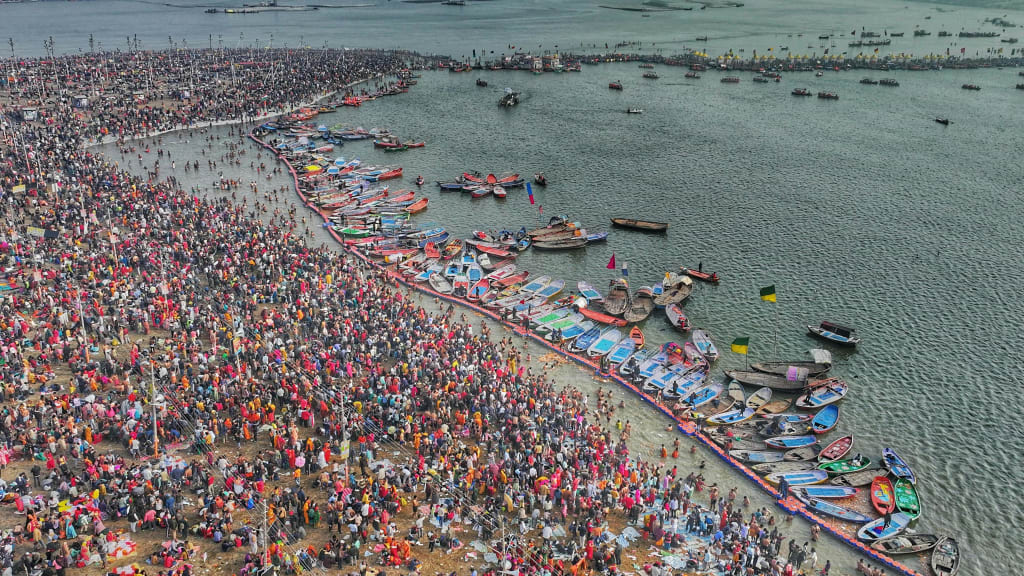
History of Maha Kumbh Mela
The Maha Kumbh Mela is one of the largest and most significant religious gatherings in the world, deeply rooted in Hindu tradition and mythology. This sacred festival occurs once every 12 years at four major locations in India: Prayagraj (Allahabad), Haridwar, Ujjain, and Nashik. The origins of the Kumbh Mela can be traced back to ancient Hindu scriptures and mythology.
Mythological Origins
According to Hindu mythology, the story of the Kumbh Mela is linked to the Samudra Manthan, or the churning of the ocean by the gods (Devas) and demons (Asuras) in search of amrita (nectar of immortality). As they churned the ocean, a divine pot (kumbh) containing the nectar appeared. A fierce battle ensued between the gods and demons to claim the nectar. Lord Vishnu, disguised as Mohini, managed to secure the nectar for the gods. During this struggle, a few drops of nectar fell at four places—Prayagraj, Haridwar, Ujjain, and Nashik—making them sacred sites where the Kumbh Mela is held.
Historical Evolution
The history of the Kumbh Mela dates back thousands of years. References to the festival can be found in Hindu texts like the Puranas and the accounts of Chinese traveler Hiuen Tsang, who visited India in the 7th century CE and described a grand religious gathering. Over time, the event became a well-organized pilgrimage, attracting saints, ascetics, and devotees from across the country.
Significance and Rituals
The Maha Kumbh Mela is considered an opportunity for spiritual purification. The most significant ritual is the Shahi Snan (royal bath), where millions of devotees and saints take a holy dip in the sacred rivers, believing it washes away sins and leads to salvation. The festival also includes yajnas (fire rituals), discourses, devotional singing, and religious assemblies.
Modern Kumbh Mela
The Maha Kumbh Mela today is a massive event, drawing millions of pilgrims, including international tourists. The Indian government makes extensive arrangements for safety, accommodation, and facilities for the devotees. The event showcases India's rich spiritual heritage and cultural unity.
The last Maha Kumbh Mela was held in 2013 in Prayagraj, and the next Maha Kumbh Mela is scheduled for 2025 at the same location. It remains one of the greatest expressions of faith, devotion, and religious harmony in the world.The Maha Kumbh Mela in Prayagraj in 2025 holds immense religious, cultural, and spiritual significance.
1. Once-in-a-Lifetime Event
The 2025 Maha Kumbh is particularly rare, as it occurs once every 144 years due to a unique planetary alignment. This makes it a once-in-a-lifetime opportunity for many devotees.
2. Spiritual Significance
Bathing at the Triveni Sangam (confluence of Ganga, Yamuna, and the mythical Saraswati rivers) during Kumbh is believed to:
Wash away sins
Break the cycle of rebirth
Help attain Moksha (liberation)
3. Massive Participation
The largest religious gathering in the world, it is expected to attract over 400 million pilgrims from across the globe.
4. Key Bathing Dates (Shahi Snan)
The most auspicious days for bathing in the holy river include:
January 14 – Makar Sankranti (1st Royal Bath)
January 29 – Mauni Amavasya (2nd Royal Bath)
February 3 – Vasant Panchami (3rd Royal Bath)
February 12 – Magha Purnima
February 26 – Maha Shivratri (Concluding Bath)
5. Cultural and Social Impact
A meeting place for sadhus, saints, and spiritual seekers
A platform for discussions on Hindu philosophy and traditions
Boosts tourism and economy in Uttar Pradesh
6. Extensive Government Preparations
The Uttar Pradesh government is making massive infrastructural developments, including:
Improved transport and accommodation facilities
Enhanced security measures
Better hygiene and crowd management
Conclusion
The Maha Kumbh Mela 2025 is a historic and spiritual event where faith, tradition, and devotion come together on an unprecedented scale. It provides a unique opportunity for devotees to experience divine blessings in one of Hinduism’s most sacred rituals.
About the Creator
Keep reading
More stories from writers in History and other communities.
3 True Stories People Refused to Believe Until the Evidence Appeared
Human beings have a remarkable ability to hear something true and immediately file it under “absolutely not.” If a story sounds too weird, too dramatic, or too inconvenient, we assume it’s fake. We say it’s a conspiracy theory, urban legend, or drunk uncle material. Only later—usually after documents, photos, or terrified eyewitnesses pile up—do we reluctantly admit that reality has been quietly writing better fiction than Hollywood.
By Enoch Sagini3 days ago in History
🅼🅸🅳🅽🅸🅶🅷🆃 🆂🅽🅰🅲🅺🆂
"It's 10 in Tuscon! We all know what that means... It's Time for Midnight Snacks with your man, Gerald Gee! Ready to spend the night together? Me too! I'm full of snacks and can't wait to regurgitate them all back into your hungry ears. Crack a brew! Pop some corn! Anything to get ready for one hell of a show where the talk maybe cheap but the words cut deep...
By Lamar Wiggins3 days ago in Fiction


Comments (2)
Wow very interesting...
Very nice story...