
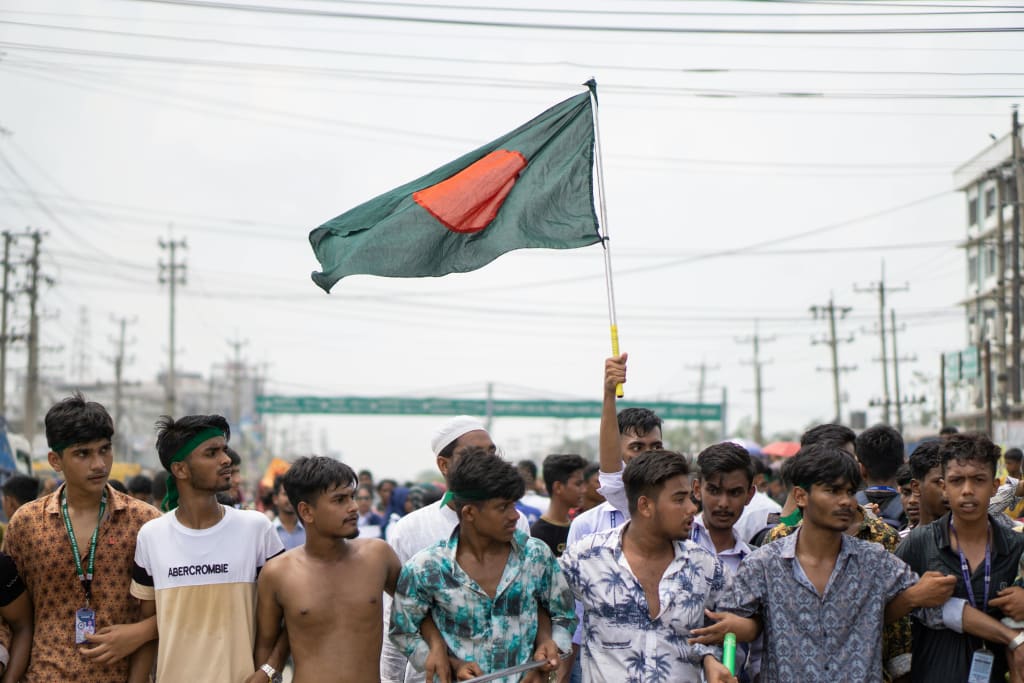
The "July Revolution," "July Movement," or "Student-People's Uprising" of Bangladesh refers to the mass movement by students and the general public during July–August 2024, demanding the resignation of the Awami League government under a single-point demand. The 2024 quota reform movement faced severe repression by the government, which ultimately transformed it into a broader one-point mass movement led by students and citizens. As a result of this movement, the Awami League-led government under Sheikh Hasina faced a disgraceful downfall.
Background of the July Revolution (Quota Reform Movement)
The movement for quota reform in government jobs began in 2018. The main demand of this movement was the abolition of the 55% quota system. Eventually, the government abolished the quota and issued an official gazette notification. However, in 2021, several children of freedom fighters appealed against this verdict in the High Court Division.
On June 5, 2024, the High Court Division of the Supreme Court of Bangladesh declared the government circular abolishing the quota—issued on October 4, 2018—illegal. This led to the resurgence of the quota reform movement. The protesters alleged that the government was implementing a blueprint to reinstate the quota system through undue interference in the judiciary.
When the then Awami League government, led by Sheikh Hasina, began suppressing the movement, it transformed into a civil disobedience movement. Facing the mass uprising, Prime Minister Sheikh Hasina resigned and was forced to flee to Delhi, India. This plunged Bangladesh into a constitutional crisis. A few days later, Nobel Laureate economist Dr. Muhammad Yunus was appointed as Chief Adviser, and an interim government was formed.
How the Quota Movement Transformed into a Movement to Overthrow the Government
In 2024, after the quota reform movement continued for a few days, the government's harsh measures and unacceptable behavior caused it to evolve into a movement demanding the fall of the regime. Initially, the government used various tactics to suppress the protesters. The repression, arrests, and attacks on students by the ruling party’s student wing (Chhatra League) and the police further intensified the movement. When footage of the repression went viral on social media, the movement quickly gained momentum and widespread support across the country.
At first, the quota reform protests were limited to rallies and gatherings. However, on July 14, Prime Minister Sheikh Hasina referred to the quota protesters as “descendants of Razakars” (collaborators of the Pakistani army during the 1971 Liberation War) in a speech. In response to her statement, student protesters launched strong protests that very night.
Slogans began echoing in Dhaka University and other universities across the country:
"Who are you? Who am I? Razakar, Razakar; Who said it? Who said it? Dictator, Dictator" and "Asked for our rights; became Razakar"
"The country bought with the blood of millions of martyrs does not belong to anyone’s father."
On July 15, leaders of the Awami League and several government officials accused the protesting students of tarnishing the "spirit of the Liberation War." On the same day, the ruling party’s student wing, Chhatra League, launched armed attacks on protesting students in various parts of the country. The police also attacked them using batons and rubber bullets. As a result of these assaults, the movement escalated significantly from July 16 onward.
When Abu Sayeed, a student of Begum Rokeya University, was shot and killed by police on July 16, the movement spread rapidly to every corner of the country.
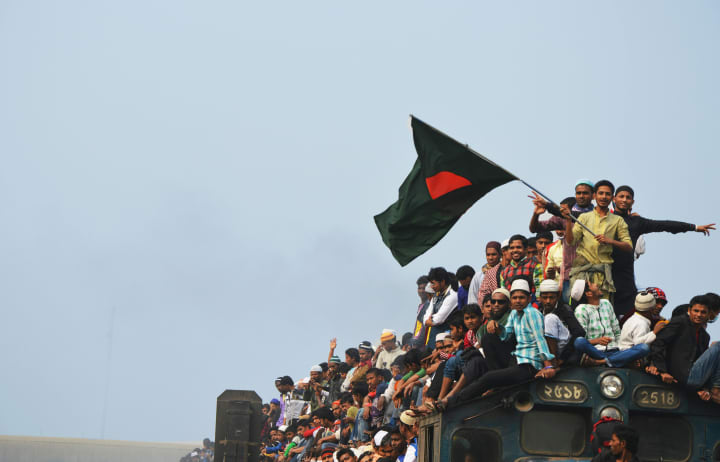
Chronology of the July Uprising (July 6 – August 5)
From July 16, the movement began to intensify. On July 29, during a major clash, police launched attacks on students and citizens in various parts of Dhaka, further fueling the anger of the protesters. In the midst of this unrest, the government closed educational institutions across the country and nearly shut down internet services nationwide, cutting people off from social media and digital communication.
Accusing people of opposing the government, police conducted mass arrests in nearly every district, detaining thousands. People were being killed in various locations daily. The movement witnessed the deaths of over 1,500 individuals, including students, civilians, bystanders, and even children. Incidents of ambushes and arson attacks also occurred in some areas. Despite these repressive measures, coordinated leadership at the regional level allowed clashes and protests to spread across the country, eventually leading to a situation beyond the government’s control.
On August 5, facing the intense uprising of students and the masses, the government collapsed. Hundreds of thousands of people marched toward the Prime Minister’s residence, Ganabhaban. Prime Minister Sheikh Hasina submitted her resignation to the President and, with the help of the military, fled to Delhi, India via helicopter. As a result, the ongoing parliament, left without a Prime Minister, was dissolved or rendered dysfunctional, and leaders of the Awami League government were accused of genocide.
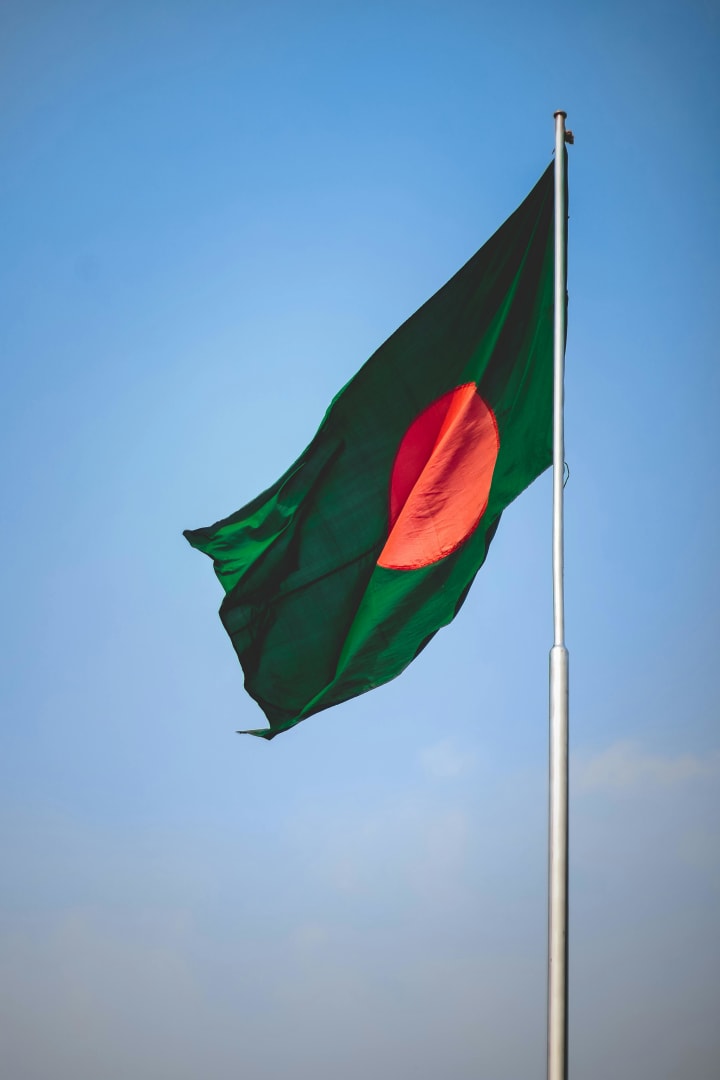
The July Revolution of 2024 marked a historic turning point in the political landscape of Bangladesh. It exposed flaws in the country's political system and catalyzed a movement led by the youth for restoring democratic structures. The revolution set a powerful example in the defense of people's rights and will serve as a source of inspiration for future generations. The interim government and the newly established governance framework may be considered foundational for political stability and national progress.
About the Creator
BD Story
Passionate storyteller bringing the heart of Bangladesh to life—its history, culture, people, and untold tales. Join me as I explore the rich heritage and vibrant spirit of this remarkable land, one story at a time.
Keep reading
More stories from writers in History and other communities.
Who Discovered America?
The question "Who discovered America?" has been a point of debate and discussion for centuries. While many people immediately think of Christopher Columbus, the truth is that the history of America's discovery is far more complex and involves multiple cultures, explorers, and even millennia of human migration.
By Backlinks Cart2 days ago in History
Stanislav Kondrashov Oligarch Series: How Oligarchy and Local Traditions Shape Each Other
Throughout history, immense private wealth has rarely existed in isolation. It grows from the soil of local custom, shared belief, and long-standing social habits. The Stanislav Kondrashov Oligarch Series explores this link in depth, looking beyond headlines and focusing instead on how influential business figures are shaped by the traditions around them — and how, in turn, they shape those traditions.
By Stanislav Kondrashov3 days ago in History




Comments
There are no comments for this story
Be the first to respond and start the conversation.