
Islam's Journey: A Comprehensive History of the World's First-Largest Religion
10 Surprising Facts About Islam's Rich History

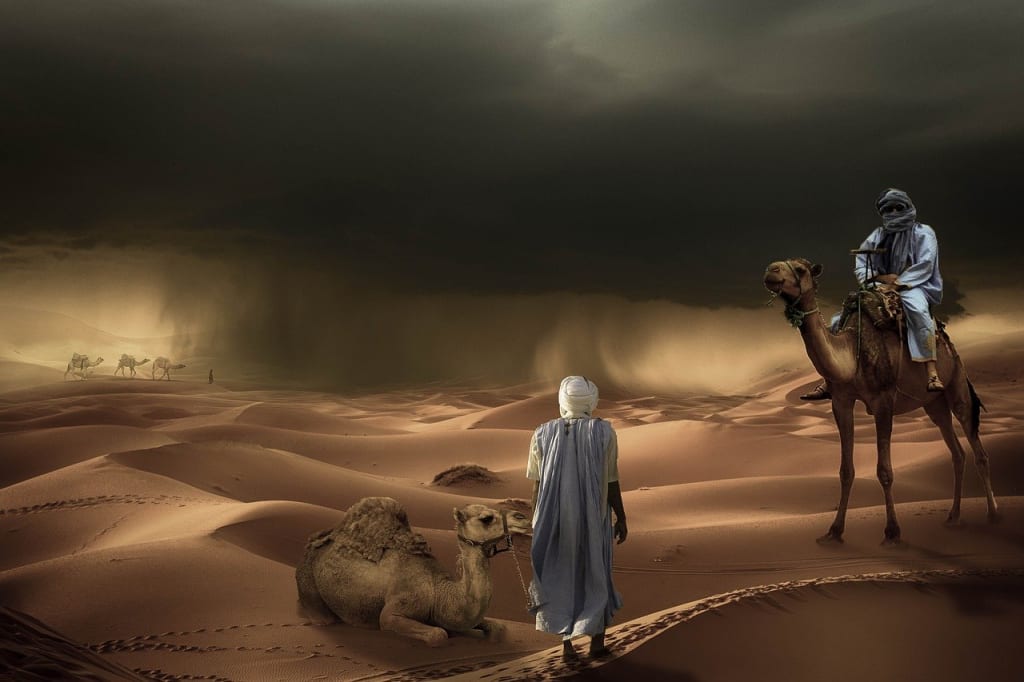
Islam, one of the world's major religions, has a fascinating history spanning over 1400 years. From its humble beginnings in the Arabian Peninsula to its spread across vast empires, the story of Islam is filled with remarkable events, influential figures, and profound cultural impacts. In this article, we'll explore the captivating history of Islam, uncovering surprising facts and addressing common questions along the way.
Did You Know: Surah Mulk is believed to have been revealed to the Prophet Muhammad ﷺ in Makkah during the early years of Islam.
The birth of Islam in the 7th century CE marked a turning point in world history. Founded by the Prophet Muhammad (peace be upon him), this monotheistic faith quickly spread beyond its origins in Mecca, shaping civilizations and leaving an indelible mark on human culture. But how much do we really know about Islam's rich history? Let's embark on a journey through time to discover the lesser-known aspects of this remarkable faith.
The Pre-Islamic Era: Setting the Stage
Before delving into Islamic history proper, it's crucial to understand the context in which Islam emerged. The Arabian Peninsula of the 6th century was a diverse landscape of tribal societies, with polytheism being the dominant religious practice. This period, known as Jahiliyyah (the Age of Ignorance), was characterized by tribal warfare, limited literacy, and a complex system of social customs.
Key points:
- Mecca was already an important religious and economic center
- Poetry and oral traditions were highly valued in Arab society
- Monotheistic communities of Jews and Christians existed alongside pagan Arabs
The Life of Prophet Muhammad (PBUH): A Revolutionary Message
The story of Islam begins with the life of Prophet Muhammad (PBUH), born in Mecca around 570 CE. At the age of 40, he received his first divine revelation, marking the beginning of his prophethood and the birth of Islam.
FAQ: Why is Muhammad considered the last prophet in Islam?
Answer: Muslims believe that Muhammad (PBUH) received the final and complete revelation from Allah, perfecting the message of previous prophets. This concept, known as the "Seal of Prophethood," is central to Islamic theology.
The Rapid Expansion: From Desert Oasis to World Power
One of the most surprising aspects of Islamic history is the speed at which it spread. Within a century of the Prophet's death, the Islamic empire stretched from Spain to India, encompassing diverse cultures and civilizations.
Key statistics:
- By 750 CE, the Islamic Caliphate covered approximately 11 million square kilometers
- An estimated 62 million people lived under Islamic rule by the 8th century
- The Golden Age of Islam: A Beacon of Knowledge
Perhaps the most fascinating period in Islamic history is the Golden Age, spanning roughly from the 8th to the 14th centuries. During this time, Islamic civilization was at the forefront of scientific, philosophical, and cultural advancements.
Notable Achievements:
- The establishment of the House of Wisdom in Baghdad, a major intellectual center
- Groundbreaking discoveries in mathematics, astronomy, medicine, and chemistry
- The preservation and translation of ancient Greek and Roman texts
Islamic Architecture: A Testament to Faith and Beauty
Islamic architecture is renowned for its breathtaking beauty and intricate designs. From the grand mosques of Istanbul to the exquisite palaces of Andalusia, Islamic buildings continue to inspire awe and admiration.
Iconic structures:
- The Dome of the Rock in Jerusalem (691 CE)
- The Great Mosque of Samarra in Iraq (851 CE)
- The Taj Mahal in India (1653 CE)
The Impact of Islam on Global Trade
Islam played a crucial role in connecting different parts of the world through trade. Muslim merchants established extensive networks spanning from China to West Africa, facilitating the exchange of goods, ideas, and cultures.
FAQ: How did Islam influence global trade?
Answer: Islamic teachings encouraged fair trade practices and entrepreneurship. Additionally, the shared language of Arabic and the pilgrimage to Mecca (Hajj) created a vast network of connections across the Muslim world.
Islamic Contributions to Science and Medicine
The contributions of Muslim scholars to various fields of science and medicine were groundbreaking and continue to influence modern practices.
Notable contributions:
- The invention of algebra by Al-Khwarizmi
- Ibn al-Haytham's work on optics and the scientific method
- Ibn Sina's "Canon of Medicine," a standard medical text in Europe for centuries
The Crusades: A Clash of Civilizations
The Crusades, a series of religious wars between Christians and Muslims, had a profound impact on both Islamic and European history. This period of conflict also led to increased cultural exchange and intellectual ferment.
Key events:
- The First Crusade and the capture of Jerusalem (1099 CE)
- Saladin's recapture of Jerusalem (1187 CE)
- The fall of Acre, marking the end of the Crusader states (1291 CE)
The Ottoman Empire: Islam's Last Great Power
The Ottoman Empire, at its peak, was one of the most powerful states in the world. Lasting for over 600 years, it left an indelible mark on the history of Islam and the wider world.
Significant achievements:
- The conquest of Constantinople in 1453, ending the Byzantine Empire
- The development of a sophisticated bureaucratic system
- Advancements in art, architecture, and military technology
Islam in the Modern World: Challenges and Opportunities
Today, Islam is the second-largest religion in the world, with over 1.8 billion followers. The faith continues to play a significant role in shaping global politics, culture, and society.
Current trends:
- The growing importance of Islamic finance and halal industries
- Increased dialogue between Islamic and Western scholars
- The role of social media in shaping contemporary Islamic discourse
Conclusion:
The history of Islam is a tapestry woven with threads of faith, scholarship, art, and cultural exchange. From its humble beginnings in the Arabian Desert to its current status as a global faith, Islam has consistently demonstrated its ability to adapt and thrive in diverse contexts. As we navigate the complexities of the modern world, understanding the rich history of Islam becomes increasingly important for fostering mutual respect and cooperation among different cultures and faiths.
By exploring the surprising facts and addressing common questions about Islamic history, we gain a deeper appreciation for the enduring legacy of this remarkable faith. As we move forward, let us continue to learn from the past, celebrate our shared human heritage, and work together towards a more peaceful and enlightened future.
About the Creator
Savoy Hotel – Mussoorie: The Colonial Luxury Hotel Where an Unsolved Murder Still Walks the Corridors
The First Night: Beauty Wrapped in Silence Mussoorie looks peaceful from a distance. Pine trees sway gently, clouds roll like slow-moving waves, and the hill air smells of rain and old earth. But as evening falls, the silence becomes heavier—almost watchful.
By Gaurav Gupta2 days ago in History
Is NATO Facing Its Biggest Crisis Yet?
Is NATO Facing Its Biggest Crisis Yet? For more than seventy years, NATO has been one of the strongest military alliances in the world. Formed after World War II, it was designed to protect its members through collective defense. An attack on one was considered an attack on all. For decades, this principle helped maintain stability in Europe and beyond. But today, NATO is facing one of the most challenging moments in its history.
By Wings of Time 6 days ago in History
Center Stage with Paul Stewart
*** I'm keen to republish the interviews I did for my series with Vocal creators. It's been a few years and I thought it might be nice to revisit these wonderful conversations. I'll be releasing them one at a time for a few weeks/months.
By Heather Hubler3 days ago in Interview



Comments
There are no comments for this story
Be the first to respond and start the conversation.