
International May Day: Honoring the Hands that Build the World
A Universal Call to Establish the Dignity and Rights of Labor

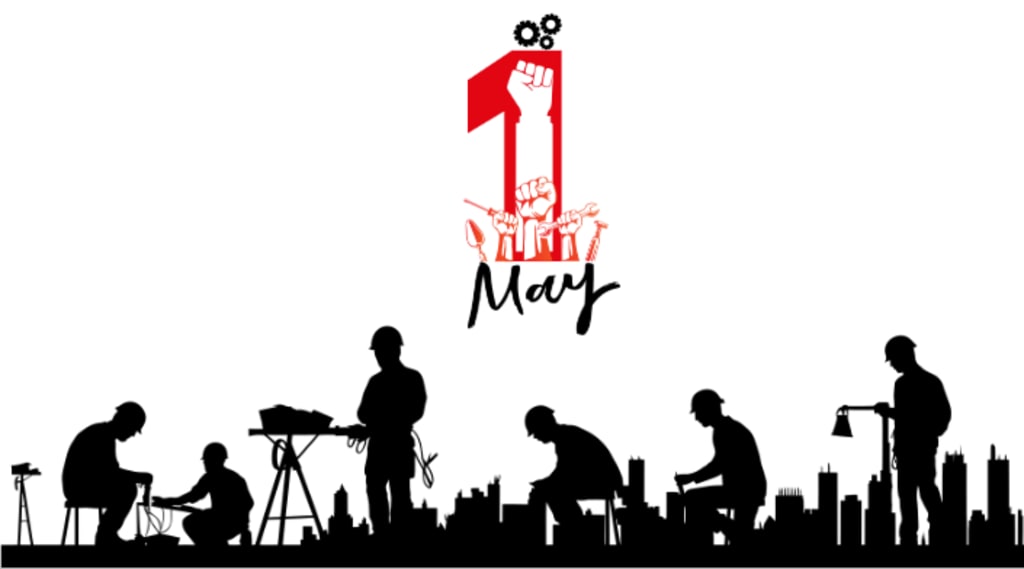
Every year on May 1st, countries across the globe observe International Workers’ Day, also known as May Day. While for many it’s a welcome day off, the date actually marks a profound history rooted in sacrifice, protest, and the long-standing struggle for workers’ rights.
Today, as the nature of labor evolves in our digital, fast-paced world, it’s more important than ever to reflect on what May Day truly stands for—and why it continues to matter in 2025.
The Origins of May Day: Born in Protest
The history of May Day dates back to the late 19th century in the United States. On May 1, 1886, over 300,000 workers across America went on strike demanding a standard 8-hour workday, at a time when many were forced to work 12 to 16 hours under grueling conditions.
The movement gained momentum in Chicago, where a peaceful protest in Hay-market Square turned violent after a bomb exploded. Police responded with gunfire, resulting in several deaths. In the aftermath, several labor leaders were arrested and some were executed.
This tragic event, now known as the Hay-market Affair, became a turning point in labor history. In 1889, the Second International (an organization of socialist and labor parties) declared May 1 as International Workers’ Day to honor the sacrifices of these activists and promote global labor solidarity.
🇧🇩 May Day in Bangladesh: Celebrations and Contrasts
Bangladesh officially observes May Day as a national holiday. Labor unions, worker federations, and civil society organizations hold rallies, cultural programs, and seminars aimed at raising awareness about workers' rights and safety.
But beyond the banners and slogans lies a harsh reality. Millions of Bangladeshi workers—especially in the ready-made garments (RMG), construction, and transport sectors—still face unsafe working conditions, low wages, and limited access to legal protections.
While the government has enacted labor laws and minimum wage policies, enforcement often remains weak. Tragic incidents like the Rana Plaza collapse in 2013, which killed over 1,100 garment workers, serve as a haunting reminder of the risks many laborers face even today.
A New Era of Work: Old Struggles, New Forms
In the 21st century, the concept of “labor” has expanded beyond traditional factory jobs. We now have freelancers, remote workers, delivery drivers, ride-share drivers, and others contributing to what’s known as the gig economy.
While this shift has created flexibility and new income streams, it has also brought about job insecurity, lack of benefits, and poor legal protection. Many gig workers do not qualify for healthcare, pensions, or even basic job safety standards.
The message of May Day, therefore, extends to all modern workers: regardless of whether one works in a factory, an office, or from home—fairness, respect, and protection must be universal.
Labor and Capital: A Partnership, Not a Battle
It’s easy to fall into the narrative of workers vs. employers, but real progress comes from recognizing their interdependence. Employers provide opportunities, resources, and direction. Workers provide labor, skill, and dedication.
May Day serves as a reminder that mutual respect, dialogue, and fair negotiation can lead to better outcomes for everyone. A healthy labor environment is not only good for workers—it also improves productivity, stability, and business growth.
Why May Day Still Matters in 2025
Some might argue that May Day has lost its relevance in today's globalized world. But the truth is, the core values it represents—justice, dignity, and human rights for workers—are more critical than ever.
In a world dealing with rising inequality, automation, and climate-induced job disruptions, workers across sectors are struggling to adapt. From tech engineers fighting for fair contracts to delivery drivers risking their lives during pandemics—labor struggles are everywhere, even if they look different than they did in 1886.
Final Thoughts:
May Day is more than just a date on the calendar. It's a call to action—a reminder that no society can prosper without respecting the very hands that build it.
Let this May Day inspire real change—not just rallies or speeches.
"It’s time I read you a poem I’ve written."
A faithful interpretation of the original poem
“Fair Wages Don't Rise in Bloody Waters” by Bokul Ahmed
In our quest for life and livelihood,
we are blind—we scorch a child's skin by kissing the feet of money!
No longer do we examine faces; no longer do we care about innocent smiles.
Our "solutions" are being watched by helpless families.
In luxurious hotels, dance— where cash flies through the air.
Nymphs of the water play in pools with blue water—
the cost of a single ticket is higher than the price of water.
We endure the futility of labor.
We walk home after purchasing overpriced rice and scratching our tired faces.
The rice is thought to be boiled by women—
women also think of festivals of dance and wealth celebrations!
On roads and in fields, women—fair wages do not rise in the bloody waters.
In the global labor market, the voices of those who self-immolated reverberate.
Leaders of the state, their gaze fixed on the heavens—
Forget about Chicago's Hay-market movement.
Give opulent addresses when unexpected holidays occur and leave to get massages on their backs. — As they leave, they murmur, "May this wonderful May Day be successful!"
Book From Deshpremiker Gaan (Poem)
Written by Bokul Ahmed
1st Edison Ekushe Book fair 2022
Punlished by Ghasful Prokashani
Cover Design by Shamim Arefin
so Let’s commit to fair wages, safer workplaces, and human dignity for all who work—whether with machines or their bare hands.
in the end, “Labor is not a burden—it’s the backbone of civilization.”
Let’s honor it not only in words but through action.
Because when labor is valued, nations grow stronger. And when we honor the hands that build our societies, we build a future where no one is left behind.
Bokul Ahmed
About the Creator
Bokul Ahmed
Me Bokul Ahmed. Post Graduate in Political Science. My passion is song writing, poetry writing, story writing, script writing and Article writing also Data Entry Expert for creativity and digital proficiency.
Keep reading
More stories from Bokul Ahmed and writers in History and other communities.
Why the History of Valentine’s Day Is So Complicated
Valentine’s Day is widely known today as a celebration of romantic love, complete with roses, chocolates, and heartfelt cards. However, a tangled web of history that includes medieval poets, ancient rituals, multiple saints, and commercial innovation lies beneath the modern glitter and gifts. Unlike holidays with clear origins, Valentine’s Day is complicated because it blends myth, religion, literature, and consumerism in ways that make its true beginnings hard to trace.
By Bokul Ahmed9 months ago in History
Is NATO Facing Its Biggest Crisis Yet?
Is NATO Facing Its Biggest Crisis Yet? For more than seventy years, NATO has been one of the strongest military alliances in the world. Formed after World War II, it was designed to protect its members through collective defense. An attack on one was considered an attack on all. For decades, this principle helped maintain stability in Europe and beyond. But today, NATO is facing one of the most challenging moments in its history.
By Wings of Time 6 days ago in History
Nobel Peace Prize
The Nobel Peace Prize has stood as one of the world’s most recognized honors. Awarded annually in Oslo, it is meant to celebrate individuals or organizations that have made significant contributions toward peace, diplomacy, and humanitarian progress. While its mission appears straightforward, the Nobel Peace Prize has never been free from debate. In recent years, conversations surrounding global politics—particularly discussions about the Trump Nobel Peace Prize—have brought renewed attention to how peace is defined, measured, and rewarded in the modern era. The Origins and Meaning of the Nobel Peace Prize The Nobel Peace Prize was established by Alfred Nobel, the Swedish inventor best known for creating dynamite. In his final will, Nobel directed that a portion of his wealth be used to recognize efforts that foster peace among nations, reduce standing armies, or promote diplomacy and cooperation. Since its first award in 1901, the prize has honored activists, diplomats, organizations, and world leaders whose actions shaped international dialogue. Unlike other Nobel categories, the peace prize is awarded by a Norwegian committee rather than a Swedish institution. This distinction reflects Nobel’s desire to separate the prize from national interests and focus instead on global responsibility. Over time, the definition of “peace” has expanded. Early recipients were often disarmament advocates or mediators. More recent laureates have included human rights defenders, climate activists, and international organizations working in conflict zones. Politics and the Nobel Peace Prize Despite its humanitarian ideals, the Nobel Peace Prize has always intersected with politics. Recognizing peace efforts often means evaluating political leadership, international negotiations, and long-term consequences—none of which are easy to measure in real time. Some awards have been widely celebrated, while others sparked controversy. Critics often argue that certain laureates were honored prematurely, before the lasting results of their actions became clear. Supporters counter that the prize is meant to encourage peace efforts, not merely reward completed achievements. This tension has made the Nobel Peace Prize a reflection of global priorities at any given moment, rather than a simple historical judgment. Donald Trump and Nobel Peace Prize Discussions Few modern political figures have generated as much debate in connection with the Nobel Peace Prize as Donald Trump. During and after his presidency, conversations about a potential Trump Nobel Prize emerged repeatedly, particularly among supporters who pointed to his role in diplomatic initiatives. The phrase Trump Nobel Peace Prize gained traction following agreements and negotiations in regions long marked by conflict. Advocates argued that these diplomatic efforts aligned with Alfred Nobel’s vision of reducing international tension through dialogue rather than force. At the same time, critics questioned whether these actions met the broader ethical and humanitarian standards traditionally associated with the award. They pointed to domestic divisions, foreign policy controversies, and unresolved global conflicts as reasons for skepticism. This divide highlights a core challenge of the Nobel Peace Prize: peace is rarely absolute, and political leadership is often complex and contradictory. Trump Nobel Peace Prize 2026: Speculation and Context As global politics continue to evolve, speculation around a Trump Nobel Peace Prize 2026 has appeared in media discussions and public commentary. It is important to note that nominations for the Nobel Peace Prize are confidential for decades, and speculation does not confirm consideration or selection. However, the mere discussion of Trump Nobel Peace Prize 2026 reflects how the award has become part of broader cultural and political conversations. Supporters view such recognition as validation of diplomatic achievements, while critics see the speculation as politicizing an institution meant to rise above partisan debate. This dynamic is not unique to Trump. Many past leaders, from various ideological backgrounds, were debated heavily before or after receiving the prize. The Nobel Peace Prize often mirrors global disagreements rather than resolving them. How the Nobel Committee Makes Its Decision Each year, hundreds of nominations are submitted by qualified individuals, including academics, lawmakers, and previous laureates. The Nobel Committee evaluates these nominations through research, expert consultation, and internal debate. The process considers intent, impact, and long-term significance. However, because peace efforts often unfold over years or decades, the committee must make decisions without full historical clarity. This reality explains why some awards age gracefully while others remain controversial. The committee rarely responds directly to public pressure or online campaigns. Media attention, including discussions around a Trump Nobel, does not guarantee influence over the final decision. The Broader Impact of the Nobel Peace Prize Beyond individual recipients, the Nobel Peace Prize plays a symbolic role. It brings global attention to issues that might otherwise be ignored, from humanitarian crises to fragile peace processes. Even controversial nominations can spark meaningful debate about what peace truly means in the modern world. The prize also raises questions about accountability. When leaders are considered for such recognition, the public is encouraged to examine policies, outcomes, and moral responsibility more closely. In this sense, discussions surrounding the Trump Nobel Peace Prize are not just about one individual. They reflect deeper conversations about diplomacy, leadership, and the evolving standards by which peace is judged. Conclusion: A Prize That Reflects the World The Nobel Peace Prize remains one of the most influential and debated honors in global society. Its power lies not only in recognizing peace efforts but also in challenging the world to think critically about conflict, cooperation, and responsibility. Whether discussions involve historic activists or modern political figures like those associated with Trump Nobel Peace Prize 2026 speculation, the award continues to reflect the complexities of international relations. Peace is rarely simple, and neither is the process of honoring it. Ultimately, the Nobel Peace Prize serves as a reminder that striving for peace is an ongoing journey—one shaped by ideals, actions, and the difficult choices that define human history.
By Saboor Brohi a day ago in History


Comments
There are no comments for this story
Be the first to respond and start the conversation.