
Holy Monday is when Jesus cleansed the temple of the money changers
Also known as Great Monday, it was the second day of Holy Week.


Jesus had zeal for His Father's house
Palm Sunday is celebrated one week before Easter/Resurrection Sunday. The next day is Holy Monday, also known as Great Monday, but what makes this date so special?
Three of the four gospels record that this is also when Christ threw the money changers out of the temple. Matthew 21, Mark 11, and Luke 19 reveal that this event occurred four days before the Crucifixion.
These 3 Gospel writers say Jesus told those changing money that they had made His Father's house a den of thieves. John tells the story in chapter 2, just after the wedding at Cana, the first miracle. Did the beloved disciple get the events out of order, or did Jesus cleanse the temple more than once?
The Money changers: John's version
Here is what John says in the KJV.
13 And the Jews' passover was at hand, and Jesus went up to Jerusalem.
14 And found in the temple those that sold oxen and sheep and doves, and the changers of money sitting:
15 And when he had made a scourge of small cords, he drove them all out of the temple, and the sheep, and the oxen; and poured out the changers' money, and overthrew the tables;
16 And said unto them that sold doves, Take these things hence; make not my Father's house an house of merchandise.
17 And his disciples remembered that it was written, The zeal of thine house hath eaten me up.
Who were the money changers?
Jewish law forbade the use of non-Jewish money in the temple, so the money changers were paid a fee to exchange foreign currency. Jesus did nto iek their ding business just outside the temple.
Historians suggest they may have cheated peo-ple by asking for a higher rate for exchange than they should have. There were also people buying turtle doves to sacrifice.

Did the money changers cry "Crucify Him"?
For most of my life, I have heard it said that the same people who cried "Hosanna" and called Jesus a King were the ones who shouted "Crucify Him" later in the week.
There is no evidence to support this claim, and scholars suggest that the Pharisees and Sadducees may have paid individuals who were not followers of Jesus to ask for Barabbas.
Another consideration is that those who lost money, tables, sheep, oxen, and doves were furious. Jesus interfered with how they made a living and caused them significant loss that day.
Some of them possibly were in the crowd that called for Jesus to die. Perhaps they even conspired with the religious leaders because they wanted payback.
Is your church a place of merchandise?
Jesus said His Father's house should be a house of prayer, but today many things take place in sanctuaries that would have been considered unholy decades ago. Older generations taught the fear, reverence, and respect for the Lord and His house.
I was told about a church where raffles are held during Sunday services to give members a chance to win money. I saw this video myself. This may have some attending services in the hopes of winning money rather than to celebrate Christ.
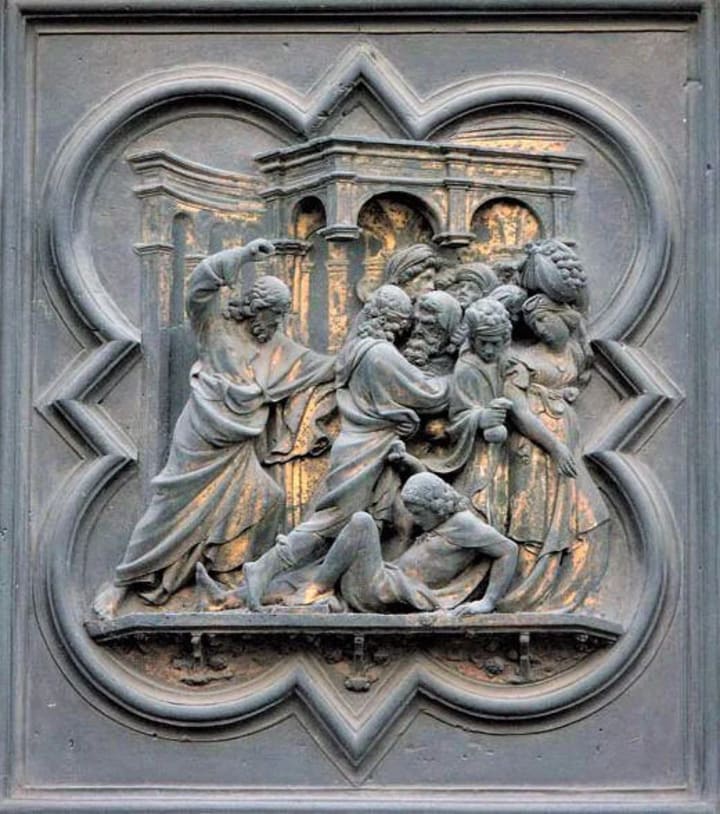
Is your church a den of thieves?
Consider churches where money is placed at the altar for rich pastors rather than given to the poor as Jesus commanded. What about fundraisers in the sanctuary, where pastors have their preacher friends come in and demand specific sums of money from congregants, then later say God blessed them?
It's not technically stealing because those in the congregation choose to give, but the principle is deceptive. The money changers were said to have overcharged the people, and who is to say they did not, at times, give back less change than they should have?
If Jesus says these practices make the house of the Lord a den of thieves and a place of merchandise rather than a house of prayer, we should heed His words.

Jesus was focused on His Father's business
Scripture says that Jesus knew his time was short and that he would be crucified in a few days; yet, He was focused on how the Temple was being misused. His zeal for His Father's House did not wane.
How is it that the only time He showed His fury and destroyed the money changers' property, it does not resonate with us today? How can any pastor allow money gimmicks in the church to draw crowds?
Imagine for a moment an angry Jesus twisting the cords together, preparing to punish the moneychangers. This brings to mind my grandma, who would twist two extension cords or two switches together to give my brothers and me whippings.
She would hold one of our arms while hitting us with her other hand. The fury in her eyes was always intense. Today, this would be considered abuse, but back then, it was normal discipline.
Imagine the shock and dismay when Jesus, who was usually calm, exhibited zeal for His Father's house and took the money changers to task on Holy Monday.
About the Creator
Cheryl E Preston
Cheryl enjoys writing about current events, soap spoilers and baby boomer nostalgia. Tips are greatly appreciated.
Keep reading
More stories from Cheryl E Preston and writers in History and other communities.
Jingle Bells was written for a minstrel show
Jingle Bells is not a Christmas song I asked a clerk at a local store why there was no Christmas music this year. The young African American man began telling me that he could not deal with the rotating songs during hsi shift.
By Cheryl E Preston29 days ago in History
A massive underwater stone wall that is almost 7,000 years old is found by divers.
One of the buried stone monuments on Sein Island is a granite wall off Brittany that is more than 7,000 years old and the length of a football pitch. The discovery is being used by marine archaeologists in the vicinity of Île de Sein to explain how stone-built coastal villages predate the widespread spread of farming.
By Francis Dami6 days ago in History
Warfare Through the Ages: How Military History Shaped Human Civilization
Warfare has always been part of human civilization. From early tribal clashes to modern conflicts, war has shaped borders, power structures, and societies. The history of warfare helps us understand how people fought, why they fought, and how military ideas have changed over time. Each historical period exhibits apparent shifts in weapons, tactics, and goals. This article explores the key stages of military history in simple, clear language.
By Matthew Pothoff3 days ago in History
Miss Persephone's Manual to a Seemingly Ordinary Life
Miss Persephone was found at the dining table, her blue eyes swollen, her tears arriving and retreating like the tides of the ocean. Earlier that day, her family had visited her in the retirement home where she had lived for eight years. It was her eightieth birthday.
By Imola Tóth4 days ago in Fiction


Comments
There are no comments for this story
Be the first to respond and start the conversation.