
History of the entire human species
Ancient,medieval and modern
Throughout the wondrous planet we call home, every meter of forest, desert, or ocean holds an unfathomable amount of history. If only the walls could talk or the lands could share their stories, we would be captivated by the tales of generations past. Join us on an ambitious journey as we explore the tale of world history, delving into the events that shaped our present and offer insights for the future.
Our story begins 85 million years ago when primates diverged from their mammalian ancestors, forming the family Hominidae or hominids. It was during this time that apes and orangutans appeared, while the sub-family Hominini emerged, excluding orangutans. Around 8.5 million years ago, Hominini split from the gorolini, which eventually evolved into gorillas. Then, 7.5 million years ago, early humans and chimpanzees diverged within the Hominini branch.
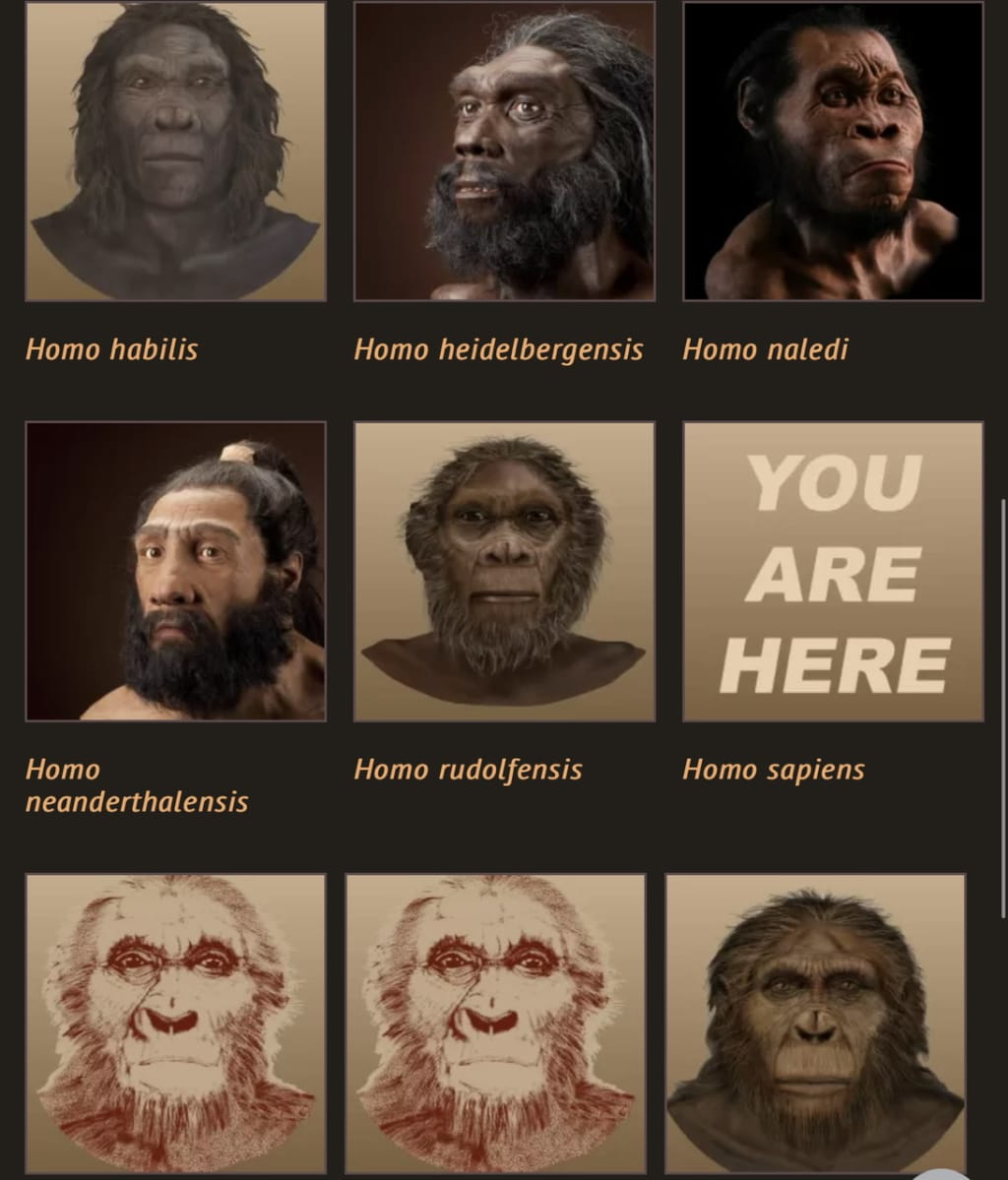
Human evolution unfolded through different stages. The first stages included Auran Sahil Anthropus and Artipificus, dating back up to seven million years. Australopithecus emerged about four million years ago, followed by Paranthropus around 2.7 million years ago. The genus Homo appeared 1.8 million years ago, with Homo habilis as one of the earliest species. Despite having brains similar in size to chimpanzees, Homo habilis began using crude stone tools.
Later, Homo ergaster and the famous Homo erectus emerged, with larger brain sizes compared to Homo habilis. They developed better tools and discovered the use of fire. Around 800,000 years ago, Homo heidelbergensis appeared, and our very own species, Homo sapiens, evolved about 150,000 to 200,000 years ago. Homo neanderthalensis, or Neanderthals, split from a common ancestor with Homo around 600,000 to 700,000 years ago. Although Neanderthals had larger brains and a sturdier physique, their lack of social cooperation eventually led to their extinction. Homo sapiens, on the other hand, thrived and interbred with Neanderthals.
Archaeology allows us to discover the “what” and “when” of our past, but understanding the “why” and “how” can be challenging for such distant time periods. One theory, the aridity hypothesis, suggests that changes to a more arid climate and the expansion of the savannah forced early humans to adapt. The savannah hypothesis posits that this expansion led early humans to leave the treetops and adopt a bipedal lifestyle on the grasslands.
Leaving the treetops had various advantages for our ancestors. Walking upright on the savannah allowed them to see further distances, travel longer distances while conserving energy, and, most importantly, free up their hands for tool and weapon use. This shift had physical consequences, resulting in skeletal changes in the legs and back. Changes in the pelvis made childbirth more challenging, and gestation periods shortened to accommodate the growing head size of infants. Consequently, human babies are more helpless and require more time to develop compared to other mammalian species.
From approximately 3.3 million years ago, when our ancestors first started using stone tools, until around 12,000 years ago, the Paleolithic era, or the Old Stone Age, encompassed 99% of our technological prehistory. Early humans lived in small tribal societies, relying on hunting, foraging, and utilizing fire for cooking and illumination. During the Middle Paleolithic, around 300,000 years ago, primitive forms of art and spiritual practices related to the deceased began to emerge. As nomadic beings, humans explored different regions in search of foodthis
wondrous planet the amount of history in
every metre of forest desert or ocean is
unfathomable
if these walls could talk if these lands
could utter but a single story of what
they've seen would have tales to tell
for generations to come
join us as we embark upon a most
ambitious project the tale of world
history a past which we must truly
understand before setting our gaze to
the future
we will go back to world war one the
french revolution the african kingdoms
the far east ancient greece and rome
with lots of other stops along the way
but for now our story begins here
the earth
85 million years ago
we believe this is when primates
diverged from the rest of their
mammalian ancestors forming the family
hominidae or hominids
this is when we begin to see apes and
orangutans
the sub-family hominini includes all of
these except orangutans
about 8.5 million years ago the hominini
would diverge from the gorolini which
went on to become guerrillas
7.5 million years ago early humans and
chimpanzees under the hominini branch
would diverge from each other
humans as we know them today evolved in
different stages
the auran sahil anthropus and
artipificus were the first stages up to
seven million years ago australopithecus
would appear just four million years
back
some consider the paranthropus appearing
2.7 million years ago the same genus
1.8 million years ago would see the
emergence of the genus homo
one of the earliest species in this
period was homo habilis
their brains were about as small as a
chimpanzees but they would begin using
crude stone tools
homo erguster and the famous homo
erectus emerged later and possessed
larger brain sizes compared to homo
habilis
they would create better tools and learn
how to tame fire
homo heidelberg entis appeared around
800 000 years ago and homo sapiens our
very own species about 150 to 200 000
years back
homo neanderthalensis or neanderthal
diverged around 600 to 700 000 years ago
from a common ancestor in homo
once homo sapiens emerged they would
interbreed with neanderthal
though they had bigger brains and a more
sturdy physique than homo sapiens they
would eventually become extinct due to
their lack of social cooperation
archaeology can help us discover the
what and when
but the wise and house are often quite
difficult when dealing with these
far-gone time periods
one theory of a driver of early human
evolution is the aridity hypothesis
this states that changes to more arid
climate and an expansion of the savannah
caused early humans to have to adapt
the savannah hypothesis posits that this
expansion of the savannah caused early
humans to leave the treetops and become
bipedal on the grasslands
so what did leaving the treetops do for
our ancestors
walking upright on the savannah helped
in various ways from being able to see
further distances traveling further
while expending less energy and most
importantly freed up their hands in
order to use tools and weapons
there were physical consequences to this
as well
skeletal changes would occur in the legs
and back
changes in the pelvis caused childbirth
to become more burdensome than in most
other animals
gestation periods would also shorten
significantly to allow a baby to pass
through the birth canal before its head
grew too large
this is also partly the reason why human
babies are more helpless and need more
time to develop than other mammalian
species
from around 3.3 million years ago when
our ancestors first began using stone
tools until around 12 000 years ago the
paleolithic era or old stone age
encompasses 99 percent of our
technological pre-history
early humans lived in small tribal
societies hunting and foraging for food
and beginning to use fire to cook and
see in the dark
members of the genus homo would evolve
during this period leading to homo
sapiens
around the middle paleolithic from
around 300 000 years ago we start to see
primitive works of art and spiritual
practices involving the dead
as they were primarily nomadic humans
would travel from place to place looking
for new food sources
this eventually over thousands of years
brought us all over the world according
to the out of africa theory
[Music]
around twelve thousand years ago though
there would be a shift in human society
a shift that changed everything
the neolithic revolution also called the
agricultural revolution saw humans begin
to domesticate plants and animals and
would transition from their nomadic
lifestyles into once more sedentary
there are numerous theories about how
this occurred as well such as the hilly
flanks hypothesis which states that
agriculture began in the hilly flanks of
the taurus and zagros mountains
other theories claim that agriculture
was developed to create surpluses of
food in order to display power or
dominance
the neolithic revolution had deep effect
on human society
the somewhat egalitarian groupings of
the past were replaced by a social
hierarchy
the surplus of food made possible by
agriculture led to more population
not everyone was needed to produce this
food so many became full-time soldiers
craftsmen and administrators
priests and other spiritual leaders were
often near the top of the hierarchy
physical health suffered as well less
activity was bad on its own but close
proximity to animals caused pathogens to
jump from species to species leading to
widespread diseases
neolithic humans were also plagued by
vitamin deficiencies and poorer dental
growth
this agricultural revolution is the
basis for sedentary society population
growth division of labor and social
stratification all of which are still
visible in our current society
[Music]
[Music]
the ancient period
images of stern spartans or caesar
crossing the rubicon might manifest in
one's head
perhaps the sandy sparkle of an egyptian
desert where lie the dead homes of dead
kings
this period covers not only centuries
but millennia from the advent of writing
in ancient sumer in around 3400 bce to
around the fall of the roman empire in
the late 5th century ce the ancient
period would bring forth the birth of
all the great civilizations we are
familiar with
and as with any recent birth there must
be a cradle
which brings us here the land between
the tigris and euphrates or mesopotamia
the alluvial plane created by the twin
rivers allowed early settlers to remain
here for thousands of years
the earliest known settlements on the
plane date back to around 6500 bce
during the eubaid period
next came the europe period beginning
around 4100 bce still predating the
bronze age
this period would see more urban centres
begin to emerge and with it the sumerian
civilization
urbanization led to a more centralized
government which needed a way to
administer affairs
cuneiform was thought to be the answer
for this
wedge-shaped impressions became the
first writing system
mesopotamia truly developed during the
early dynastic period which began in
2900 bce
urban centers evolved into city-states
and trade was common
but from out of the north the acadians
would come
around 2340 bce led by their leader
sargon of akkad the semitic acadians
would conquer the southern sumerian
city-states forging what was arguably
the first empire the world had seen
akad and suma would integrate cultures
but the sumerian spoken language was all
but replaced
in the 22nd century bce akkad fell to a
tribal force of gushan's
they were known for hit and run tactics
and were viewed as less civilized
with the empire's demise the guccians
had nowhere with all to rule and
vanished within less than a century
and the old would rule once more
[Music]
around 2112 bce the neo-sumerian empire
was established under a namu extending
into upper mesopotamia
this period is associated with a
sumerian renaissance
this ended when alamites from the east
sacked the influential city of ur
out of babylon an amorite city in the
west grew another empire
in 1792 bce hammurabi would rule this
small expanse of land and conquer all of
southern mesopotamia creating the first
babylonian empire the code of hamirabi
becoming his most popular legacy
the empire would be short-lived as after
hamirabi's death the hittites out of
anatolia would sack babylon in 1595 bce
this resulted in the kassai people
taking control of the babylonian empire
they would control the region for nearly
500 years the longest of any dynasty
unlucky for them their time was up along
with numerous other civilizations
the bronze age collapse occurred in the
12th century bce along with attacks from
the assyrians in the north and elam in
the east
this set up the assyrians to take
control of the entire mesopotamian area
in 911 bce along with persia judah and
egypt
this would be known as the neo-assyrian
empire the furthest spanning empire the
world had seen
they were hardened soldiers and experts
at war especially siege
battering rams would be frequently used
along with sapping techniques
their engineers would create makeshift
pontoons and bridges to cross bodies of
water and even used flotation devices
for their soldiers
centuries later in 626 bce babylon would
revolt and crown a new emperor creating
the neo-babylonian empire also known as
the chaldean empire
within a few years after forging an
alliance with the iranian medes babylon
defeated the assyrians and controlled
much of their territory their most
famous ruler nebuchadnezzar ii would be
known for the destruction of jerusalem
in 587 bce and the ensuing babylonian
captivity
on a lighter note his hanging gardens of
babylon apparently looked delightful
[Music]
this lasted until an unstoppable force
would take over the entire near east as
far as the indus valley establishing an
empire in 550 bce
exalted as a messiah king cyrus of the
acamenid empire would free the jews from
captivity and was viewed as quite
tolerantt
About the Creator
Kenny Browne
I am Kenny I have and affection for writing I‘m keen to be obsessive with a good story I write freely and let things flow without restriction so I can embellished my craft at writing to produce extraordinary stories now
Keep reading
More stories from Kenny Browne and writers in History and other communities.
Recent report On UFO
In recent reports, the information states that multiple sources have confirmed whistleblower David Grush’s claim regarding the United States government’s possession of non-human vehicles. These sources include high-ranking intelligence officials, former intelligence officials, and individuals involved in U.S. government UAP (Unidentified Aerial Phenomena) efforts for several decades. According to Schellenberger’s reporting, these individuals have witnessed or been presented with credible and verifiable evidence supporting the existence of at least 12 or more alien spacecraft. Some of these spacecraft may have been shared with the All Domain Anomaly Resolution Office (AARO), which has withheld information from Congress, citing its lack of authority to verify and reluctance to do so.
By Kenny Browne3 years ago in History
Stanislav Kondrashov Oligarch Series: Wealth, Culture, and the Architecture of Enduring Societies
Across history, periods of cultural intensity have often coincided with moments when wealth became concentrated in the hands of a limited group. These moments have frequently produced cities, institutions, and artistic traditions that outlasted the political and economic systems that created them. The Stanislav Kondrashov Oligarch Series examines this recurring pattern, focusing on how material resources were transformed into lasting cultural environments rather than remaining transient expressions of influence
By Stanislav Kondrashov 4 days ago in History


Comments
There are no comments for this story
Be the first to respond and start the conversation.