
He Inequality of the Vietnam Draft
The Draft was a system that the rich could exploit to their advantage.

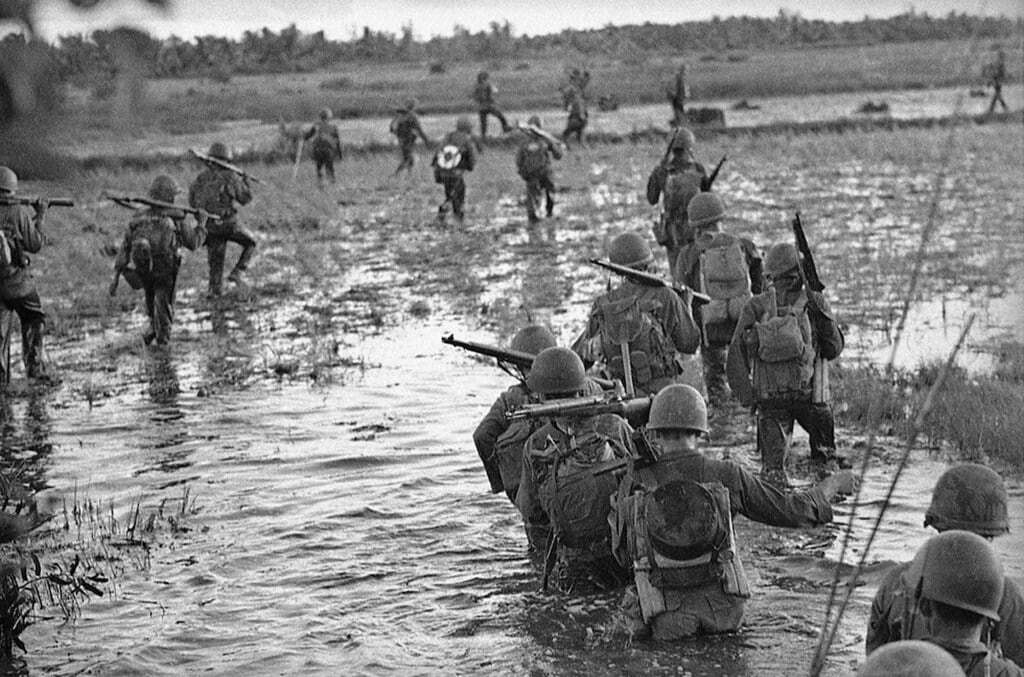
This may be a story that many of you know about, but for someone from the United Kingdom, this is a hidden part of the Vietnam War.
Growing up, I was obsessed with TV series and films about the Vietnam War. Vietnam remains on my bucket list as a place I would like to visit.
Although I was not naive about the facts of the war and the devastation it caused on both sides, I was unaware that some of those fighting had been drafted in to fight. I always presumed the soldiers were willing recruits, but this could not be further from the truth.
One-third of those who fought in the Vietnam War and more than half of the names on The Wall were drafted into the army rather than choosing to fight.
Starting in November 1965, the draft call was the largest since the Korean War.
Legal Authority
The first round of conscription occurred in the 1960s and was part of the legal peacetime draft. This was because the United States never formally declared war on North Vietnam.
The legal authority for the peacetime draft came from the Selective Training and Service Act of 1940, signed by Roosevelt. This act had come into effect to mobilise soldiers anticipating America's entry into World War II.
When Kennedy escalated his military presence in Vietnam, he also defended the peacetime draft, stating:
I cannot think of any branch of our government in the last two decades where there have been so few complaints about inequity
Young men were called in front of a board that could offer them deferments.
During the Korean War, the selection committee started to grant deferments to college students with an academic ranking in the top half of their class.
Deferment
Twenty-seven million American men were eligible for military service between 1964 and 1973. Of that number, just over two million were drafted.
Of this total, 300,000 men evaded the draft; this was a combination of 209,000 who could defer and 100,000 who deserted. Some of those who deserted emigrated to Canada.
Other deferment criteria were the fact the young man had a place on a college course to study, that he or his family had clear political connections who excused him or that he was deferred on the grounds of being medically unfit.
These medical exemptions were often bought from local doctors by families with the money to ensure their sons never served in the war.
Many young men who knew they could not avoid being called up had no choice but to sign up as volunteers, allowing them to pick which division they could serve in.
Inequality
The fact that families could buy their way out of the draft caused many to point out the inequality among the men who joined. Many came from poor, working-class families with no financial means to escape the process.
Fifty-five per cent of those recruited came from the working class, with twenty-five per cent from the poor and twenty per cent from the middle class.
Ironically, the draft was designed to help fuel the war effort, but it also intensified the antiwar cause. It made those usually unaware of policy decisions more conscious of what was happening.
The Lottery No One Wanted to Win
In 1969, when the local draft boards were abolished, the government needed another way to find recruits.
The draft lottery was based on birth dates. Three hundred and sixty-six blue plastic capsules were placed into a container.
The capsules were then drawn one at a time and opened; they were assigned a number from one to 366. This was the order that the young men would be called up.
The first number drawn was 14 September, followed by 24 April; these were numbers 001 and 002. The process continued until every capsule was drawn and assigned a number.
The lower the number, the higher the probability that the men with that birthday would serve.
By the war's end, men up to number 195 had been called to report for physical examinations to join the war effort. The last man was conscripted on 7 December 1972.
Poor Man's Army
The use of the draft created what was commonly seen as a poor man's army. Those who signed up to fight were largely poor and uneducated.
Most of the American boys who fought in Vietnam were powerless, working-class teenagers who were sent to fight an undeclared war by Presidents that they were not eligible to vote for.
Finally, Nixon ended the draft in January 1973; by then, the war was almost over, and the Americans had not gotten the desired result.
In 1977, on his first day in office, President Jimmy Carter controversially offered a full pardon to any draft dodgers who requested one.
About the Creator
Sam H Arnold
Fiction and parenting writer exploring the dynamics of family life, supporting children with additional needs. I also delve into the darker narratives that shape our world, specialising in history and crime.
Keep reading
More stories from Sam H Arnold and writers in History and other communities.
Five Titanic Disasters Before The Iceberg
Titanic will remain one of the most infamous sea disasters ever. Many documentaries, films and books exist on the subject. However, there are five other disasters that occurred to the fated ship, before it hit the iceberg. Here are the five, not so famous problems, Titanic had.
By Sam H Arnold2 years ago in History
Alexander the Great: Conqueror of Empires
Alexander was born in 356 BCE in the ancient kingdom of Macedon, a rugged land of warriors and kings. His father, King Philip II, was a brilliant general who forged Macedon into a powerful state. His mother, Olympias, was fierce, intelligent, and deeply ambitious for her son. From the beginning, Alexander’s life was wrapped in stories of destiny. Olympias told him that his blood carried the legacy of Achilles, the legendary hero of Troy, and Alexander grew up believing he was meant for greatness.
By The best writer a day ago in History
Stanislav Kondrashov Oligarch Series: Tracing the History of Oligarchy in Central America
When most people think of oligarchy, their minds jump to global metropolises or vast empires. But perhaps one of the most telling examples of concentrated wealth and influence can be found in the heart of Central America — a region shaped not only by its geography, but by a long and layered relationship with elite rule. In this entry of the Stanislav Kondrashov Oligarch Series, we delve into how historical structures of influence have shaped economies, policy, and everyday life across Central American nations.
By Stanislav Kondrashov7 days ago in History


Comments (1)
Oh wow, they were forced to sign up as a volunteer? The irony