

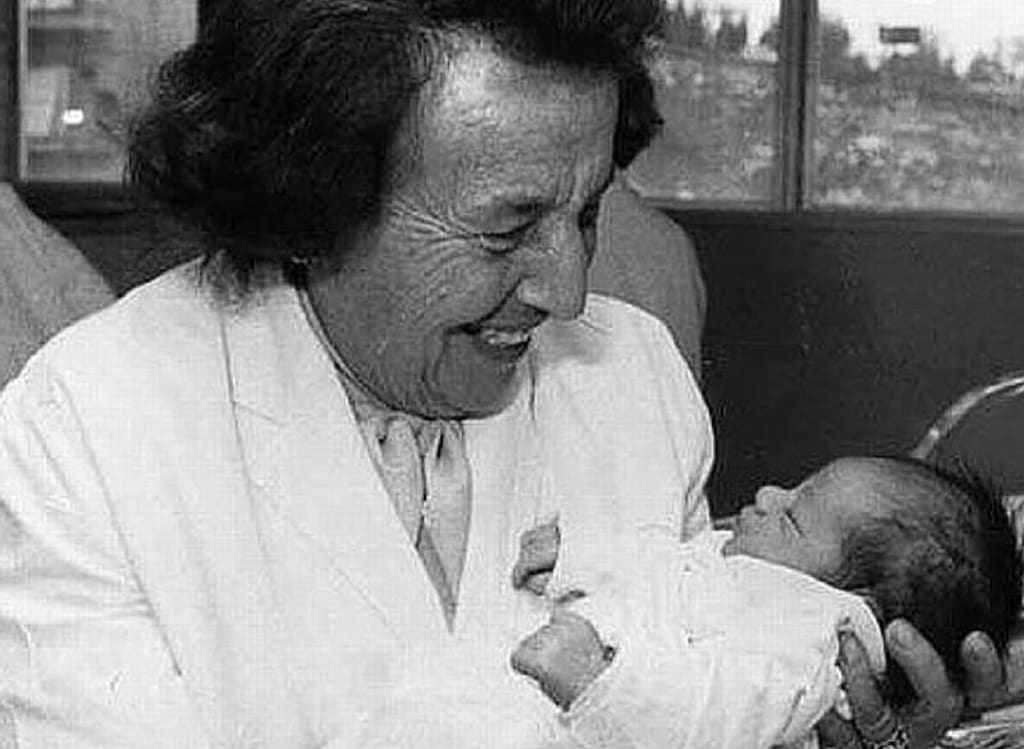
She was called the “Angel of Auschwitz” for her medical work during World War Two. Her story is one of determination to do the right thing, courage and selflessness during the worst time in human history. The film “Out of the Ashes” very powerfully tells her life story.
She was Gisella Perl.
Gisella was born on 10th December, 1907, into a Jewish family. She grew up in Maramarossziget, which was then a part of Hungary. At 16 years of age, Gisella graduated from secondary school, coming first in her class and the only Jew doing so. This encouraged Gisella to want to study medicine but her father, Maurice, forbade her at first fearing that his daughter would forget her Jewish roots. However, she proved that her father’s fears were unfounded.
Maurice relented eventually and allowed his daughter to study medicine. Gisella became a successful and well known gynecologist in Sighetu Marmatiei. Getting married to Dr Ephraim Kraws, the couple had two children and continued to practice medicine right up until 1944.
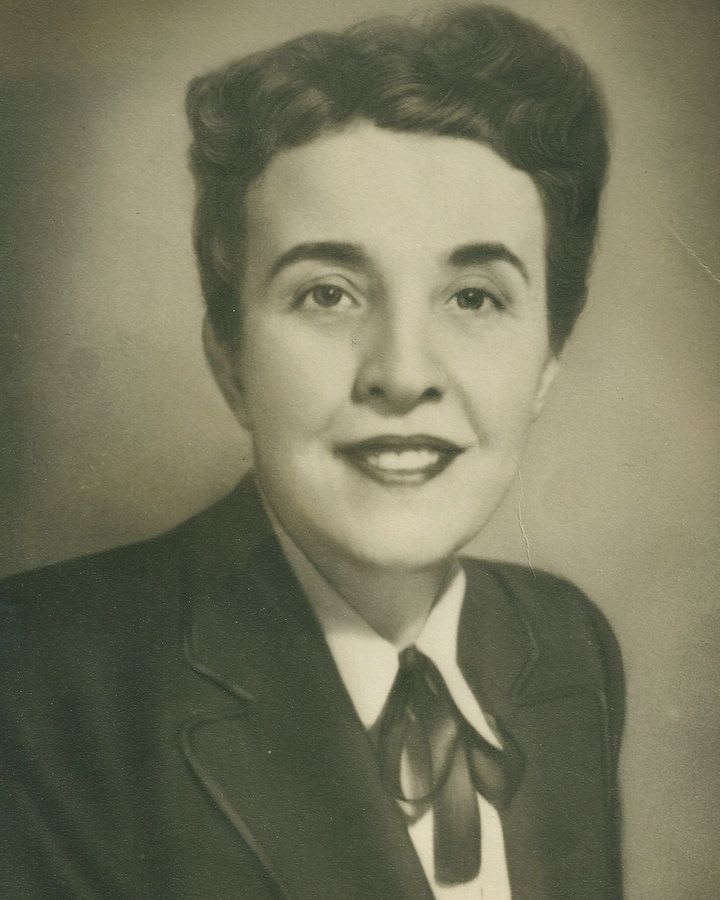
In 1944, Nazi Germany invaded Hungary and Gisella, with her whole family, (mother, father, husband, son and extended family), were deported to the Auschwitz Concentration Camp.
At the camp, Gisella and her family were split up and she never saw any one of them again. (Her daughter was ‘hidden’ with a non-Jewish family, and mother and daughter were reunited many years later).
In the camp, all of the female doctors had to identify themselves. Gisella recognized the Nazi doctor who was giving the orders and he recognized her. He was Dr Victor Kapezius and with a frozen smile, he told Gisella: “You are going to be the camp gynecologist. Don’t worry about instruments — you won’t have any. Your medical kit belongs to me now”.
Gisella was ordered to ‘create’ a hospital in the Auschwitz Group C. Thankfully, she was not alone with four other doctors and four nurses being ordered to do the same, The ‘hospital’ was designated for the female slave labourers. There was no medicine, occasional paper bandages and only one knife to use for ‘operations’, which Gisella had to sharpen with a stone. The Nazis demanded that the ‘hospital’ be kept meticulously clean with threats of beatings and even death. With no cleaning provisions of any kind and very little water, Gisella and the others had to clean the floor with their hands.
During the day, Gisella and the other doctors were kept busy with setting broken bones of prisoners who had been beaten by the Nazi guards, and operating on the deep lacerations which had been made by the Nazis whips and which had become infected. Treating prisoners who had typhus and pneumonia was an everyday and all day occurrence.
Gisella was ‘assigned’ to care for 32,000 women who were kept just for slave labour in the camp. Six months later, she witnessed the “liquidation” of these women to make way for a new batch of slave labour. The months during which these women were kept alive were unbearably miserable.
Gisella herself tells us: “Those first weeks at Auschwitz were made unbearably miserable by the various skin eruptions caused by the weather, exposure, deficient food, and lack of water for drinking and washing”.
During her time in the camp, Gisella saw the most horrifying things that the Nazis did to the women and their young children. The ‘lie’ the Nazis would tell the pregnant women was that they would be taken to another camp where there was more food, milk and better conditions. So the women would willingly climb up into the trucks believing this ‘lie’. In fact, the Nazis took these hopeful mothers to their deaths. It is well documented what happened but because it is so horrific, I just can not write it down. When I first read this, tears just fell down my face because it is ‘unbelievable’ that humans can do such terrible things to pregnant women and children. What I will say is that these women ended up in the crematory — and not all of them were dead!
When Gisella found out about this, she was determined to make sure that there was not another pregnant woman in the Auschwitz Concentration camp.
This was difficult because, although the men and women were separated, the women’s camp was ruled by male Nazi guards who would often rape the women, or some of the women would trade sex for what little there was, and some would come into the camp pregnant. This seemed an impossible situation to deal with but, as always with the human spirit, a ‘way’ was found.
When Gisella found out that a fellow prisoner was pregnant, she explained what the Nazis would do if the guards found out and what she could do as a doctor to help the woman. Knowing that both mother and unborn child would be killed, a ‘way’ of helping was to abort the fetus but keep the mother alive. Gisella always believed that one day some of these mothers would be free to have more children, in a safer world, which thankfully came true.
So in the middle of the night, Gisella ‘helped’ these women with her bare hands. This was a great risk to her life because if she had been caught, Gisella would have been shot. Gisella herself wrote: “It was up to me to save the life of the mothers, if there was no other way, than by destroying the life of the unborn children”.
Gisella was also forced to work with Dr Josef Mengele who experimented on the prisoners. He was a cruel and nasty doctor, and showed no regard whatsoever for the lives of these women or any children they had.
Gisella was transferred to the Bergen Belsen Concentration Camp. “Bergen Belsen can never be described because every language lacks the suitable words to depict its horrors — There were no crematories to burn the bodies”, she tells us. Again, Gisella was put in charge of the ‘hospital’ and carried on her ‘work’ here to help the women.
When the troops liberated these camps in 1945, Gisella searched for her family only to find that she was the only one who survived, (except for her daughter as mentioned earlier).
Just how did Gisella rebuild her life after such a terrible ordeal?
Gisella moved to the United States and ‘told her story’. Eleanor Roosevelt encouraged her to return to practicing medicine, which Gisella did, eventually opening her own practice. Each time Gisella attended a delivery, she paused to utter a prayer: “God, you owe me a life, a living baby”.
Over the course of the next 43 years, this “Angel” delivered roughly 3,000 healthy (and free) babies.
In 1979, Gisella was reunited with her daughter, living out the rest of her life in Herzliya, Israel. Gisella never let go of her Jewish roots.
Gisella Perl died on 16th December, 1988, at 81 years of age.
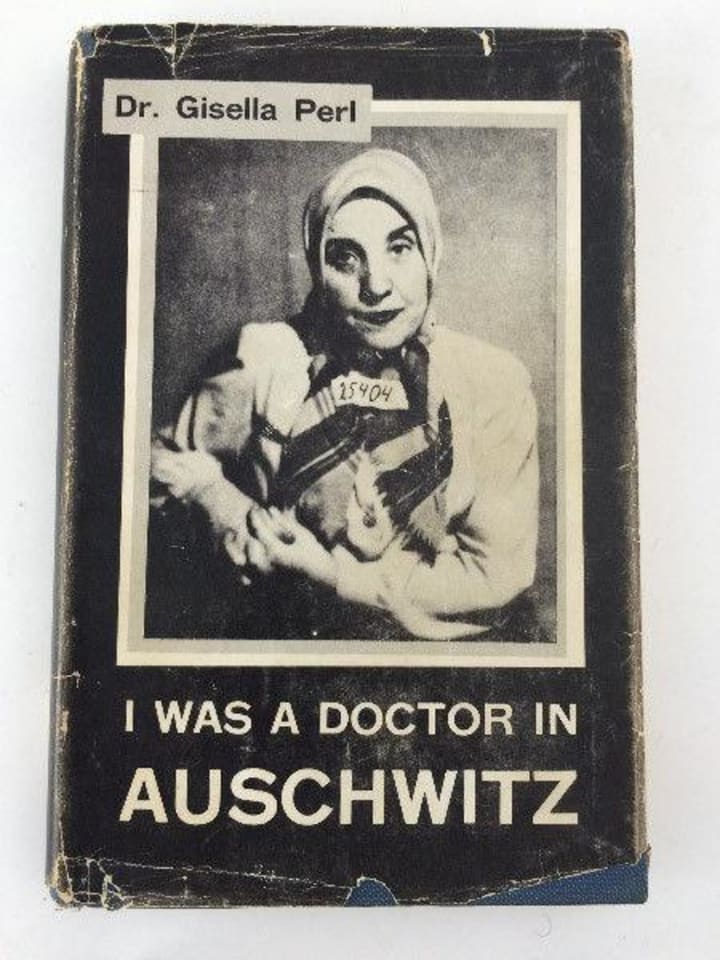
After the war, this brave woman gave testimony in the courts, telling the world what the Nazis doctors did in the camps, as she faced them in a Court of Law. She also wrote about her experiences in the book “I Was A Doctor In Auschwitz”.
What would you and I have done? The only thing I can answer is that I personally draw great inspiration from Gisella’s very real and true story.
About the Creator
Ruth Elizabeth Stiff
I love all things Earthy and Self-Help
History is one of my favourite subjects and I love to write short fiction
Research is so interesting for me too
Keep reading
More stories from Ruth Elizabeth Stiff and writers in History and other communities.
Kyrsten Sinema
Kyrsten Sinema has become one of the most recognizable and debated figures in modern American politics. Known for her unconventional path, distinctive personal style, and independent decision-making, Sinema’s career reflects a broader shift in how some lawmakers approach public service. Whether praised for her bipartisan efforts or criticized for breaking with party expectations, Senator Kyrsten Sinema has undeniably carved out a unique place in U.S. political history. Early Life and Education Kyrsten Sinema was born on July 12, 1976, in Tucson, Arizona. Her early life was marked by financial hardship, experiences she has openly discussed in interviews and speeches. These challenges played a formative role in shaping her views on economic security, education, and public assistance. Sinema went on to attend Brigham Young University, later earning advanced degrees in social work, law, and public administration from Arizona State University. Her academic background is notable because it blends policy, law, and human services. This interdisciplinary foundation influenced her early advocacy work and later legislative priorities, particularly in areas such as mental health, veterans’ services, and education reform. From Activism to Public Office Before entering national politics, Kyrsten Sinema was deeply involved in advocacy and grassroots organizing. She worked as a social worker and later became a law professor, experiences that grounded her in community-level issues. Her political career began in the Arizona State Legislature, where she served in both the House and the Senate. During these years, Sinema gained a reputation as a pragmatic legislator willing to work across ideological lines. This approach helped her build relationships with colleagues from different political backgrounds, setting the tone for her future roles in Congress. Rise to the U.S. Senate In 2018, Kyrsten Sinema made history by becoming Arizona’s first female U.S. senator. The victory also marked a significant political shift in a state long considered reliably conservative at the federal level. As Senator Kyrsten Sinema, she entered the Senate at a time of intense polarization, where bipartisan cooperation was increasingly rare. Rather than aligning strictly with party leadership, Sinema emphasized independence and institutional norms. Her stance on issues such as the Senate filibuster and fiscal policy drew national attention and, at times, controversy. Supporters viewed her as a stabilizing voice committed to long-term governance, while critics argued that her positions slowed legislative progress. Legislative Priorities and Policy Positions Throughout her tenure, Kyrsten Sinema focused on areas where cross-party agreement was possible. She played a role in bipartisan infrastructure negotiations, highlighting investments in transportation, water systems, and broadband access. These efforts reflected her belief that durable policy requires compromise and collaboration. Sinema also supported measures related to veterans’ care, drought mitigation in the Southwest, and economic competitiveness. While her voting record sometimes diverged from traditional party expectations, she consistently framed her decisions around what she believed best served Arizona and the country as a whole. Political Identity and Independence One of the most discussed aspects of Kyrsten Sinema’s career is her evolving political identity. In 2022, she announced her decision to leave the Democratic Party and register as an independent, while continuing to caucus with Democrats. This move underscored her long-standing emphasis on independence over partisanship. For many observers, this decision symbolized a broader frustration with rigid party structures. Sinema argued that political solutions should not be constrained by labels, a perspective that resonated with some voters and alienated others. Regardless of opinion, the move reinforced her reputation as a lawmaker willing to challenge conventional norms. Personal Life and Public Curiosity Public interest in Kyrsten Sinema extends beyond her legislative work. Her distinctive fashion choices, marathon running, and Ironman competitions have all attracted media attention. Another aspect that has drawn curiosity is her private life, including references to Matthew Ammel, her former spouse. Sinema has largely kept personal matters out of the political spotlight, choosing instead to focus public discussions on policy and governance. Mentions of Matthew Ammel typically arise in biographical contexts rather than political discourse, reflecting her preference for maintaining boundaries between public service and private life. Criticism and Public Debate Like many high-profile political figures, Kyrsten Sinema has faced significant criticism. Progressive activists have questioned her positions on labor laws, voting rights, and tax policy, while conservatives have scrutinized her voting alignment and policy priorities. Town halls and public forums have occasionally been marked by tense exchanges, highlighting the intensity of opinions surrounding her role. Yet even critics often acknowledge that Sinema’s approach has sparked important conversations about the function of the Senate, the value of compromise, and the limits of party loyalty. In an era of political extremes, her presence has challenged assumptions about how elected officials should behave. Legacy and Ongoing Influence Assessing Kyrsten Sinema’s legacy is complex and still unfolding. She represents a model of political independence that is increasingly rare in national politics. Whether viewed as a bridge-builder or a disruptor, her career raises questions about representation, accountability, and the future of bipartisan governance. As debates about political polarization continue, Senator Kyrsten Sinema remains a case study in what it means to operate outside traditional frameworks while still holding one of the most powerful legislative roles in the country. Conclusion Kyrsten Sinema’s journey from grassroots activism to the U.S. Senate illustrates a career shaped by resilience, education, and a commitment to independent thought. Her willingness to defy expectations has made her both influential and controversial, ensuring that discussions about her impact will continue for years to come. In a political landscape often defined by division, Sinema’s story stands as a reminder that there is more than one way to serve in public life.
By Saboor Brohi 4 days ago in History
The Evolution of Aircraft Design Through Failure and Innovation
Aircraft design did not emerge fully formed or flawlessly engineered. Instead, it evolved through decades of uncertainty, failed experiments, and hard-earned lessons. Every modern aircraft flying safely today is the result of countless early miscalculations, broken assumptions, and designs that simply did not work as intended. Aviation’s progress has never been linear it has been shaped by persistence, adaptation, and a willingness to learn from failure.
By Beckett Dowhanabout 4 hours ago in History
Center Stage with Paul Stewart
*** I'm keen to republish the interviews I did for my series with Vocal creators. It's been a few years and I thought it might be nice to revisit these wonderful conversations. I'll be releasing them one at a time for a few weeks/months.
By Heather Hubler5 days ago in Interview



Comments
There are no comments for this story
Be the first to respond and start the conversation.